Golfer's Viral Slow Play Moment Reveals Hidden Injury Struggle
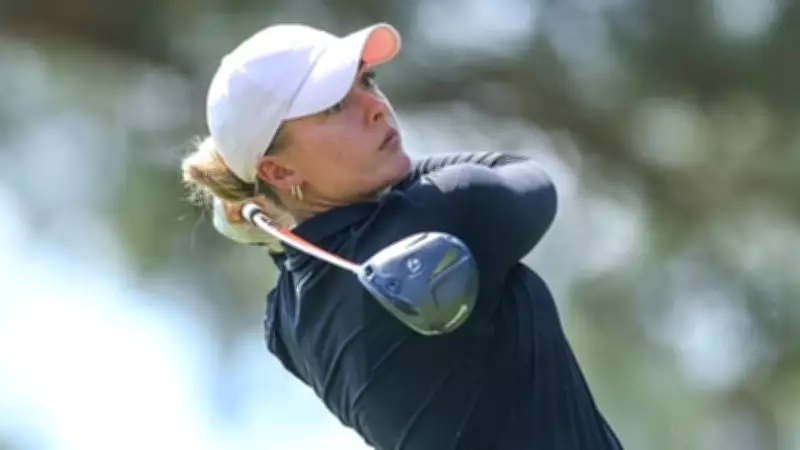
Bailey Shoemaker, a 21-year-old golfer from the University of Southern California, unexpectedly became one of the most discussed figures in sports this week, though not for the reasons she would have preferred. The young athlete went viral after a video clip from the Augusta National Women's Amateur showed her taking an unusually long one minute and 12 seconds to execute a single golf shot. The footage spread rapidly across social media platforms, capturing Shoemaker standing over the ball, repeatedly starting and stopping her swing, resetting her stance multiple times before finally making contact.
The Real Story Behind the Delay
Following the viral attention, Shoemaker provided crucial context that transformed the narrative from one of simple slow play to a story of athletic perseverance. In an interview with GOLF.com, she revealed she has been battling cubital tunnel syndrome, a nerve condition affecting the elbow area, for over a year. The golfer underwent surgery in October of last year and is still navigating the challenging recovery process.
"I've been battling injury for over a year now, I've got some things bugging me," Shoemaker explained. "When you have nerve surgery, you aren't in control."

She emphasized that the extended delay was completely unintentional and stemmed from both physical limitations and psychological factors. "Do you think I want to do it intentionally? Of course not. It was better today, that was the worst one yesterday. Of course, it went viral."
The Mental and Physical Toll of Recovery
Shoemaker detailed how the injury has created a complex interplay between physical capability and mental preparedness. Even when positioned and ready to swing, her body anticipates potential pain, causing hesitation and requiring multiple reset attempts. The golfer shared insights into the extensive rehabilitation work that remains invisible to spectators.
"You don't see me at home working out five hours a day, going to rehab, waking up before practice to go to rehab. You don't see all of that," she noted, highlighting the dedication behind her comeback attempt.
The seriousness of her situation became particularly evident when she revealed, "A year ago, I didn't know if I would be playing golf anymore. This was a pretty substantial injury, given it was my nerve."
Golf Community Reacts with Mixed Responses
Despite Shoemaker's transparent explanation, the golf community responded with polarized opinions, reigniting the perennial debate about slow play in professional and amateur tournaments. Many fans expressed frustration, arguing that competition rules should apply uniformly regardless of personal circumstances.
One critic commented, "Sounds like she's not ready to compete without placing her competitors in a disadvantaged position versus the top players who can play faster."
Another added, "This is bizarre. The attempted rationalization makes no sense. Taking too long to hit a golf shot is a penalty. The reason as to why you take too long does not matter at all."
Some responses attempted balance while maintaining competitive concerns. "Appreciate the situation. But she needs to work that out in practice, not competition," wrote one observer.
Broader Implications for Sports and Injury Management
The incident has evolved into a broader discussion about several critical issues in competitive sports:
- The fairness of allowing athletes to compete while managing significant injuries
- The psychological challenges athletes face during recovery periods
- How tournament rules accommodate or penalize players with legitimate medical conditions
- The balance between athlete welfare and maintaining competitive integrity
Bailey Shoemaker's experience at the Augusta National Women's Amateur has highlighted the complex intersection of athletic determination, physical limitation, and competitive standards. While her viral moment began as criticism of slow play, it has ultimately revealed the profound challenges athletes face when returning from serious injuries, sparking important conversations about compassion, rules, and recovery in professional sports.