High Court Mandates Haryana to Reassess Blind Sportsperson's Bhim Award Eligibility
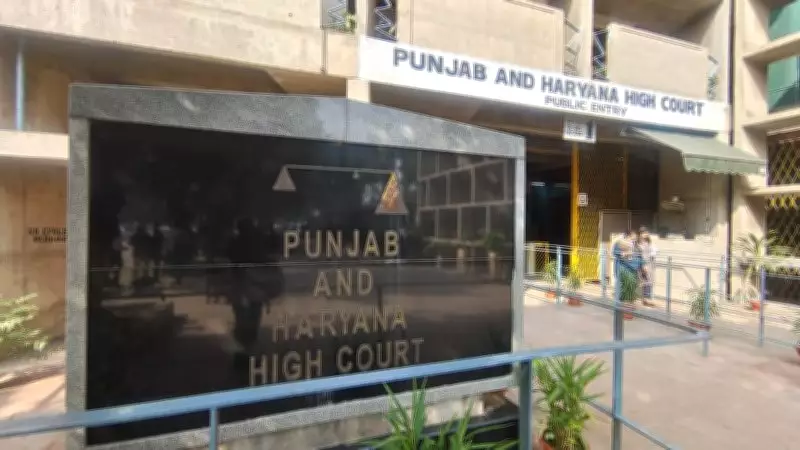
The Punjab and Haryana High Court has issued a directive to the state of Haryana, instructing it to reconsider the claim of a blind sportsperson for the prestigious Bhim Award for the years 2017-2018 and 2018-2019. Justice Jagmohan Bansal presided over the case and delivered a significant ruling, emphasizing that the authorities must take proactive steps to verify relevant records rather than dismissing the claim solely on the grounds of insufficient proof of representation.
Court's Emphasis on Verification and Fair Process
In disposing of the petition filed by the sportsperson, represented by counsel Himanshu Arora, Justice Bansal ordered the Director of Sports and Youth Affairs in Panchkula to re-examine the matter within a strict timeframe of three months. The court mandated that the petitioner be granted an opportunity for a hearing and allowed to submit additional documents to support his claim. This decision underscores the judiciary's commitment to ensuring a fair and transparent process in sports awards.
Background of the Petitioner's Claim
The petitioner, identified as Deepak, approached the High Court after his claim for the Bhim Award was rejected. Deepak asserted that he had participated in multiple international events, including World Cup tournaments, and challenged the state's decision on the basis that he had not represented Haryana. The state's counsel argued before the court that Deepak was considered for the Bhim Award for both 2017-2018 and 2018-2019, but a committee of eight members found his claim invalid due to a lack of proof of participation from Haryana.

Court's Critique of State's Approach
Justice Bansal strongly criticized the state's handling of the matter, stating that determining whether an athlete represented the state should not be a difficult task. The court observed that such information could easily be verified through the concerned sports federations. Furthermore, Justice Bansal made it clear that the burden of proof should not be entirely shifted onto the claimant. "It is not difficult to find out whether the petitioner represented the state of Haryana in international games or not. The respondent can collect information from the concerned federation... The respondent shall not attempt to shift burden upon the petitioner, whereas would endeavour to bring on record actual facts and figures," the court noted.
State's Concessions and Court's Restraint
During the hearing, the state counsel conceded that there was no evidence to suggest that Deepak had represented any state other than Haryana. Additionally, it was acknowledged that certificates indicating his participation in national-level tournaments had not been properly considered. Despite these admissions, Justice Bansal refrained from making a definitive finding on whether Deepak had indeed represented Haryana, stating that the court could not return such findings without proper verification.
This ruling highlights the importance of due diligence in sports award processes and sets a precedent for future cases involving athletes with disabilities. It calls for a more equitable approach where authorities actively engage in fact-finding rather than placing undue burdens on claimants.