Alex Honnold Scales Taipei 101 in Daring Free Solo Ascent, Defying Human Limits
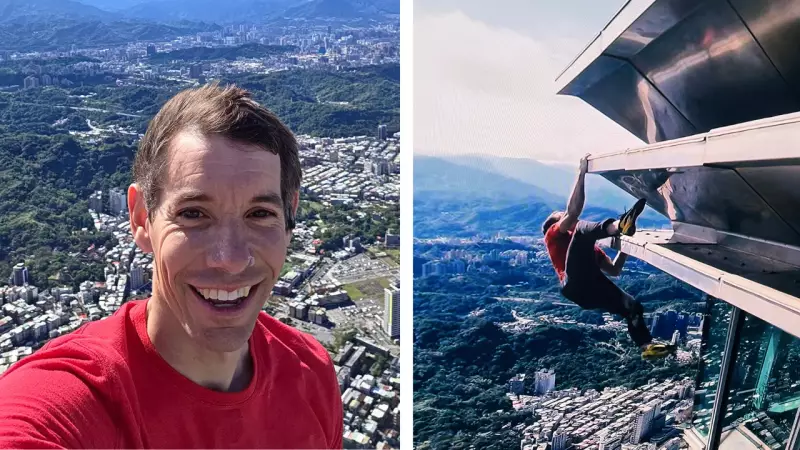
Scaling the colossal Taipei 101 skyscraper seems an impossible task for any human, yet professional climber Alex Honnold achieved this extraordinary feat without ropes or safety equipment. On a clear Sunday, the American adventurer completed a free solo ascent of the 508-meter structure in Taipei, becoming the first person ever to climb the building without any protective gear. His remarkable climb was executed in just 1 hour and 35 minutes, astonishing spectators and viewers worldwide.
Live Broadcast and Global Audience Captivate as Honnold Conquers Heights
The ascent was carried out under perfect weather conditions, drawing live crowds below and being broadcast internationally on Netflix. As millions watched, one question dominated discussions: how does Honnold maintain such composure in situations where a single misstep would result in certain death? This query has long puzzled both the climbing community and scientists, leading to groundbreaking neurological research.
Neurological Study Reveals Honnold's Unique Brain Response to Fear
In 2016, Honnold participated in a neurological study at the Medical University of South Carolina, where researchers used functional MRI scans to examine his brain's reaction to fear. The findings were nothing short of striking. The study focused on the amygdala, the brain region responsible for processing fear and threat. While most individuals show strong amygdala activity when exposed to disturbing or frightening images, Honnold's amygdala displayed minimal response, even to stimuli designed to provoke fear or jumpscares.

Comparative tests highlighted this contrast vividly. Another control subject's amygdala reacted vigorously, whereas Honnold's remained largely inactive. Doctors involved in the study clarified that this does not mean Honnold is incapable of fear; he is still human. Instead, they suggested he might require much stronger stimuli to trigger the same fear response that others experience normally. Alternatively, years of exposure to risk may have altered how his brain processes danger—or, in his case, does not process it at all.
Honnold's Perspective: Preparation Over Fearlessness
Honnold himself has consistently rejected the notion that he is fearless. In interviews with American media, he has emphasized that fear does exist for him, but he manages it through meticulous preparation and repetition. Before attempting any free solo climb, he rehearses routes multiple times with ropes. He has also expressed that uncertainty, rather than height, is what he fears more. This mindset, combined with his unique neurological makeup, has paved the way for a career built on extraordinary achievements.
Landmark Climbs That Define Honnold's Legacy
Beyond the Taipei 101 ascent, Honnold has completed numerous major climbs globally and set impressive speed records. Key highlights of his climbing portfolio include:
- Taipei 101 (2026) – Height: 508 meters
- El Capitan, Freerider (2017) – Height: 914 meters
- El Capitan, The Nose speed climb (2018) – Height: 880 meters
- Half Dome, Regular Northwest Face (2016) – Height: 610 meters
- Moonlight Buttress, Zion (2016) – Height: 360 meters
Scientific Insights: A Multifaceted Explanation
Scientists caution that the MRI study offers insight rather than a complete explanation. Factors such as genetics, rigorous training, extensive experience, and personality traits all play crucial roles in shaping Honnold's abilities. What remains clear is that his brain responds to fear differently from most people's, enabling him to operate with calm precision in conditions that would be insurmountable for others. These neurological tests, obtained and published by Newsweek and National Geographic, continue to inspire both awe and scientific curiosity.