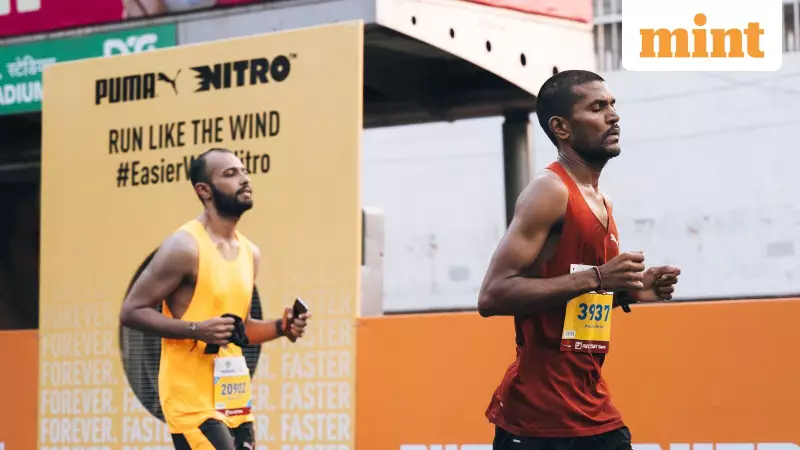
Two decades after the first major city marathon ignited a fitness revolution, lacing up for a race has transformed from a niche hobby into a mainstream, multi-crore industry in India. This January, as the iconic Tata Mumbai Marathon celebrates its 21st edition, it symbolizes a nationwide phenomenon where running is both an aspirational goal and a serious commercial enterprise.
The Starting Gun: From a Few Thousand to Millions
The journey began in the early 2000s with events like the Mumbai Marathon, which initially saw 7,000-8,000 registered runners. Today, the landscape is unrecognizable. Vivek Singh, Joint Managing Director of sports firm Procam International, notes that India now has over 2.8 million people registering for running events annually. His company, which pioneered the Mumbai Marathon, estimates this has created a massive ecosystem worth $450 million every year.
This ecosystem encompasses far more than just entry fees. A September 2025 report by KPMG highlighted that marathons and distance events drive an annual revenue of ₹250-300 crore from the sale of shoes, apparel, travel, and hotels. India hosts more than 1,500 marathons each year, with participation ranging from a few thousand to the 65,000 who will line up for the 2026 Tata Mumbai Marathon on January 18.

Sponsors on the Run: The Business of Community Fitness
The financial scale is compelling. According to Procam's Singh, 1,100 registered races generate roughly ₹800 crore in direct annual revenue. WPP Media's 2025 sports business report revealed that nearly a fourth of all sponsorship money in emerging sports now comes from marathons alone, estimated at roughly ₹600 crore in 2024.
Corporate giants, especially those with limited consumer-facing advertising, have embraced these events as "living billboards." The Tata Group's association is seminal, sponsoring the Mumbai Marathon since inception. Its subsidiary, Tata Consultancy Services (TCS), sponsors 14 major global races, including New York and London, spending an estimated $30-40 million annually. Brand Finance credits such sponsorships with helping increase TCS's brand value from $2.1 billion in 2010 to $21.3 billion in 2025.
"For brands, these events are 'living billboards', where marketing meets purpose," stated the KPMG report. "The business of community fitness is where commerce and culture converge."
Beyond the Marathon: New Avenues for Participation
While running remains king, the participative sports wave is expanding. Events like the Bajaj Pune Grand Tour, a 437km cycling race, and Hyrox—a fitness race combining running with functional exercises—are gaining traction. Hyrox was brought to India by Zerodha's venture arm, Rainmatter, and its portfolio company Yoska, which also organizes the Ironman 70.3 Goa triathlon.
Brands like Puma are strategically investing across this spectrum. Shreya Sachdev, Director of Marketing at Puma India, explains that while mass marathons offer scale—reaching 40-60,000 people across categories from 5K to full marathon—niche events like Hyrox attract a dedicated, high-spending athletic crowd. "We see steady growth in half and full-marathon categories, but the bigger growth is in the 5k and 10k categories," Sachdev noted, pointing to an "explosion in running from 2020 onwards."
Despite this boom, running remains a segment within India's vast sports economy. In 2024, it comprised 15% of the total sports business worth ₹16,663 crore, with cricket still dominating. However, the unique appeal for sponsors lies in the deep emotional and personal investment of participants. As Vivek Singh contrasts, it's the difference between a spectator buying a cricket ticket and a runner who trains for months to achieve a personal goal, making the connection far more profound.
The finish line is nowhere in sight. From a solitary watershed event in Mumbai, running has sprinted into the heart of India's urban culture, proving that a nation's passion for fitness can also be a powerful engine for economic growth.