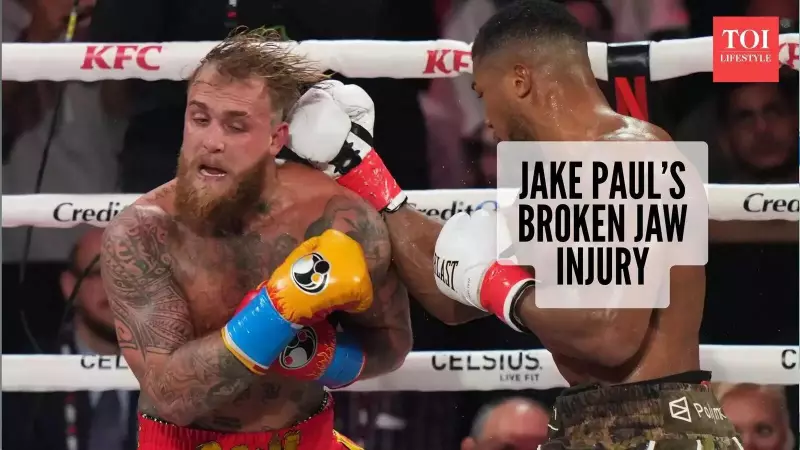
In a stark reminder of boxing's inherent dangers, social media star turned professional boxer Jake Paul did not just leave the ring in Miami with a defeat. He exited with a significant physical toll—a jaw broken in two distinct places. The severe injury occurred during his high-profile heavyweight bout against former world champion Anthony Joshua, who delivered a dominant performance, knocking Paul down twice before the fight was stopped.
The Anatomy of a Devastating Injury
Paul later confirmed the extent of the damage by sharing an X-ray image, opting to skip post-fight media obligations to seek immediate medical treatment. The injury, medically termed a mandibular fracture, is a clear testament to the sport's brutality. A "double broken jaw" means the mandible bone cracked in two separate locations, typically resulting from a powerful, direct impact to the chin or the side of the face.
While not unheard of in combat sports, a fractured jaw is never a minor setback. The jawbone is central to essential functions like speaking, eating, and breathing, and even plays a role in maintaining balance. When it fractures, an athlete's daily life is instantly and dramatically altered.

Physical Toll and the Long Road to Recovery
The consequences of such an injury extend far beyond localized pain. Significant swelling and discomfort make speech difficult. Chewing becomes hazardous, forcing a diet of liquids and soft, pureed foods for weeks. One of the critical risks is improper healing or misalignment, which can permanently alter a person's bite. This misalignment can, in turn, lead to chronic issues like headaches, neck pain, and temporomandibular joint (TMJ) disorders.
Treatment usually involves wiring the jaw shut or using other stabilization methods to immobilize it, a crucial step for proper bone healing. Paul's team has indicated a recovery window of four to six weeks, a realistic timeline for such a complex fracture. Bone regeneration cannot be accelerated, even for elite athletes, and any premature physical stress can compromise the healing process, delaying return further.
The Psychological Battle and Career Implications
Beyond the physical ordeal, jaw injuries carry a heavy mental burden for fighters. Confidence in one's "chin"—the ability to absorb punches—is foundational. After a break, doubt can infiltrate a boxer's psyche. The memory of the injury can make future punches near the face feel more threatening, and rebuilding trust in one's own durability and protective gear is a slow process. This psychological healing often outlasts the physical recovery.
For Jake Paul, this injury represents a significant hurdle in his boxing trajectory. While a broken jaw does not necessarily spell the end of a career, it can severely disrupt momentum. A full and careful recovery is paramount; rushing back risks long-term complications. Promoters and medical professionals are already urging caution, labeling this a challenging injury to return from. Paul's next victory will not be scored in the ring but achieved through disciplined and patient rehabilitation.
Disclaimer: This article is intended for general awareness and educational purposes only. It is not a substitute for professional medical advice, diagnosis, or treatment. Always seek the guidance of a qualified healthcare provider for any health condition or injury.