Kolkata Trio Launches Epic Sahara Desert Cycling Challenge
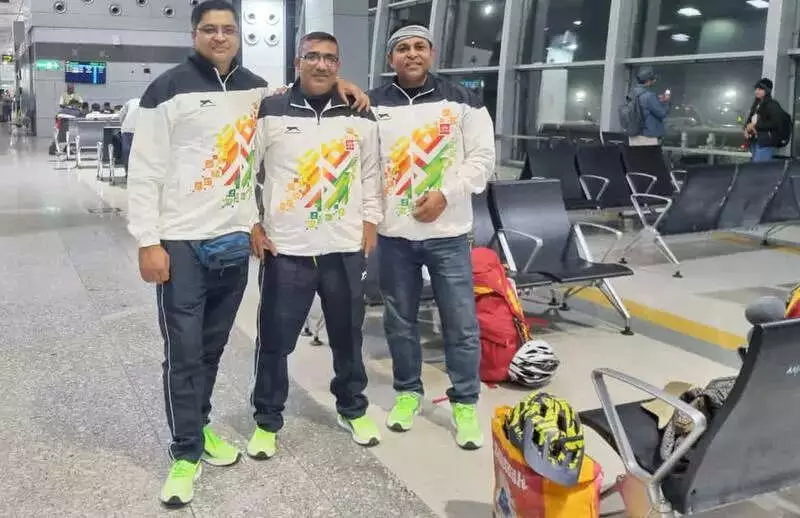
Three adventure sports enthusiasts from Kolkata are gearing up for an extraordinary journey. They will start a demanding 1,500 kilometer cycle expedition across the vast Sahara Desert in Egypt on Monday. The team includes Mount Everest summiteer Malay Mukherjee, along with fellow cyclists Debashis Chakraborty and Partha Pratim Hazra.
Mapping the Arduous Desert Route
The expedition kicks off from the historic city of Alexandria on the Mediterranean coast. The cyclists plan to take the road west of the Nile River delta as they head towards the capital, Cairo. After reaching Cairo, the real test begins. The team will pedal nearly 400 kilometers south towards the otherworldly Bahariya White Desert.
This area is famous for its surreal white chalk rock formations. It presents a major challenge due to scarce resupply points and notoriously strong winds. Gusts in the Bahariya region can be powerful enough to knock a person down. From there, the journey continues towards the final destination: Lake Nasser. This leg involves crossing volcanic rock zones known as the Black Desert and passing the unique Crystal Mountain.

Confronting Extreme Desert Conditions
Malay Mukherjee highlighted the severity of the undertaking. "The area near the Bahariya White Desert and beyond is the toughest part of the journey," he stated. "Heat, isolation from human settlements, and the need for a lot of stamina make this journey a serious one."
He further described the mental challenge. "For miles, there will not be anything other than desert on both sides of the road." The team is traveling during Egypt's winter, which helps mitigate extreme heat. However, they must still contend with unpredictable and powerful winds. Roads through the Sahara often experience wind speeds around 30 kilometers per hour, with occasional increases. Cyclists face difficult sidewinds and headwind drafts that test their endurance and skill.
Preparing for Adventure on a Budget
Practicality guides their preparations. The team will hire bicycles in Alexandria to keep costs manageable for their budget-conscious expedition. They plan to carry essential spare parts with them. Mukherjee acknowledged the inherent risk. "If there is a major breakdown, we will not have any backup. But that is the thrill of adventure. We know that it will not be smooth at all."
This group is no stranger to long-distance cycling. They previously completed a 900 kilometer expedition in Vietnam. For this Sahara challenge, they aim to cover the 1,500 kilometer distance in just 11 days. Beyond personal achievement, they carry an important message. The cyclists hope to promote environmental consciousness by encouraging people to save nature and use bicycles more frequently for transportation.