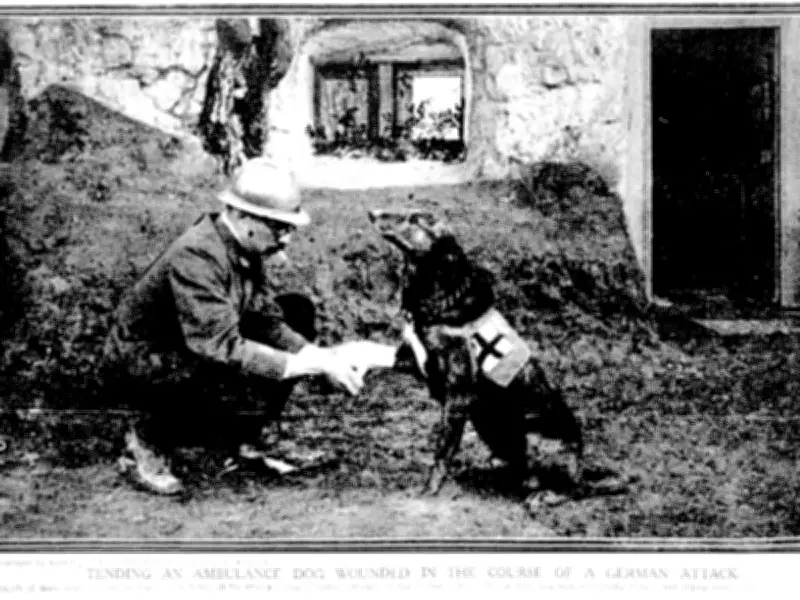
Before they became our favorite couch companions and social media celebrities, dogs served in roles demanding unimaginable courage. During the dark times of World War I, up to 20,000 canines were recruited from family homes, animal shelters, and police departments to serve on the front lines. They carried heavy machine guns, sped vital messages across muddy trenches, and sniffed out enemy troop positions.
The Rise of Mercy Dogs
Among these brave creatures, a distinct group emerged as life-saving heroes: mercy dogs, also known as ambulance dogs. These expertly trained canines were given an extremely humane task: to find wounded soldiers scattered across the battlefield. They also gave the wounded hope, even when all seemed lost.
From Trusted Companions to Frontline Lifesavers
The idea of employing dogs for medical evacuation is not a new wartime creation. Training for dogs dates back to European military practices of the 19th and early 20th centuries. According to historical documents in the magazine Marine Corps History, the first military programs recognized that dogs' instincts could be developed for crucial rescue and communication missions, transforming them from companions into disciplined, valuable assets. As early as 1908, countries such as Germany, France, Italy, and Austria established formal programs, often managed by national Red Cross societies, to train dogs for the adversities of contemporary warfare.

The extent of their training was remarkable. Dogs were trained to disregard dead bodies and focus on the living. They learned to navigate turbulent battlefields by understanding intricate hand signals from their handlers. Under hostile fire, dogs were trained to freeze or sink into the ground for safety.
Breeds like German Shepherds and Boxers were chosen for their superior fitness, intelligence, and unwavering commitment to humanity. Each dog wore a vest marked with the Red Cross symbol and carried a saddlebag filled with essential first-aid supplies, fresh water, and liquor. For a wounded soldier stuck in a ditch, seeing a compassionate dog running through the smoke could be the ultimate lifeline.
The Amazing Urge to Help
After gunfire ceased following an intense battle, these dog heroes were sent into the dangerous wilderness of no man's land. Since battlefields were scarred by deep craters, heavy mud, and thick scrub, human rescue teams often missed soldiers who were unconscious or unable to move. That's where dogs' exceptional sense of smell made a life-or-death difference.
If a soldier was alert and could walk, the dog would guide them to safety in the trenches. If circumstances were more dire, dogs would physically drag troops away from the firing zone. When a soldier was too seriously wounded to move, the dog would take an item from their clothing—such as a cap or glove—into its mouth and rush back to its handlers. This was explicit evidence of the survivor's status, and the dog would then lead a stretcher group directly to the injured person.
Historical archives are full of fascinating accounts of these frontline rescues. In October 1914, a French journal reported the tale of a soldier heavily wounded and covered in debris. He remembered feeling soft, warm, moist kisses from a dog's face. He gently brushed the animal; it fled, then returned with an ambulance crew.
Some dogs achieved fame for their endurance. A French dog named Captain famously found 30 wounded warriors in one day. Another heroic dog, Prusco, reportedly saved hundreds of soldiers in a single intense battle, pulling men one at a time from deep depressions and dense bush where they were hidden from human view.
The Comfort of the Darkest Night
One of the most significant duties a mercy dog performed required no medicine. In addition to searching for survivors, they were instructed to locate injured soldiers in grave danger. If a soldier could not receive medical assistance and was stranded on the ground, the dog would stay by their side.

The attentive, warm, constant presence of dogs ensured that soldiers did not face their last moments in cold isolation. Up to 10,000 dogs may have played this role during the conflict. Their work resulted in hundreds of confirmed rescues, with at least 22,000 lives saved in France and another 4,000 in Germany. These animals displayed dedication and courage that exemplified the highest of animal-human bonds, earning them the status of national heroes.