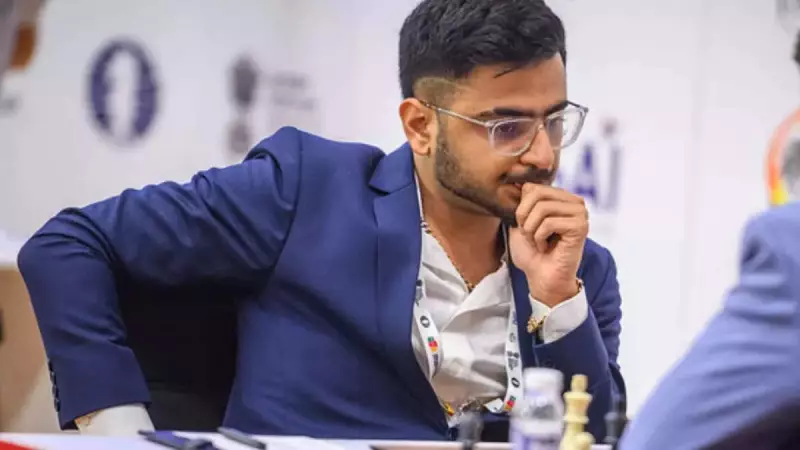
In a world that now seems like a distant memory, a chess prodigy from Nagpur etched his name into the record books. It was 2019, a time before the global COVID-19 pandemic, before Lionel Messi's World Cup triumph, and before AI dominated daily chatter. In that era, 13-year-old Raunak Sadhwani achieved the prestigious Grandmaster (GM) title, becoming one of the youngest Indians ever to do so at 13 years, 9 months, and 28 days.
The Early Triumph and the Elite Club
Raunak's feat placed him in the rarefied company of India's chess wunderkinds. The record book includes names like current World Champion Gukesh Dommaraju (12 years, 7 months, 17 days), Rameshbabu Praggnanandhaa (12 years, 10 months, 13 days), and Nihal Sarin (14 years, 1 month, 1 day). While Gukesh and Praggnanandhaa lead the current FIDE junior ratings, Raunak holds a respectable position at number eight, staying within striking distance of the top.
Reflecting on his journey to the GM title, Raunak, now 19, shared with TimesofIndia.com that the initial pressure was the most significant hurdle. "I was never bothered about the GM title. I've always felt that I would get there," he said during an exclusive chat at the ongoing Global Chess League (GCL) in Mumbai. "But my first norm was difficult. It took some time, and then it was really easy. I knew I belonged there. So I just kept playing and eventually got it."

The Uphill Climb in a Post-Pandemic World
The path following his early success, however, has been fraught with challenges. The COVID-19 pandemic brought life and international travel to a standstill, stalling the momentum of many players who couldn't access higher-rated tournaments abroad. While his contemporaries like Gukesh, Praggnanandhaa, and Nihal have risen to become celebrated stars, Raunak acknowledges he is still navigating his way to the very top.
"I definitely have to improve more. I lost rating in the last six months, so I definitely want to get back and win some tournaments and get my ELO back. So I'm working on it," stated the 2638-rated teenager, who had reached a peak rating of 2681 in January 2025.
The Expensive Reality of Professional Chess
This plan for improvement requires a solid framework, guidance, and mentorship—resources that are proving difficult to secure. Raunak highlighted a dark, often undiscussed side of professional chess: the exorbitant cost. In an ecosystem where players bear most of their own expenses, even hiring a full-time coach is a major challenge without substantial private sponsorship.
"It's a big problem in the game. Even I still face this issue myself. I don't have a full-time coach right now because it's really expensive. You need a sponsor for that, and I'm waiting for one," he revealed candidly. "At the moment, I don't have any. So yeah, it's a very expensive game. Coaching isn't easy to afford because the rates are much higher compared to other sports. So yeah, it's not very easy for people to manage it."
Despite these hurdles, Raunak continues to compete at high levels. This season in the GCL, he finds himself sharing a team with legends and rising stars alike, including five-time World Champion Viswanathan Anand, 2025 FIDE World Cup winner Javokhir Sindarov, and German talent Vincent Keymer.
"It's an interesting team with the likes of Viswanathan Anand sir, and everyone else is quite young, so I know them quite well myself. So it will be fun," he noted. For Raunak, the GCL serves as crucial preparation for the upcoming FIDE World Rapid and Blitz Championships in Doha, Qatar.
"It will be very good to stay in the flow. You're playing rapid here and then immediately you go to Qatar to play rapid again. So it's definitely a good warm-up to have," the young Grandmaster concluded, his focus firmly on the future battles ahead, both on and off the chessboard.