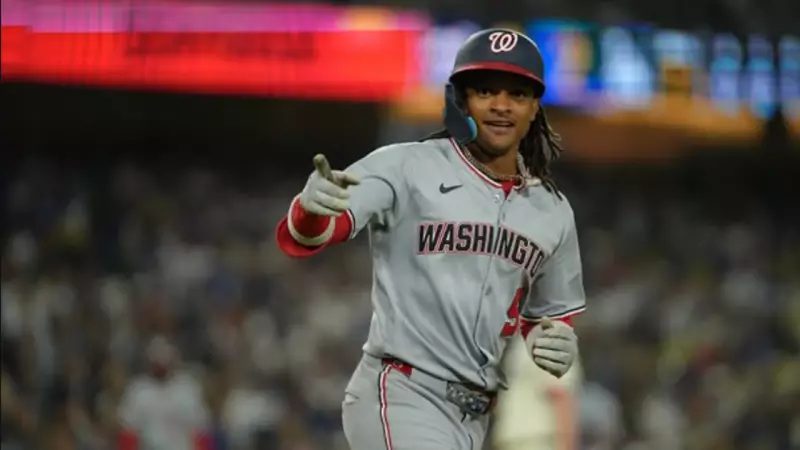
The Washington Nationals have firmly rejected an offseason push from the San Francisco Giants to acquire all-star shortstop CJ Abrams, according to a report by The Athletic's Andrew Baggarly. This development highlights the Nationals' commitment to retaining their core young talent as they continue their rebuilding process.
Giants' Aggressive Approach Meets Washington's Resistance
The San Francisco Giants approached the Washington Nationals about a significant trade proposal and were reportedly open to building a package around teenage shortstop prospect Josuar Gonzalez. However, Washington refused to move one of its best young players, demonstrating their valuation of Abrams' long-term potential.
This interest from San Francisco emerged shortly after the Nationals completed a separate transaction, trading left-handed pitcher MacKenzie Gore to the Texas Rangers for a five-player package headlined by first-round pick Gavin Fien. According to The Washington Post, while the Nationals have been willing to listen to offers for Abrams, their asking price remains substantially higher than what they sought in the Gore negotiations.

Contractual Leverage Strengthens Washington's Position
Washington's firm stance is significantly bolstered by Abrams' favorable contractual status. The 25-year-old shortstop remains under arbitration control for three more seasons, compared to Gore's two years of control. This additional year of team control provides the Nationals with greater leverage in trade discussions, allowing them to demand a premium return if they eventually decide to move him.
Evaluating CJ Abrams' Performance and Defensive Questions
CJ Abrams has demonstrated clear stardom potential at the top of the Nationals' lineup over the past two seasons. In more than 1,200 plate appearances, he has posted a solid .252/.315/.433 slash line with 39 home runs and 62 stolen bases. Notably, he has maintained his strikeout and walk rates slightly below the league average, showing improved plate discipline.
Abrams has been particularly impressive before the All-Star break in recent years, reinforcing the belief among evaluators that his ceiling is that of a regular All-Star caliber player. However, defensive concerns continue to temper some of the enthusiasm surrounding his overall profile.
Defensive Metrics Raise Positional Questions
During this same period, Abrams has committed 39 errors, ranking second only to Elly De La Cruz among major league shortstops. Advanced Statcast metrics have also graded his range unfavorably, leading some evaluators to suggest he might be better suited for second base or even center field in the long term.
This defensive profile might have influenced the Giants' interest, given their current situation with Willy Adames firmly established at shortstop. San Francisco could have envisioned Abrams transitioning to another defensive position where his offensive production would provide exceptional value.
Giants' Search for Impact and Washington's Firm Line
San Francisco's pursuit of Abrams represents an aggressive attempt to add upside following a relatively quiet winter transaction period. The Giants have focused on stabilizing their starting rotation with the signings of Tyler Mahle and Adrian Houser, but their outfield remains thin and in need of reinforcement.
Last week, ESPN's Jeff Passan reported that the club has been actively seeking to make a significant move to address their outfield situation, with names like Brendan Donovan and Nico Hoerner circulating in trade discussions. The Giants' interest in Abrams aligns with this broader strategy of acquiring impact talent.
Negotiations Cool as Both Sides Hold Firm
With the Nationals demanding a premium return for Abrams and the Giants unwilling to part with their very best young talent, negotiations have cooled for the time being. Abrams will begin the season with Washington, but the situation remains fluid given San Francisco's roster needs and the league-wide interest in middle-infield upgrades.

As Opening Day approaches and the trade deadline draws nearer, this situation bears close monitoring. Both organizations have clear motivations—the Giants seeking immediate impact talent to bolster their playoff aspirations, and the Nationals carefully managing their rebuilding timeline while maximizing the value of their assets.