Pakistan's Secret Weapon Usman Tariq Ignites Bowling Action Controversy
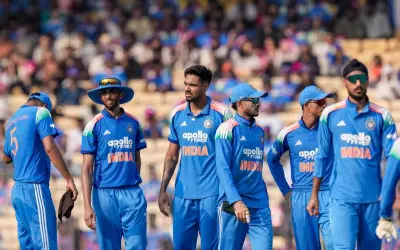
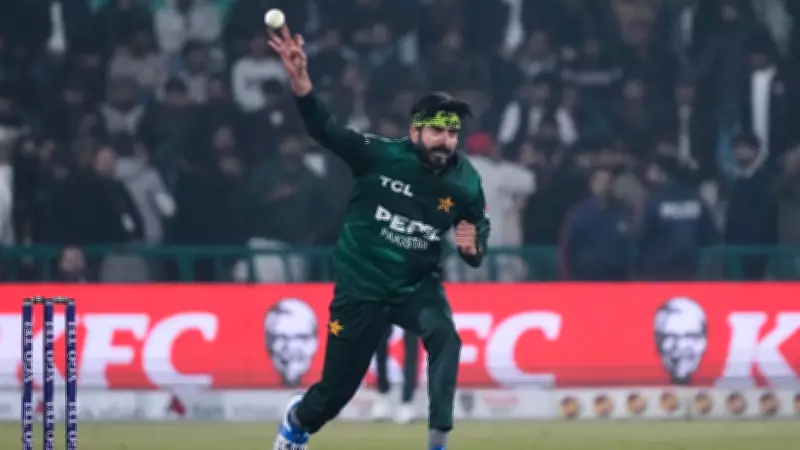
Pakistan's emerging spin sensation Usman Tariq has become the center of a fiery cricketing debate, with former Indian cricketers questioning the validity of his unique bowling action ahead of the high-stakes India-Pakistan T20 World Cup encounter. The spinner, who possesses double-jointed elbows that prevent him from fully straightening his arms, has confounded umpires and opponents alike with his distinctive delivery style.
Double Reports and Double Clearances
Usman Tariq's journey has been marked by controversy from the beginning. During the Pakistan Super League, umpires reported his bowling action twice for suspected illegal elbow bending. However, the International Cricket Council cleared him to bowl on both occasions after thorough testing. This pattern of suspicion followed by official clearance has created what many are calling a "grey area" in bowling regulations.
The Pause That Provokes Debate
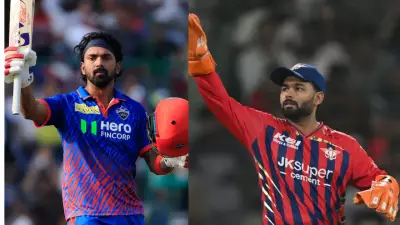
What makes Tariq's action particularly contentious is the exaggerated pause he takes before releasing the ball. This unusual technique came under scrutiny after Pakistan deployed their "secret weapon" against the USA, where Tariq claimed three crucial wickets in Pakistan's second consecutive T20 World Cup victory. The pause has drawn comparisons to football's penalty run-up rules, with former cricketer Shreevats Goswami questioning its legality on social media platform X.

Indian Cricket Legends Weigh In
The debate reached fever pitch when legendary Indian spinner Ravichandran Ashwin entered the conversation. Ashwin defended Tariq's right to use his natural action while highlighting what he sees as inconsistencies in cricket's rulebook. "While the batter can be allowed to switch hit or reverse without informing the umpire or bowler," Ashwin argued, "why are the restrictions only limited to the bowler?"
Former Indian opener Aakash Chopra added another dimension to the discussion, focusing on the physics of Tariq's delivery. "I feel 'pause' is absolutely fine," Chopra stated before posing a technical question: "But I do have a very specific bowling question—if there's no momentum generated by the run-up, is it possible to increase your pace by 20-25kms on certain deliveries without bending the arm?"
The Medical Reality and Historical Precedent
Tariq's physical condition provides crucial context to the debate. His double-jointed elbows mean he cannot fully straighten his arms, a condition that echoes that of Sri Lankan spin legend Muttiah Muralitharan, who also had a congenital deformity affecting his bowling arm. This medical reality complicates traditional assessments of bowling actions and raises questions about how cricket accommodates natural physical variations.
On-Field Frustration and Mimicry
The controversy isn't limited to social media debates. During a pre-World Cup match between Australia and Pakistan, Australian all-rounder Cameron Green expressed visible frustration after falling to Tariq's bowling. Green was captured on camera mimicking what appeared to be a chucking gesture as he walked off the field, highlighting the psychological impact Tariq's unusual action has on opponents.
Ashwin's Clarification and the 15-Degree Rule
As the debate intensified, Ashwin posted a detailed clarification emphasizing the technical aspects of bowling regulations. He pointed to the ICC's 15-degree rule, which allows bowlers a specific elbow extension limit, and noted the practical impossibility of on-field umpires accurately judging this margin without technological assistance. "The only solution to that is having a real time in competition testing tool," Ashwin suggested, acknowledging the limitations of current assessment methods.
Broader Implications for Cricket
This controversy touches on fundamental questions about cricket's evolution. As Ashwin noted, while bowlers face strict regulations about changing their bowling arm without informing umpires, batsmen enjoy increasing freedom with innovative shots like the switch hit. The debate surrounding Usman Tariq thus becomes a microcosm of larger discussions about fairness, innovation, and adaptation in modern cricket.

With Pakistan preparing to face India in their next T20 World Cup match, all eyes will be on Usman Tariq and his controversial bowling action. Whether viewed as exploiting a grey area or simply utilizing his natural physical advantages, Tariq has undoubtedly sparked one of the most significant cricketing conversations of the tournament, forcing players, commentators, and fans to reconsider what constitutes a legal bowling action in contemporary cricket.