Pickleball and Padel: India's New Social Sports Craze Replacing Late-Night Parties
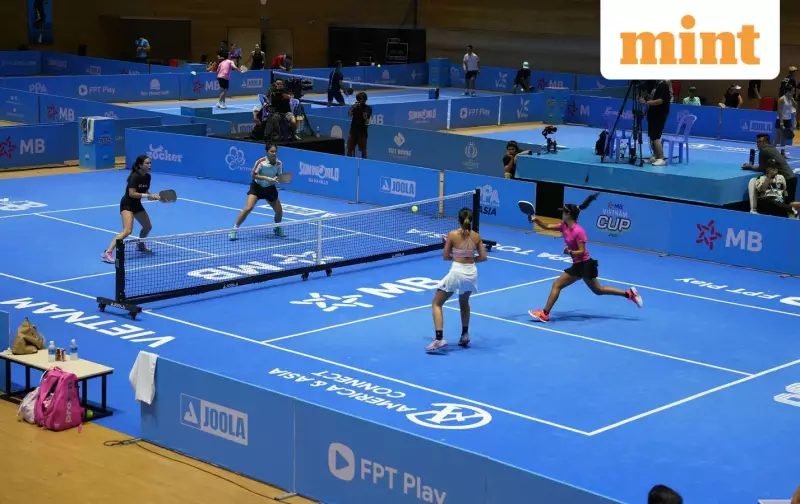
In a nation where cricket has long been revered as a religion, two emerging racquet sports—pickleball and padel—are rapidly gaining mass momentum. However, there's a fascinating twist to this trend. Alongside the allure of late-night socializing, Gen Z and millennials are increasingly turning to these highly social racquet sports as a preferred way to hang out with friends on weekend nights. "It's a great way to catch up without the pressure of eating out or drinking," explains Tanay Bhimrajka, a 31-year-old entrepreneur based in South Mumbai. "We are a group of friends who play regularly and sometimes welcome newer people whom we connect with via WhatsApp communities," he adds, highlighting the communal aspect of these activities.
Neon Courts and Round-the-Clock Play
The growing love for pickleball inspired four friends—Shashanth Shetty, Sashant Shetty, Milin Patel, and Bhushan Shinde—to open an indoor 24/7 neon pickleball court named LEVEL ONE in Andheri East, Mumbai, nearly six months ago. The neon accents significantly enhance the late-night experience, with halogens turning off at night and UV lights illuminating the graffiti-marked courts, players' jerseys, nets, racquets, and balls. "People work through the week and catch up with friends over matches on weekends, playing from midnight onwards," notes Sashant. Snacks are served off the courts, and notably, there is no alcohol served, yet the courts remain booked around the clock, clearly marking a departure from traditional boozy parties. "There are people coming in from two ends of Mumbai, Marine Lines and Dombivli at 4am to play. We have age-specific coaching available for a few sessions," he shares.
Low-Impact Appeal Across Generations
Padel and pickleball are low-impact sports with a lesser risk of injury compared to more strenuous games like tennis or cricket, lending them a wider appeal across different age groups. "My 60-year-old uncle comes regularly with his friends to play," says Sashant. "It helps that you can go alone to the court and find someone to partner with for a game, unlike cricket or football where you need a larger group. The sport is very addictive because you can always find many players at your level, leading to competitive and fun games." This adaptability has fueled soaring, round-the-clock demand for these sports.

Booking and Community Building
While one can book directly with neighbourhood courts, apps like Hudle—a sports community platform—enable players to book venues, find events, locate players, and join games with just a touch. Booking slots, especially on weekend nights, can cost as high as ₹1,200 per hour, compared to ₹1,050 on weekdays. "Millennials usually come in larger groups and pair up for half an hour of play. We have PS5 set up together with snooker tables outside the courts. Those who wait for their turn watch the match from this zone through a glass separator," adds Sashant.
"These sports are extremely popular as they are easy to pick up and highly social," remarks Vishnu Malani, 38, co-founder of Coco Padel in Goa. "You don't need years of training to enjoy a good rally, which removes the intimidation factor that many traditional sports carry. Gen Z has clearly found an alternative way to socialize beyond crowded bar takeovers. Sports such as padel and pickleball allow them to socialize while being active and having a good time."
Celebrity Influence and Lifestyle Shifts
With A-list celebrities like Alia Bhatt embracing pickleball, its popularity is accelerating rapidly. For those with pressure-cooker lifestyles, especially in metros, the flexibility in timing bodes well for individuals who wish to socialize without compromising their health. Bhimrajka shares, "Padel has given me the option to meet my friends over a game rather than drinks. I'm not much of a drinker, so this really takes the social pressure off." For others, it presents an opportunity to forge new connections as well.

"Playing the game has a lot to do with community building. We regularly see people walk in solo and leave with a playing group. That sense of community is a big part of why the sport works so well here. Late-night sessions are dominated by players in the 25–45 age group. People keep coming back not just to play but to see familiar faces and engage with a like-minded community. That emotional and social stickiness is very powerful," emphasizes Malani.
Personal Stories and Cultural Impact
Danielle Jones, 34, a director and hair colour specialist at The Bridgette Jones Fashion Salon in Kolkata, says, "Playing pickleball in the evenings has become my reset button. After a long, demanding day at the salon, it's the one space where my mind quiets down and my body switches on. There's something incredibly energizing about ending the day with movement. It's social, competitive, and gives me a sense of progress." She started playing with her sister, and eventually, her mother and aunt, both over 60, took up padel too. Jones adds, "Watching them step onto the court, unafraid to learn something new, has been incredibly inspiring. It's rare to find an activity that connects two generations with the same spark."
She believes this trend represents a cultural shift, with people increasingly wanting to invest in their well-being, build micro-communities, and find joy in authentic experiences: "It's not just a sport on the rise; it's a mindset that's reshaping how we unwind, connect, and take care of ourselves."
Health Considerations and Expert Advice
While waking up feeling good is preferable to nursing a hangover, there are potential pitfalls to playing sports late at night. "The human biological clock is designed to slow down at night, allowing the body to rest, recover, repair, and restore energy levels. Muscles, joints, and tendons repair themselves during sleep. But when intense physical activity is done late, it can delay sleep, disrupt hormone balance, and affect muscle recovery," explains Dr. Anup Khatri, senior consultant in orthopaedics at Gleneagles Hospital in Mumbai. "Occasional late-night games, especially on weekends, may not be a matter of concern, but it's better to play earlier in the evening on a regular basis, followed by proper hydration, stretching, and sleep to allow the body to recover."
In hectic urban lives, there's a tendency to squeeze in as much as possible within limited time, with fitness activities often spilling into weekends. Bhavna Harchandrai, a fitness instructor at Fitness Fundas studio in Mumbai, advises, "Adopt a mid-path: keep the game easy-going, not aggressive, and begin and end with light stretches." Aryan Goveas, a 27-year-old former professional tennis player in Mumbai who now coaches pickleball and padel, observes that post-pandemic, the ideology of being fit has captured people's mindsets, leading them to turn to sports: "It's certainly better than going out and partying. Playing a sport is the new cool."