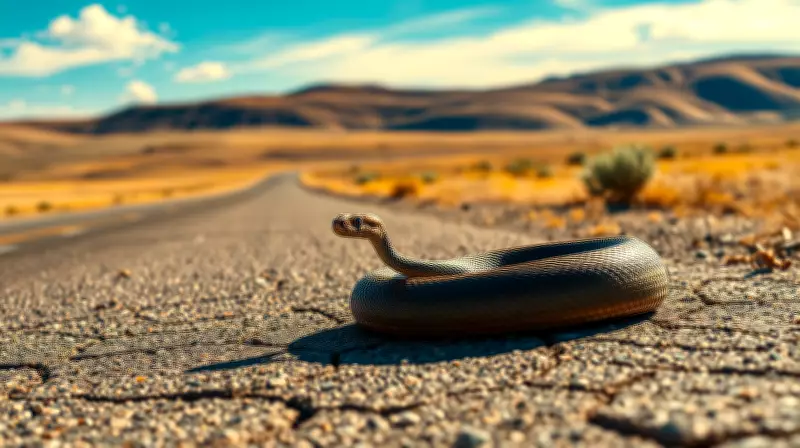
Canada's Prairies may appear as vast, tranquil expanses, but hidden within their coulees, river valleys, and sun-baked badlands resides one of North America's most intriguing reptiles. The Prairie rattlesnake (Crotalus viridis) is the sole rattlesnake species found in Saskatchewan and one of the few present in Alberta, surviving at the northernmost edge of its continental range. Rather than being uniformly distributed across the landscape, these snakes are predictably concentrated in specific terrain features that retain heat and provide the underground crevices essential for communal winter hibernation. Most activity is centered in pockets of southern Alberta and southwestern Saskatchewan, where encounters peak between late May and early September. If you plan to hike or camp in these provinces this summer, here is essential information to stay safe.
Prairie Rattlesnake Habitat in Canada: Why These Five Zones Are High-Risk
The geography of rattlesnake hotspots in the Canadian Prairies follows a consistent pattern. South-facing slopes, river coulees, clay escarpments, and exposed badlands terrain absorb solar heat more effectively than flat grasslands, and this thermal advantage draws Prairie rattlesnakes into predictable concentrations. According to a peer-reviewed study in the Journal of Wildlife Management tracking snake populations across southwestern Saskatchewan, rattlesnakes share communal hibernacula underground during winter before dispersing into surrounding grasslands during the active season, sometimes traveling over 11 kilometers from their dens. Research published in the Journal of Herpetology found that burrows and shrub cover are critical microhabitat features, particularly at the northern edge of the species' range where thermoregulation is more demanding. All five hotspots below share this formula: reliable underground den sites, south-facing warmth, and adjacent grassland supporting the ground squirrels and deer mice that constitute the bulk of the rattlesnake diet.
Milk River Valley, Alberta
The Milk River valley in southern Alberta is among the most densely populated rattlesnake zones in Canada. Dry coulees, sagebrush slopes, and rocky south-facing bluffs near Writing-on-Stone Provincial Park and the Lost River area create near-ideal conditions year-round. Sightings are common along warm pavement edges on Highway 501, where snakes bask during the hottest parts of the day. The combination of fragmented badlands topography, limited precipitation, and a reliable small mammal population results in one of the highest rattlesnake encounter rates anywhere in the country, with activity peaking from late May through early September.

Grasslands National Park, Saskatchewan
The West Block of Grasslands National Park in southwestern Saskatchewan is one of the most well-documented rattlesnake zones in Canada. The Prairie rattlesnake is the only rattlesnake species in the province, and within the park, it reaches some of its highest northern densities along the Frenchman River valley and the Killdeer Badlands. Deep sandstone fissures and clay formations serve as communal overwintering sites used year after year. Sightings are most frequent near exposed ridge trails and sparsely vegetated hillsides, with encounters clustering during late spring emergence and early autumn when snakes return to their dens.
Cypress Hills Interprovincial Park, Alberta–Saskatchewan Border
Straddling the Alberta-Saskatchewan border, Cypress Hills offers a different type of rattlesnake habitat: elevated plateau edges with warm south-facing slopes dropping into sheltered valley systems. Rock outcrops and talus fields along escarpments near Battle Creek and the Elkwater Lake area are known communal hibernation sites, with snakes returning to the same locations across generations. The mosaic of mixed forest, open grassland, and rugged terrain creates defined basking corridors on lesser-traveled footpaths. Activity peaks sharply after den emergence in late spring.

Red Deer River Valley, Drumheller, Alberta
The deeply eroded badlands around Drumheller, Horseshoe Canyon, Midland Provincial Park, and adjacent coulee systems support notable Prairie rattlesnake populations along clay slopes and sandstone ledges. Snakes here overwinter in stable crevices above the river floodplain and disperse into surrounding dry grassland during the active season. Research published in the Canadian Journal of Zoology found that thermal conditions along migration paths directly affect rattlesnake body condition, which is relevant here, where steep temperature gradients between valley floor and rim create sharp variation across short distances. Encounters are most common on hiking routes descending into the valley and at canyon overlooks.
Dinosaur Provincial Park, Alberta
Dinosaur Provincial Park in southeastern Alberta, a UNESCO World Heritage Site, is also one of the province's most significant rattlesnake habitats. The same eroded coulees, sun-baked clay slopes, and layered sandstone formations that preserved ancient fossils also make this terrain ideal for Prairie rattlesnakes. Communal dens sit in stable rock layers above the valley floor, and during the active season, snakes disperse widely into grasslands where prey is plentiful. Encounters are most frequent along hiking trails, rim edges, and interpretive routes near the visitor centre, terrain that also sees the heaviest tourist foot traffic. Park staff regularly remind visitors to stay on marked paths and give any snake encountered a wide berth.