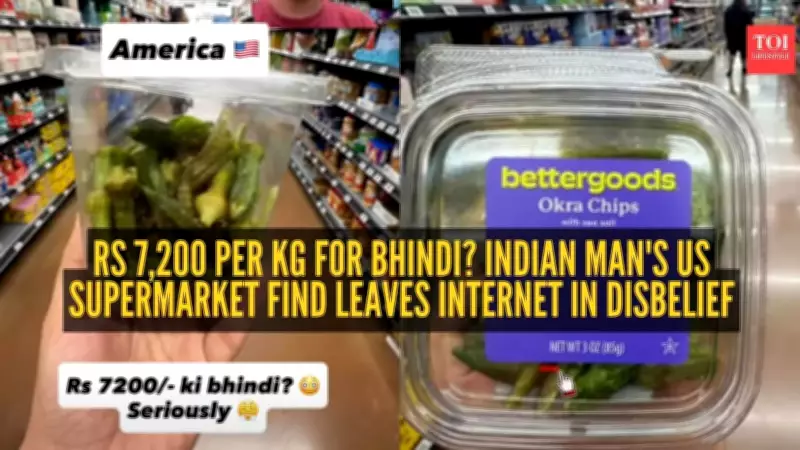
For most Indians, bhindi is just another vegetable quietly sitting in the kitchen. It is affordable, familiar, and probably something you have complained about eating at least once as a kid. But in a supermarket in the United States, that same bhindi is being sold as a fancy snack at a price that has left the internet stunned.
The Viral Discovery
The conversation started after Indian content creator Ashish Ahuja, who lives in the US, shared a video from a grocery store. While walking through the snack aisle, he spotted something unexpected among packets of chips and packaged treats: fried okra, or as Indians know it, bhindi. The snack itself was not the surprising part. The price was.
Ahuja pointed to an 85-gram packet carrying a price tag of $6.50, which works out to roughly Rs 600. Curious, he did some quick math and estimated that if the snack were sold by the kilogram, it would cost around Rs 7,250. That number alone was enough to make many Indians do a double take.

Comparison with Other Snacks
In the video, Ahuja could not help comparing it with the other snacks around it. Large packs of chips were selling for much less, with several popular brands priced between $2 and $4. The fried bhindi, meanwhile, sat comfortably in premium territory. He joked about how people in India grow up seeing bhindi as an ordinary vegetable that is cooked at home every week, only to discover that it has somehow achieved luxury status overseas. At one point, he laughed that the snack was pricier than Lay's chips and quipped that nobody had informed bhindi of its newfound celebrity status.
Online Reactions
The clip quickly took off online, and the comments section became a comedy show of its own. One user joked that bhindi sells for around Rs 50 a kilogram in India and offered to send an entire sack overseas. Another laughed that customers back home would probably develop a fever just hearing the price. Someone else pointed out that in many Indian households, bhindi is cooked in large batches and whatever remains often gets shared with domestic helpers.
Defending the Price
Not everyone thought the pricing was outrageous, though. Some viewers noted that incomes in the US are much higher and that healthy specialty snacks often cost significantly more than regular packaged foods. Others suggested that bhindi is not as widely grown or consumed in America, making products made from it more expensive and harder to find. A few people even saw a business opportunity. One commenter joked that it might be time to start an import-export company dedicated to bhindi.
The Contrast
What made the video resonate was not just the price tag. It was the sheer contrast. A vegetable that many Indians see as ordinary and sometimes even boring has somehow become a premium supermarket snack thousands of miles away. And if the internet's reaction is anything to go by, bhindi's glow-up has caught everyone by surprise.