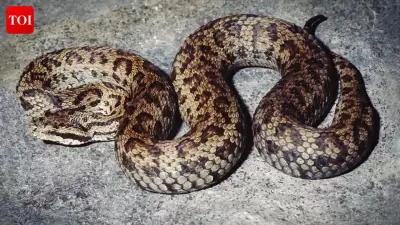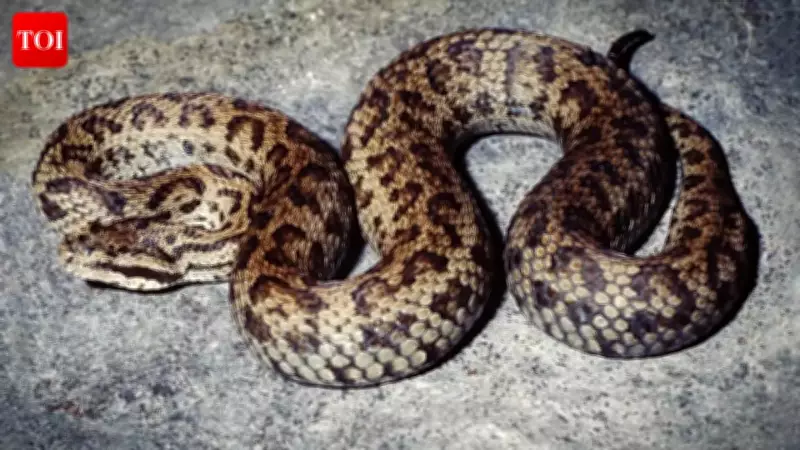
For over 160 years, scientists believed the Himalayan pit viper was a single species—a short, venomous snake inhabiting the cold slopes of the Himalayas. However, a new study published in ZooKeys has overturned this long-held assumption, revealing that what was once considered one species is actually five distinct ones. Among them, two were previously known, but three are entirely new to science.
Hidden in Plain Sight
Led by Daniel Jablonski at Comenius University in Slovakia, the research team employed a comprehensive approach, analyzing fresh tissue, preserved museum specimens, body and skull measurements, and genetic data. The genetic divergence between the groups was clear, confirming they are separate species. The reason these snakes remained hidden for so long is their striking physical similarity: all have stocky bodies, triangular heads, dark patterns, and a preference for rugged, cold mountain slopes. Even closely related mountain snakes often retain a similar appearance due to shared environmental pressures.
The initial description of the Himalayan pit viper dates back to the 19th century, when explorers brought specimens to Britain. Subsequently, any snake resembling that original specimen was classified under the same name, masking the true diversity.

Old Bones, New Answers
Sequencing DNA from museum snakes preserved in alcohol for over a century posed a significant challenge, as the DNA is often fragmented. Despite this, the team successfully extracted and analyzed genetic material from ancient specimens, comparing them with fresh samples. One notable specimen was studied by Albert Günther in the 1860s. The DNA analysis linked the original species name to a specific genetic fingerprint, which did not match snakes from other regions. Sylvia Hofmann at Museum Koenig in Germany emphasized that such collections are not merely dusty artifacts but are essential for modern scientific discovery.
Meet the New Vipers
The three newly identified species belong to the genus Gloydius and inhabit remote mountain pockets. Gloydius hindukushensis is found in the Hindu Kush range in northwestern Pakistan, G. hazarensis in northeastern Pakistan, and G. nepalensis in central Nepal. Their names reflect their geographic origins. The team also designated a lectotype—a reference specimen—to firmly anchor the original Himalayan species name. Beyond DNA, these new snakes differ in scale counts, body proportions, and skull shapes. While these differences are subtle, they are consistent and align with genetic findings. All five species retain the classic pit viper appearance: stout bodies, triangular heads, cryptic coloration, and adaptations for surviving harsh, cold mountain environments. They are so similar that even experts struggle to distinguish them without genetic analysis.
New Evidence and Long-Kept Secrets
Researchers analyzed seven genes, with some showing over 14% genetic divergence—well within the range for separate species. They also measured bodies, scanned skulls, examined scale patterns, and mapped habitats. No single test alone was conclusive, but collectively, the evidence was overwhelming. The museum drawers held the most significant secrets. The original specimen from over 160 years ago confirmed the identity of Gloydius himalayanus and revealed that other specimens belonged to different species. The Himalayas and adjacent mountain ranges remain poorly explored due to harsh weather, high elevations, remote locations, and political challenges. Many more species likely await discovery.
Why It Matters
The discovery has important implications for conservation and medicine. Each species occupies a small, isolated habitat, making them vulnerable to threats such as mining, road construction, climate change, and overgrazing. Venomous snakes are also a public health concern in South Asia, where tens of thousands of snakebites occur annually. Accurate species identification is crucial for effective medical treatment, as antivenom specificity can be life-saving. Antivenom lists and field guides will need updating to reflect the new classification. Conservation efforts must now address each species separately, and healthcare workers in northern Pakistan and Nepal can better manage snakebite cases with precise species identification.