Pune's Grand Cycling Revival: How a City Reclaimed Its Pedal Power
Pune has not carried the title "Cycle City" for many decades. The gentle bicycles that defined its character in the 1960s and 1970s have vanished. They gave way to a snarling fleet of over 72 lakh vehicles that now choke its roads daily. The cycle tracks the city once marked on its streets have all but disappeared.
So when news emerged a few months ago that Pune would host a world-class international cycling event, skepticism outweighed celebration. The city's notoriously potholed roads seemed an unlikely stage for such a spectacle. Four months later, Pune has silenced the doubters.
The Race That Changed Everything
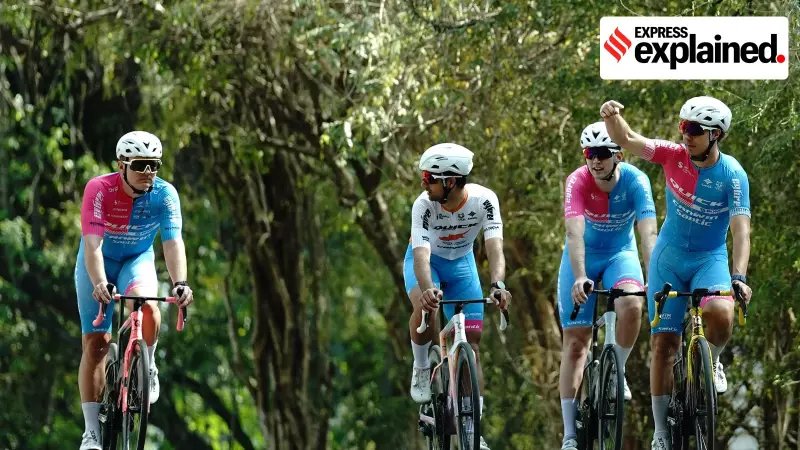
The 437-kilometre route for the Bajaj Pune Grand Tour 2026 stands ready. This marks India's first-ever Union Cycliste Internationale (UCI) 2.2 multi-stage race. The event commences on January 19 and promises to be the biggest UCI 2.2-level race globally.

A UCI 2.2 race serves as the entry-level competition organized by the global cycling body. Points earned here count toward Olympic qualification. The Pune edition features 171 participants and 29 teams from 35 countries. This surpasses the general average of 125 participants for such races and breaks the previous record of 144.
Why Choose a Cycling Race?
The idea originated from a government mandate to develop Pune. District Collector Jitendra Dudi spearheaded the initiative. After discussions with stakeholders, he concluded that a sporting event linked to the city's legacy offered the best path forward.
"We took inspiration from other places," Dudi explained. "Rajasthan reinvented itself thirty years ago by marketing its deserts, havelis, and culture to the world. Kutch did the same with the Rann festival." With the Tour de France as a model, officials decided to bring a UCI 2.2 race to Pune.
The Road to Preparation
The Pune administration approached the Cycling Federation of India in June 2025. The UCI application deadline loomed just a week away. The federation sprang into action. A carefully crafted presentation highlighted a route through picturesque landscapes of Mulshi, Maval, Rajgad, and Purandar. Heritage sites, villages, and ghats formed the backdrop.
This presentation proved decisive. The UCI committee meeting in Rwanda during September unanimously approved the proposal. With only three to four months post-monsoon, Collector Dudi and Municipal Commissioner Naval Kishor Ram mobilized resources to meet the international deadline.
The administration diverted approximately Rs 500 crore toward road repairs and infrastructure rebuilding. Road surfaces required smoothing. Over 2,000 speed breakers needed removal from the route. Many roads demanded widening.
"The convergence of various government departments proved crucial," Dudi noted. "Training engineers and contractors about international road standards made the difference."
Overcoming Initial Doubts
Tournament head Pinaki Bysack moved from Kolkata to Pune for nearly three months. His task involved supervising preparations according to UCI specifications. "When I first saw Pune's roads in June, I declared the event impossible here," Bysack admitted. "But my doubts vanished as I witnessed the fast-track work from various agencies."
Contractors faced strict penalties. They would incur fines of Rs 1 lakh per day for missing deadlines. A clause also held them responsible for road upkeep over the next five years.
Benefits for Pune
The city administration viewed the international deadline as an unprecedented opportunity. They positioned the event as a watershed moment for Pune's civic landscape. Of the 437-kilometre route, 75 kilometers lie within Pune municipality limits. Another 52 kilometers fall under Pimpri Chinchwad jurisdiction. The remainder traverses rural areas.
Upgraded roads within city limits promise long-term benefits. Plans include hosting the race annually and adding a different 100-kilometer segment each year that requires rebuilding.
Pollution concerns pushed the administration toward both short-term measures and long-term plans. These include removing older vehicles from roads and installing AQI meters at construction sites for live data feeds.

In rural areas, where 310 kilometers of the cycle route pass, approximately 130 villages now boast world-class roads. This connectivity should boost agriculture, small-scale industries, and agro-tourism. Farmers can transport produce quicker, reduce waste, and secure better prices.
"As cyclists pass through villages, commentators will highlight local culture, historic forts, polyhouses, GI-tagged fruits, and exotic farming like Dutch roses," Dudi elaborated. "We will run Maharashtra Tourism and Development Corporation advertisements during the live telecast on Jio Hotstar. Top influencers will showcase the race and Pune district globally."
Last week, MS Dhoni joined as brand ambassador for the event.
Impact on Indian Cycling
Maninder Pal Singh, secretary general of the Cycling Federation of India, emphasized cycling's status as the third-largest medal sport in the Olympics. Qualification remains highly competitive. India has hosted limited cycle races for various reasons.
This event provides Indian riders direct competition against professionals. It boosts experience, generates word-of-mouth promotion, and may lead to future invitations. Organizers aim for sustainability, potentially upgrading to more competitive 2.1-level and professional events. Singh expressed hope for Pune's potential as a global cycling hub.
"The Pune administration already fields inquiries from governments like Tamil Nadu and Uttarakhand," Singh pointed out. "They want to know how to replicate such an event."
Lessons for Other Cities
Pune stakeholders send a clear message: sports can trigger time-bound, high-quality infrastructure delivery. Cities should identify games matching their strengths and host them. "Go for international hosting," advised Collector Dudi. "It creates positive pressure to deliver world-class infrastructure." He noted that administrative units often work in silos, but such projects foster coordination.
Not all experts agree about the usefulness of such events. Renowned town planner Anita Benninger believes cities should address problems more fundamentally rather than focusing on optic-heavy events. "Why increase tourism that brings more people and vehicles?" she questioned. "The focus should be on reducing both and making cities more livable."
Pune's journey from a lapsed cycle city to hosting India's biggest international cycling race offers a compelling template. It demonstrates how sport-led deadlines can accelerate long-neglected urban improvements. The city's transformation raises important questions about sustainable development priorities while showcasing what determined coordination can achieve.