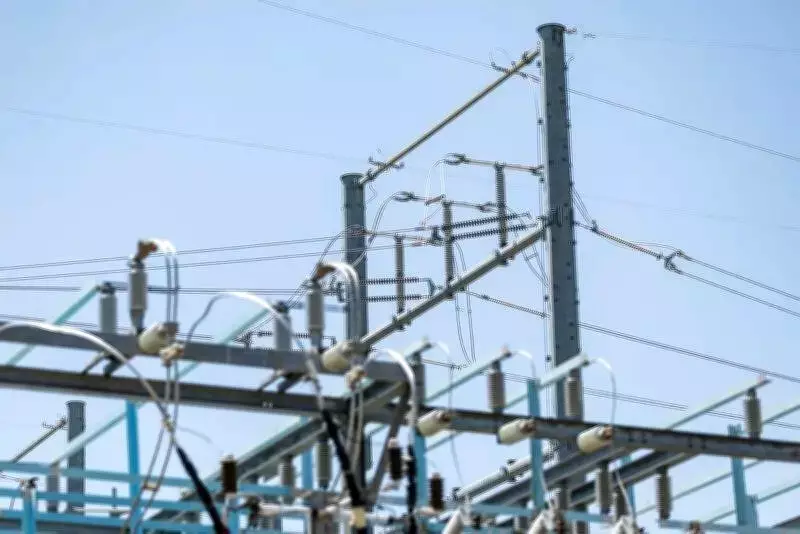
Punjab's electricity demand witnessed a sharp upward trajectory as the paddy transplantation season gained momentum, with the state's peak power demand hovering between 11,000 MW to 12,000 MW by Tuesday, June 2, placing significant pressure on the distribution infrastructure.
Rising Demand and Supply Challenges
The maximum power demand was 10,545 MW on Monday, June 1, compared to 8,904 MW on May 31. Last year, the corresponding day saw a demand of 10,500 MW. On Monday, the state supplied 2,123 million units from all sources, including central sector purchases, bilateral banking, and Punjab IPPs.
To meet this surging load, the Punjab State Power Corporation Limited (PSPCL) ramped up its efforts, drawing over 7,300 MW from central sector projects and other arrangements to ensure the mandated eight-hour power supply to agricultural pumpsets. The maximum demand recorded on Tuesday evening surpassed 11,400 MW, reflecting seasonal stress on the grid as irrigation needs peaked.

Impact of Weather and Generation Capacity
Power experts noted that demand rose on Monday and Tuesday after a dip following recent rainfall across the region. With an internal generation capacity of approximately 6,500 MW, the utility remained heavily reliant on external sources, including central sector and power banking mechanisms, to bridge the gap. By Tuesday evening, the state's gross generation, including its own thermal and hydro generation and power from Punjab IPPs, stood at 4,874 MW.
PSPCL officials claimed that by next week, the power demand is expected to hover between 14,000 and 15,000 MW with the rise in paddy transplantation during the season. State sector power plants were running at reduced load on Tuesday, while one unit of the Ropar power plant was expected to revive operations on June 5 after being shut down in March for overhauling.
Agricultural Drivers and Coal Reserves
The state's 13.94 lakh tubewells drove the increased demand during the paddy season each year, as farmers worked to meet transplantation schedules across over 30 lakh hectares. Coal reserves at thermal plants remained at comfortable levels, ensuring a steady supply to support the peak demand period. According to the latest data, coal stocks at state-owned plants provided a buffer: GHTP and Lehra Mohabbat held enough coal for approximately 26 days of operation; GGSSTP, Ropar had stocks for about 34 days; GATP had 25 days; while Punjab IPPs had 20 days at NPL and 25 days at TSPL.
Future Projections and Staggered Schedule
Power sector experts anticipated that demand could reach as high as 18,000 MW as the season progressed, particularly during the second fortnight of June, when all agricultural feeders are expected to be fully operational. To manage irrigation demand and facilitate timely harvesting, the Punjab government implemented a staggered paddy transplantation schedule for this kharif season, dividing the state into three phases.
The first phase, which commenced on June 1, covered the districts of Gurdaspur, Pathankot, Amritsar, Tarn Taran, Ropar, Mohali, Fatehgarh Sahib, and Hoshiarpur. The second phase was scheduled to begin on June 5, encompassing the Malwa belt districts of Faridkot, Bathinda, Ferozepur, Muktsar, and Fazilka. The final phase started on June 9, covering Ludhiana, Malerkotla, Mansa, Moga, Patiala, Sangrur, Barnala, Kapurthala, Jalandhar, and Shaheed Bhagat Singh Nagar.