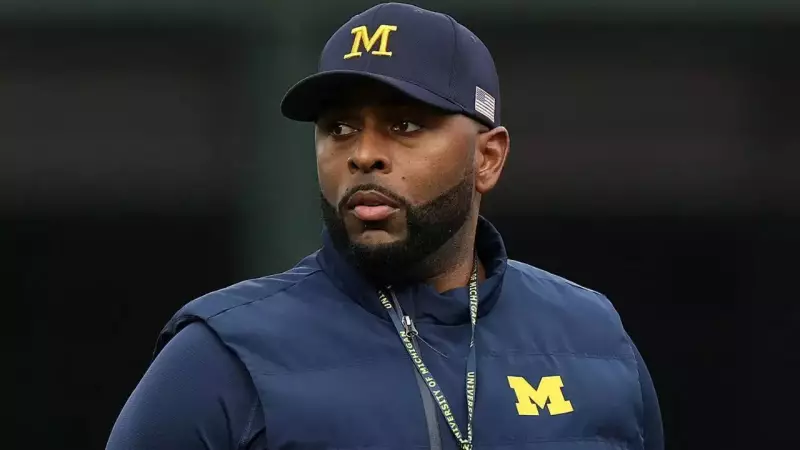
The sudden and public departure of Sherrone Moore from the University of Michigan has ignited a difficult conversation that extends far beyond the football field. His situation is deeply entangled in the larger, often uncomfortable debate about second chances and redemption within the high-stakes world of college athletics. While coaching history is littered with comebacks, the path to forgiveness is never guaranteed, often dictated by timing, context, and public perception.
Why Moore's Path to Redemption Appears Blocked
Unlike many disgraced coaches before him, Sherrone Moore is confronting a unique and significant hurdle: criminal charges linked to alleged conduct after his termination. This critical distinction places his case in a different category altogether, moving the discussion from mere rule-breaking to matters of legal accountability.
Sports historian Louis Moore from Michigan State University underscores this point, stating, "I don't think a college will take the risk." His assessment reflects a growing sense of caution within athletic departments that are already operating under intense public and media scrutiny. The era of automatic comebacks may be closing.

A Stark Contrast with Historical Coaching Comebacks
College football has repeatedly demonstrated a capacity to forgive. The sports landscape is filled with examples of coaches who survived major scandals and later resurfaced, their narratives often reshaped as tales of personal growth and professional resurrection.
Figures like Rick Pitino and Bobby Petrino navigated controversies and returned to prominent roles. Even Jim Harbaugh, Moore's predecessor at Michigan, faced early legal troubles but saw his career flourish as institutions deemed it an isolated incident. These cases, however, largely involved breaches of rules or personal conduct without accompanying criminal proceedings.
The New Calculus: Safety, Trust, and Institutional Responsibility
Experts argue that Moore's scenario introduces a new and more serious calculus for any potential employer. Robert Gemmill of ChangeMakers USA explains the core issue: "Hiring someone with Coach Moore's recent history would immediately raise questions about workplace safety, institutional judgment, and whether the school prioritizes student welfare or wins on the field."
He emphasized that the post-termination conduct is particularly damaging, creating a cloud that is harder to dispel than past on-field or recruiting violations. The stakes now involve fundamental issues of safety and trust, complicating the familiar redemption arc.
Furthermore, an unspoken but powerful factor lurks beneath the surface. Crisis communications executive Sandy Young points to an uncomfortable truth: "Historically, the coach whose behavior gets forgiven, forgotten or rewritten is white." This racial dynamic potentially narrows the already difficult path back for Moore.
The consensus among observers suggests that if a return to coaching is possible for Sherrone Moore, it will not follow a swift or high-profile trajectory. As Louis Moore concluded, "I think they're done in college." In today's climate, where institutional responsibility is paramount, redemption is no longer earned simply by waiting for time to pass. The nature of the transgression itself now holds decisive power.