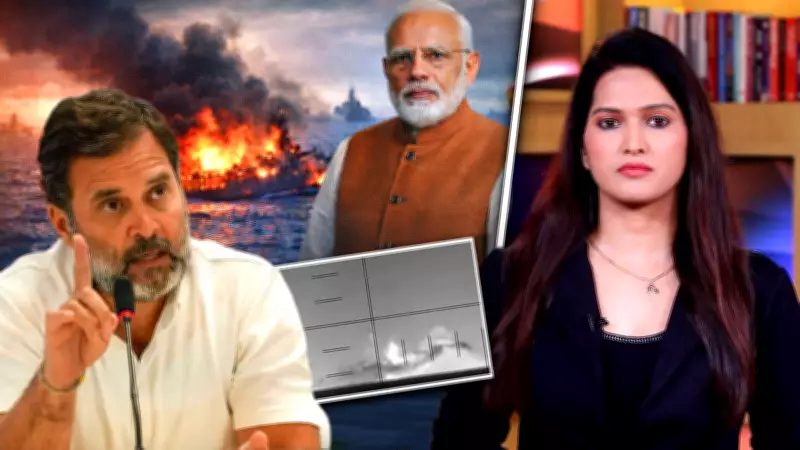
Political Storm Erupts Over Sinking of Iranian Warship in Indian Ocean
A major political controversy has ignited in India following the sinking of the Iranian warship IRIS Dena in the Indian Ocean. Congress leader Rahul Gandhi has launched a sharp attack on Prime Minister Narendra Modi, accusing him of maintaining a conspicuous silence as the escalating conflict between Iran, the United States, and Israel expands dangerously close to India's maritime backyard.
Gandhi's Warning on Security Threats
In a strongly worded statement, Rahul Gandhi warned that this crisis now poses a direct threat to critical global shipping lanes and, more importantly, to India's energy security. He emphasized that the government's apparent inaction could have severe repercussions for the nation's strategic and economic interests.
"The conflict is now in our backyard, and the Prime Minister's silence is deafening," Gandhi asserted, highlighting the geopolitical tensions that are spilling over into regions vital for Indian trade and oil imports.

Government's Firm Rejection of Allegations
However, government sources have vehemently rejected any claims linking India to the incident. Officials provided a detailed timeline to clarify the situation:
- The Iranian warship IRIS Dena had participated in the International Fleet Review 2026, held in India.
- It was officially a guest in Indian waters from February 16 to February 25, 2026.
- After departing Indian territory, the vessel did not request any form of assistance from Indian authorities.
- The ship was later struck and sunk in international waters near Sri Lanka, far from India's jurisdiction.
"There is absolutely no basis to suggest Indian involvement or responsibility in this matter," a senior official stated, dismissing the political accusations as unfounded.
Broader Implications and Regional Tensions
This incident has triggered a heated political debate within India, reflecting the broader anxieties as tensions continue to escalate across the wider Middle East and Indian Ocean region. The sinking of the IRIS Dena underscores the fragile security environment that now impacts key maritime routes essential for global commerce.
Analysts point out that such developments could destabilize energy supplies and increase risks for shipping, directly affecting India's import-dependent economy. The government's stance aims to project stability and distance the country from the conflict, while opposition figures like Gandhi leverage the situation to critique national security preparedness.
As diplomatic and military maneuvers intensify among Iran, the U.S., and Israel, India finds itself navigating a complex geopolitical landscape. The political fallout from this warship incident highlights the challenges of maintaining neutrality and safeguarding interests in a volatile international arena.