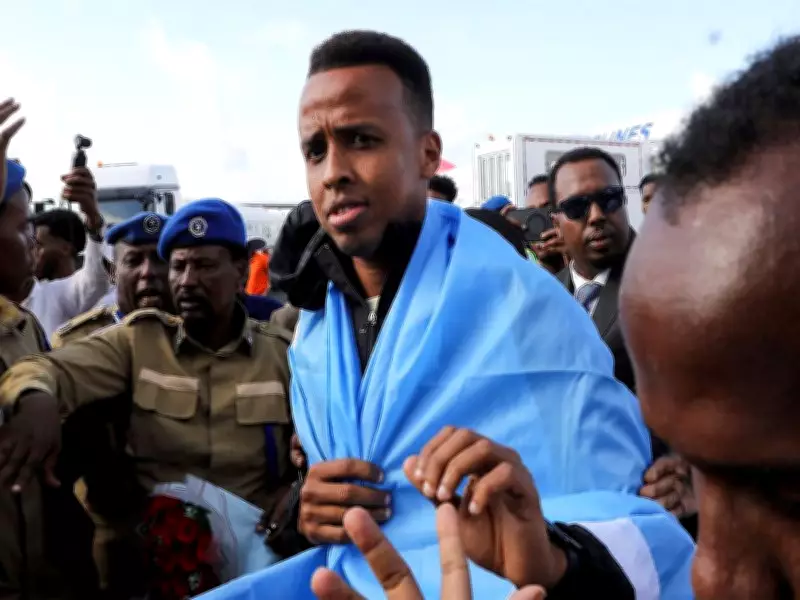
Somali soccer referee Omar Abdulkadir Artan has described the decision to bar him from entering the United States for the FIFA World Cup 2026 as 'unfortunate.' Artan, who was named Africa's referee of the year in 2025, was set to become the first Somali to officiate at soccer's global showpiece. However, he was turned back by US Customs and Border Protection (CBP) over the weekend, according to Reuters.
US Cites National Security Concerns
The Trump administration stated on Tuesday that Artan was denied entry due to his alleged links to suspected members of terrorist organizations. A US Customs and Border Protection official said a Somali national arriving at Miami International Airport from Istanbul on Saturday was denied entry due to 'vetting concerns.' An administration official later clarified that CBP assessed the individual as a potential national security risk.
Artan's Response
Speaking to reporters upon arriving in Mogadishu, Somalia's capital, Artan expressed gratitude for FIFA's support. 'What happened has happened, and it was unfortunate. I am grateful for the support FIFA gave me,' he said. He urged his supporters to stand behind their country. 'Somalia is ours, whether things are good or bad. I want to tell our youth not to lose hope in our country. I am now in my country, and there is no other place I want to be,' he added.

FIFA's Stance
FIFA had previously announced the appointment of 52 referees and 88 assistant referees for the World Cup 2026. A FIFA spokesperson confirmed that Artan will no longer be able to train or officiate at the tournament, which will be hosted across the United States, Mexico, and Canada, beginning on Thursday.
Somalia's Government Reacts
Somalia's government expressed regret over the situation, stating that it had made unsuccessful efforts to engage with both the United States and FIFA to secure Artan's entry. The government emphasized its disappointment over the denial of entry for the accomplished referee.
This incident highlights ongoing tensions regarding visa policies and security vetting procedures, particularly for individuals from countries with perceived security risks.