India's Sports Endorsement Market Soars to Rs 1,350 Crore, Cricket Reigns Supreme
NEW DELHI: The sports celebrity endorsement market in India has surged to an impressive valuation of Rs 1,350 crore, equivalent to approximately $153 million. This marks a substantial growth of 2.2 times over the past four years, according to a recent comprehensive report released by WPP Media.
Cricket's Overwhelming Dominance in Endorsement Arena
Cricket continues to dominate the endorsement landscape, contributing a staggering 87 per cent of the total market value. This translates to Rs 1,178 crore or $133 million. In contrast, all other sports combined account for just Rs 173 crore, which is about $20 million.
The report, titled 'Sporting Nation: Building a Legacy' in its 13th edition, highlights a significant shift in the industry. "With rising sophistication in the endorsement arena, athlete-led endeavours are steadily becoming institutionalised, indicating a more coordinated approach to value extraction," the report stated.

It further elaborated: "This pattern is particularly evident among high-profile players who are leveraging their stature to create well-designed deals."
Elite Athletes Transitioning to Self-Management Models
As elite athletes increasingly recognize their economic worth, there is a notable trend of moving away from traditional talent management agencies. Many are now taking direct charge of their contracts through independent ventures or in-house offices managed by trusted friends and family members.
"Athletes are increasingly viewing themselves as enterprise entities rather than solely as represented talent," emphasized the WPP Media report.
One prominent example is Virat Kohli, who has strategically associated with One8 and made a significant investment to become a co-owner of Agilitas Sports.
Hardik Pandya Leads the Charge with Family Office
After a long-standing 12-year association with Reliance Industries' RISE Worldwide, Hardik Pandya, one of India's most bankable cricketers, officially parted ways in November last year. He announced the establishment of his own family office to consolidate all his business ventures.
"I'm excited to share that I'm officially setting up my family office [Hardik Pandya Family Office] to bring all my business ventures, investments and off-field commitments under one unified version. This is an important step towards building long-term meaningful opportunities on and off the field, and I could not be more thrilled about what is ahead," Hardik declared in a social media post on November 26.
Following his lead, his brother Krunal Pandya, along with fellow cricketers Ishan Kishan and Shreyas Iyer, also departed from the sports and lifestyle business arm of Reliance Industries Limited.
Shreyas Iyer's Entrepreneurial Vision with 96 Degree
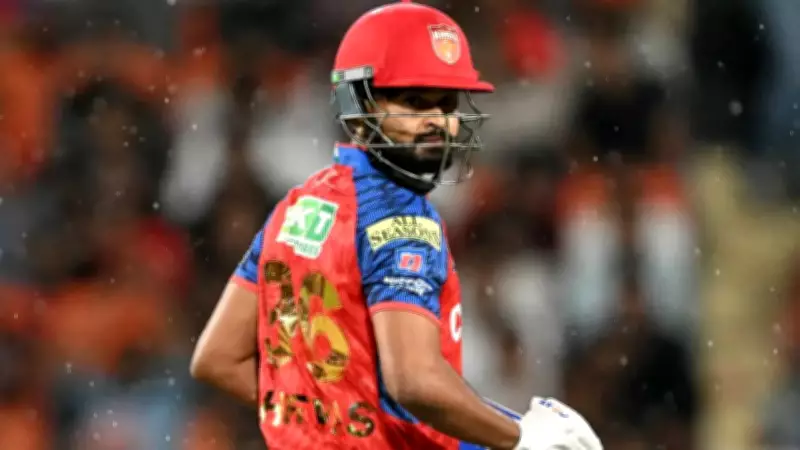
Shreyas Iyer, the ODI vice-captain and skipper of IPL franchise Punjab Kings, has launched his own management firm called 96 Degree. In the WPP Media report, he shared his evolving perspective: "Hunger to score runs and win championships remain the bedrock of my life, my perspective has widened."
He reflected on the unique challenges faced by professional athletes: "A professional athlete’s career is a race against time. At 35, when most individuals pursuing successful careers in their respective fields wonder how to take their professional journeys to the next level, a top sportsperson begins to wonder what he or she will be doing next."
Iyer emphasized the importance of financial planning: "We earn most of our lifetime income in a condensed window. To manage this effectively, one must shift from the mindset of ‘earning income’ to ‘building generational value.’ I’ve looked closely at global icons — athletes who have transitioned from being superstars to operating as sophisticated investment platforms."
Regarding his management philosophy, he stated: "My early career experiences have shaped my financial sobriety. My philosophy towards wealth is deeply intertwined with the lessons I have learned on the 22 yards: discipline, patience and a calculated approach to risk."

He clarified that starting his own firm is not a break from past relationships but a natural progression: "Starting my own management firm, ’96 Degree’ is not a departure from those relationships, but rather the next chapter built upon the strong foundations we laid together. It is a transition from ‘managed talent’ to self-determined entrepreneurship."
Iyer also expressed hope that his move would inspire younger athletes: "I hope this move inspires younger athletes to think financially from the start. We need more financial education for the athletes in India, moving away from 'advice from friends' toward entrepreneurial excellence."
Other Cricketers Embracing Independence
This trend extends beyond these players. Other notable cricketers who have opted for independent or in-house management include Test and ODI skipper Shubman Gill, Rishabh Pant, and Sanju Samson. They follow in the footsteps of legends like Sunil Gavaskar with PMG Sports, Sachin Tendulkar with SRT Sports Management, and MS Dhoni with Midas Deals, who have long managed their own commercial interests.
An industry insider revealed that a major motivation for elite athletes to leave traditional agencies is the desire for better control over their affairs, avoiding competition for deals with peers. The benefits are already apparent, with some athletes securing endorsements at three times their previous values.
Neeraj Chopra: An Exception in Non-Cricket Sports
The movement toward self-management is not confined to cricket. Two-time Olympic medallist and world champion Neeraj Chopra ended his decade-long association with JSW Sports earlier this year and launched his own management agency, Vel Sports.
However, Neeraj remains an anomaly in the non-cricket domain. Rahul Trehan, COO of IOS Sports and Entertainment, explained: "In non-cricket, this trend of leaving the traditional agencies and starting your own individual thing is not there. Neeraj is an exceptional case. Otherwise, 99.9% of the athletes are managed by one of the other larger agencies."
IOS Sports and Entertainment manages a roster of multiple Olympic medallists, including Vijender Singh (boxing), Anju Bobby George (athletics), Mirabai Chanu (weightlifting), Hardik Singh, Manpreet Singh (hockey), and Lovlina Borgohain (boxing).
Market Dynamics: Cricket vs. Non-Cricket Sports
Trehan pointed out that non-cricket athletes have valid reasons for caution, as their market is more volatile and cyclical, often dependent on major events.
"Cricket is a sport where there's a regular dosage for the audience. In non-cricket events, there are fewer, and in most cases, there is no live telecast. So the recall value is higher in cricket as compared to non-cricket," he elaborated.
He contrasted the two: "In cricket, one knock can take your brand value up. But, in non-cricket competitions, there are fewer, and it is mostly a game of a four-year cycle. The Olympics are the biggest event for them."
Trehan cited examples to illustrate this cyclical nature: "If you see Manu Bhaker, she was in the limelight after the Paris Olympics. Now again, the market is slow for her. Every Olympics, we get a new star. In 2016, it was Sakshi Malik; there was also Deepa Karmakar. Neeraj got good deals after the Tokyo Olympics. Manpreet Singh got good deals... it is not like cricket."
This comprehensive analysis underscores a transformative period in India's sports endorsement industry, where financial savvy and entrepreneurial spirit are becoming as crucial as athletic prowess.