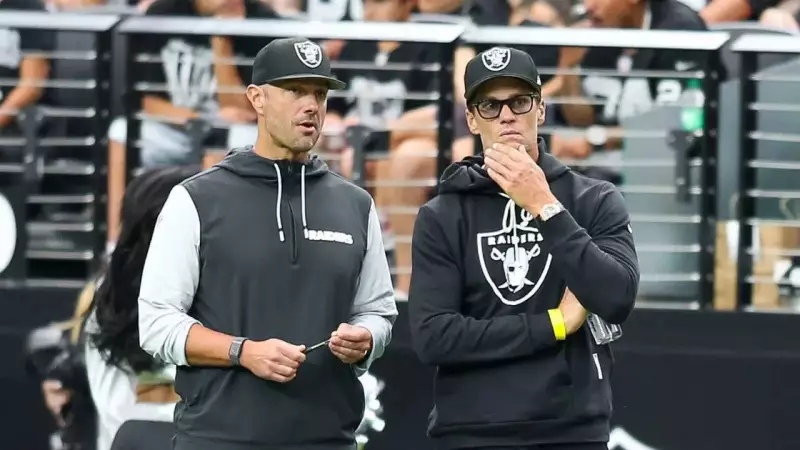
When legendary quarterback Tom Brady joined the Las Vegas Raiders ownership group, the expectation was a tidal wave of positive change. His arrival, shaped by an unparalleled career of six Super Bowl victories, was seen as the catalyst to rebuild a struggling franchise's culture and accountability. However, the 2024 NFL season has delivered a starkly different narrative, one where the grand vision has clashed painfully with a harsh reality.
A Grand Vision Meets a Harsh Reality
The intentions of Raiders owner Mark Davis were clear from the start. In January, Davis explicitly stated that bringing Brady into the fold was about infusing the football side of the organization with expertise and stability—a role previously intended for Jon Gruden. "It took four years to actually get Tom into the building and bring in that expertise and that confidence," Davis revealed. He emphasized Brady's competitive fire and long-term vision for the team, though he clarified Brady's role was not as team president.
Yet, the season that unfolded has been a brutal test of that vision. The Raiders have spiraled to a dismal 2-9 record, consistently lacking rhythm, identity, and on-field execution. The initial optimism surrounding Brady's entry has swiftly shifted into a phase of intense self-examination within the organization's highest levels.

Internal Tension and the Chip Kelly Fallout
The first major public crack appeared with the mid-season firing of offensive coordinator Chip Kelly. Reports indicate that Kelly, believed to have been hired at Brady's strong recommendation or even urging, was let go with a $6 million annual salary still on the books. The justification for his dismissal included embarrassing details, such as claims that Kelly sometimes called plays that were not part of the established game plan or playbook.
This move, however, has indirectly cast doubt on Brady's judgment in personnel matters. As analysts noted, the clumsy effort to justify firing Kelly has splashed mud on Brady's decision-making. Furthermore, it highlights the broader question of whether Brady's legendary success as a player can seamlessly translate into building a functional football organization from the top down.
Internally, the frustration is palpable. Sources, including reports from Dianna Russini, indicate that Brady was deeply unhappy with the offensive direction, starting with Kelly's schemes but extending to wider issues of structure, discipline, and overall execution. The belief that his mere presence would inspire improvement has not materialized, creating tension behind closed doors.
A Defining Challenge for Brady's Second Act
This difficult inaugural year has become a revealing case study in leadership beyond the gridiron. Tom Brady's competitive spirit remains undimmed, but the challenge of reshaping an entire NFL franchise's culture and decision-making processes is proving far more complex than orchestrating a game-winning drive in the final two minutes.
The coming months will be critical. The decisions made in the offseason—regarding coaching staff, player personnel, and overall strategic direction—will determine whether this rocky start was a mere misstep or the painful but necessary foundation for a stronger future. For Tom Brady, this season is no longer about winning games on the field, but about proving he can win the much tougher battle of building a winner from the owner's suite.