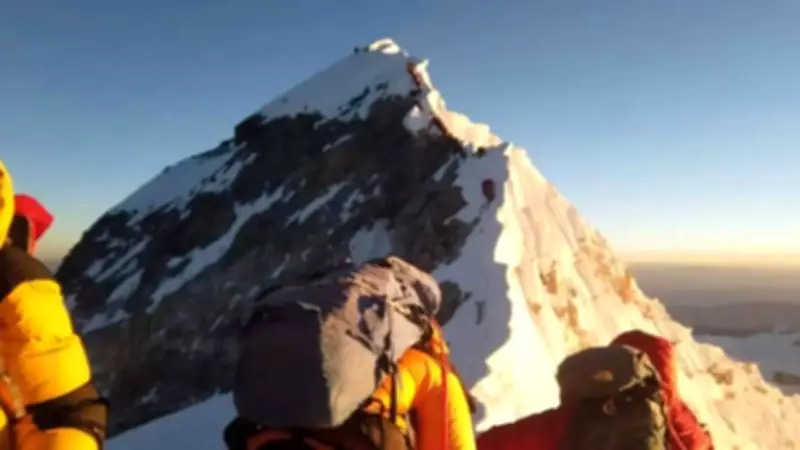
American endurance athlete Tyler Andrews's record-breaking ascent of Mount Everest has ignited a fierce debate within the climbing community. Critics are questioning whether his 9-hour, 55-minute summit push from Base Camp was aided by an earlier 'route recce' that provided him with a strategic advantage.
The Record-Breaking Ascent
Andrews originally aimed to break the no-oxygen Everest speed record. He left Base Camp on May 23 with the goal of summiting without supplemental oxygen. However, shifting weather patterns and unforeseen complications forced him to use bottled oxygen support before he ultimately turned back. Despite this setback, his subsequent successful summit push, completed in under 10 hours, has been hailed as a remarkable achievement.
Criticism and Concerns
Critics argue that the earlier attempt, even though it did not result in a summit, served as a valuable reconnaissance mission. They claim it allowed Andrews to study key sections of the route, plan his speed push more effectively, and acclimatize to the extreme altitude. This, they contend, gave him an unfair advantage over other climbers who attempt the route without such prior knowledge.

Supporters of Andrews counter that his feat remains extraordinary, emphasizing the physical and mental demands of climbing Everest at such a pace. The debate highlights the evolving nature of speed climbing on the world's highest peak, where every second counts and strategic planning can make a significant difference.
As the climbing world continues to discuss the implications of Andrews's achievement, it raises broader questions about the ethics of route reconnaissance in extreme mountaineering and the definition of a 'fair' record.