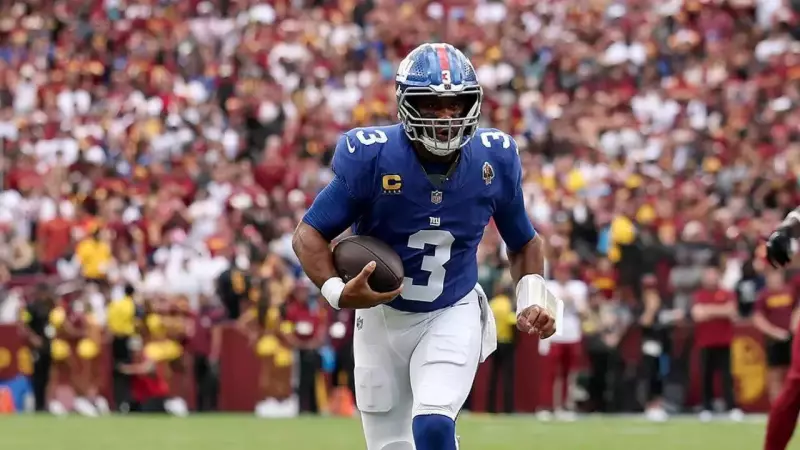
In a stunning revelation that has sent shockwaves through the National Football League, veteran quarterback Russell Wilson has admitted to playing a crucial game with a significant, undisclosed injury. The admission, made casually during locker clean-out, has thrust the critical issue of injury transparency back into the spotlight, raising serious questions about league rules, team accountability, and the integrity of the game.
The Hidden Injury: A Secret Kept Before Week 2
Russell Wilson disclosed that he suffered a Grade 2 hamstring tear on the very last play of practice on the Friday before Week 2. Despite the severity of the injury, which typically involves a partial muscle tear and considerable pain, Wilson took the field against the Dallas Cowboys. He delivered a massive passing performance, all while keeping his condition a complete secret from the public and, by his own account, from his team at the time, the New York Giants.
His explanation was personal and direct. "I'm not blinking," Wilson stated regarding his future playing plans. "I know what I'm capable of. I think I showed that in Dallas... I played that [Week 2] game, you know, I tore my hamstring on Friday in practice — the last play of practice. And I had a grade two [tear]. I couldn't tell anybody. I had to go and play on it just because I knew the circumstance."

Wilson described seeking treatment at the Dallas Mavericks' facility and playing through extreme limitation. "I probably couldn't run from the goal line to the 10-yard line if I wanted to," he admitted, emphasizing his determination to compete.
A League-Wide Reckoning on Transparency
What Wilson might have intended as a testament to his toughness has opened a complex Pandora's box for the NFL. The league's injury report policy is a cornerstone of its operational integrity, designed to ensure competitive balance and provide crucial information for legal sports betting markets. Wilson's silence, however noble his intent, directly contravenes this system.
The aftermath raises difficult, unavoidable questions. Someone provided treatment for the injury. Teammates and coaches likely observed altered movement. Yet, this critical health information never made it to the official injury report. In an era where the NFL is hyper-sensitive to the misuse of insider information, especially concerning injuries, this omission forces the league's hand to investigate.
Wilson later took to social media to absolve the Giants of any blame, placing responsibility solely on himself. "Not the [Giants] fault!" he tweeted. "They didn’t know bc I didn’t want to tell anyone bc of the circumstances. I just had to play through it to try and go ball that day!"
Consequences Beyond the Gridiron
While Wilson's intent may have been to help his team win, the impact of his decision reaches far beyond a single game. The NFL now faces a scenario where a star player knowingly bypassed injury disclosure protocols. This sets a problematic precedent and challenges the enforcement mechanisms of league rules designed to protect fairness.
Potential repercussions could include fines for Wilson or the team, though the Giants' claimed lack of knowledge complicates the matter. More broadly, the incident serves as a stark reminder of the immense pressure on players to perform and the inherent conflict with strict health reporting mandates.
Russell Wilson's Week 2 performance was, by all accounts, heroic. However, the revelation of the hidden hamstring tear has created a far messier aftermath. His honest reflection has inadvertently sparked a necessary but uncomfortable conversation about secrecy, pain, and the price of non-disclosure in the modern, highly scrutinized NFL.