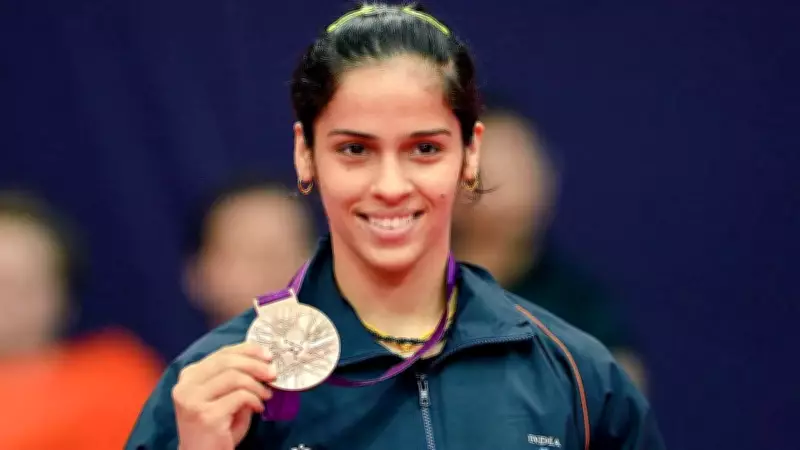
Saina Nehwal's retirement announcement, delivered in a podcast with characteristic understatement, was met with a subdued response from the badminton community. Having been out of competitive circuit for nearly two years, her absence had already been accepted as an inevitable reality of sporting careers where years and injuries accumulate. Yet, this quiet departure belies the seismic impact of her career.
The Unannounced Farewell of a Pioneer
"I actually felt that I entered the sport on my own terms and left on my own terms, so there was no need to announce it," Saina remarked about her retirement decision. While she may approach her absence with casual pragmatism, the annals of Indian sport will not permit such understatement. Saina Nehwal's name will shine not merely as a champion, but as a transformative catalyst who fundamentally altered India's sporting landscape.
Before the Revolution: A Sport in Shadows
Long before badminton became household conversation in India, before packed stadiums and prime-time broadcasts, before young girls across the nation picked up racquets with professional ambition, there was Saina—dreaming, daring, and grinding away on courts, challenging a global order dominated by China and Europe. Her legacy transcends medals and rankings, encompassing the irreversible transformation she brought to Indian badminton.

The Unlikely Rise Against All Odds
Saina's ascent was neither accidental nor convenient. Emerging from a country where cricket overwhelmingly dominates sporting imagination, she chose a path strewn with obstacles: limited infrastructure, scarce financial backing, and minimal international exposure. Yet, she consistently emerged stronger from every setback, turning adversity into opportunity.
In 2008, she announced her arrival on the world stage by becoming the first Indian woman to win the BWF World Junior Championships. That same year, her quarterfinal finish at the Beijing Olympics marked another historic first for Indian badminton, signaling that India was ready to compete with the world's best.
Breaking Barriers and Setting Precedents
The milestones accumulated relentlessly. In 2009, Saina became the first Indian woman to win a BWF Super Series title at the Indonesia Open, a tournament long considered a fortress for badminton's elite nations. Each victory cemented the belief that Indians could excel globally in the sport. Saina didn't merely win matches—she demonstrated how to dismantle psychological barriers.
The Defining Olympic Moment
Her crowning achievement came at the London 2012 Olympics, where she secured the bronze medal, albeit through a walkover, becoming the first Indian badminton player to win an Olympic medal. For India, this was historic; for Saina, it represented acknowledgment of years of sacrifice, pain, and perseverance. This moment fundamentally altered public perception—badminton was no longer a niche sport but had produced a national hero.
Ascending to the Summit
If the Olympic medal established Saina as a champion, her ascent to World No.1 three years later anointed her as a legend. She became the first Indian woman and only the second Indian after Prakash Padukone to achieve the top world ranking. At a time when women's singles badminton was fiercely competitive, Saina dared to challenge Chinese hegemony. Tournaments began to be described as "Saina versus China," a phrase capturing both her dominance and defiance, and capturing a nation's imagination.
That rise to the summit was profoundly emotional. Saina herself admitted she never dreamt of being world No.1—it was her mother's dream for her to win an Olympic medal. When Carolina Marin's defeat at the India Open confirmed her top ranking, Saina struggled to articulate the moment. Wiping sweat from her brow, glancing at the Indian flag stitched into her kit, she could only utter, "Oh my God, world No.1..." It was a moment of disbelief, humility, and triumph—facets that would remain hallmarks of her career.

Beyond Rankings: A Legacy of Longevity
Saina's legacy cannot be measured in rankings alone. Over a career spanning nearly two decades, she won over 24 international titles, including 11 Super Series titles, and achieved remarkable feats such as becoming the first Indian woman to win two Commonwealth Games singles gold medals (2010 and 2018). These accomplishments reflect not just exceptional talent, but extraordinary longevity in one of the world's most physically demanding sports.
The Transformational Impact Beyond the Court
What truly distinguishes Saina from her contemporaries is her impact beyond competitive arenas. Her success fundamentally altered badminton's position in India. Television viewership surged dramatically. Corporate sponsorships followed in unprecedented ways—Saina became the first Indian woman athlete to sign a multi-million dollar sponsorship deal. Badminton academies mushroomed across the country. Parents who once hesitated to support non-cricketing careers began viewing badminton as a viable profession.
Coach Vimal Kumar, who guided her to that No.1 spot, observed, "You know, she really brought Indian women's badminton to the forefront because no woman prior to that has excelled so much at the world stage."
Inspiring a Generation of Champions
Most significantly, Saina inspired an entire generation. PV Sindhu, Lakshya Sen, Kidambi Srikanth, and countless others grew up watching her battle against the world's best. Sindhu herself has frequently acknowledged Saina's role in paving the way for Indian women in badminton. Where Saina walked alone initially, others followed with newfound belief.
The Journey of Resilience
Her journey was never smooth. Injuries, coaching changes, form slumps, and intense public scrutiny tested her resolve repeatedly. Yet Saina's work ethic—acknowledged by coaches like P Gopichand and Vimal Kumar—never wavered. She shifted cities, reinvented her game, and adapted her style to remain competitive. Even as younger players emerged, Saina continued fighting, proving that resilience, not comfort, defines true champions.
National Recognition and Lasting Legacy
The nation honored her with its highest sporting and civilian awards—the Arjuna Award, Khel Ratna, Padma Shri, and Padma Bhushan. Yet her greatest accolade remains the revolution she ignited. While Prakash Padukone introduced India to world badminton, Saina Nehwal sparked the renaissance. She made Indian badminton fearless, visible, and aspirational. She demonstrated that an Indian woman could dominate a global sport through grit, discipline, and unwavering belief.
Saina coded a new architecture for success in an individual sport—and left the template for others to follow. She didn't merely play badminton; she transformed Indian badminton forever, creating pathways where none existed and inspiring millions to dream beyond conventional boundaries.