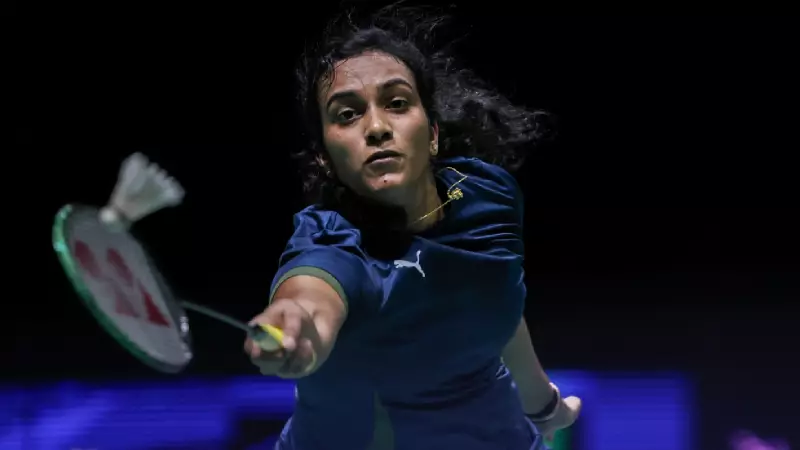
In a high-stakes rematch of their Paris World Championship clash, Indian badminton ace PV Sindhu is set to face China's top-ranked women's singles player, Wang Zhiyi, in the semifinals of the Malaysia Open 2026. The Super 1000 tournament, one of badminton's four premier events akin to tennis Grand Slams, has set the stage for a gripping encounter where Sindhu aims to once again prove her mastery over the Chinese contender.
The Weight of the Crown: Wang Zhiyi's Burden
Wang Zhiyi carries the immense pressure of being China's No. 1 women's singles player, a title that comes with intense scrutiny. Her 2025 season was marked by winning three smaller titles but stumbling in eight finals, seven of those losses coming against the dominant World No. 1, An Se-young. In the demanding world of Chinese badminton, consistently playing second fiddle to a Korean rival is viewed as a national failure, leading to severe criticism in the media.
The situation worsened for Wang when she was defeated by PV Sindhu in the round of 16 at the 2025 World Championships in Paris. That loss triggered a fresh wave of scrutiny. Now, at the first major tournament of 2026, she has reached the semifinals but faces the daunting prospect of meeting Sindhu again on Saturday, with a potential final against An Se-young looming on Sunday.

Sindhu's Fearless Resurgence
On the other side of the net stands a rejuvenated PV Sindhu. Currently ranked World No. 18 and returning from injury, the 30-year-old Indian has displayed a refreshingly light and pressure-free attitude in Kuala Lumpur. Her path to the semifinals included victories over Japan's Tomoka Miyazaki and a win against former world champion Akane Yamaguchi, who retired injured after losing the first set 21-11.
Sindhu's career has been defined by major medals at the Olympics and World Championships, making her perhaps the lightest bearer of a World No. 2 ranking, which she first achieved back in 2017. Unlike Wang, who is constantly measured against an unbeatable rival, Sindhu has never been defined by a single nemesis. This mental freedom is a key asset.
Her tactical game, sharpened under coach Irwansyah, was key to her surprise win in Paris. She has shown a springy, short back-swinging smashing action in Malaysia, relying on whip-like wrist and elbow movement rather than pure shoulder power. This has added speed and decisiveness to her play, though her game remains largely a powerful, direct one with limited deception.
The Semifinal Battle: Tactics and Temperament
The clash presents a fascinating contrast in mental states. For Wang Zhiyi, the match is laden with the pressure of national expectation and the haunting memory of her recent defeat to Sindhu. The Chinese media and fans constantly question when she will truly become a No. 1, a burden Sindhu does not carry.
Sindhu's stellar record against Chinese players, dating back to 2013, gives her a significant psychological edge. Her current 'chill' approach, born from a career stage where fear of losing or criticism has diminished, only makes her more dangerous. However, Wang is a formidable opponent with a well-rounded, speedy game capable of exploiting Sindhu's defensive weaknesses, particularly on the wide forehand and backhand flanks.
While Sindhu's height advantage was a key factor against shorter Japanese opponents, it may be less pronounced against the 5'7" Wang. The Indian will need to rely on her expansive array of deep hits, court-opening tactics, and the patience to defend and bide her time before unleashing her attack.
The question remains: Can Wang Zhiyi prevent lightning from striking twice within six months? Or will PV Sindhu, with her renewed vigor and tactical clarity, once again emerge as the Chinese star's nightmare in a noisy coliseum, advancing to the final of the Malaysia Open 2026?