How Toxic Air Is Crippling India's Athletes: Hockey Captain's Harrowing Health Battle
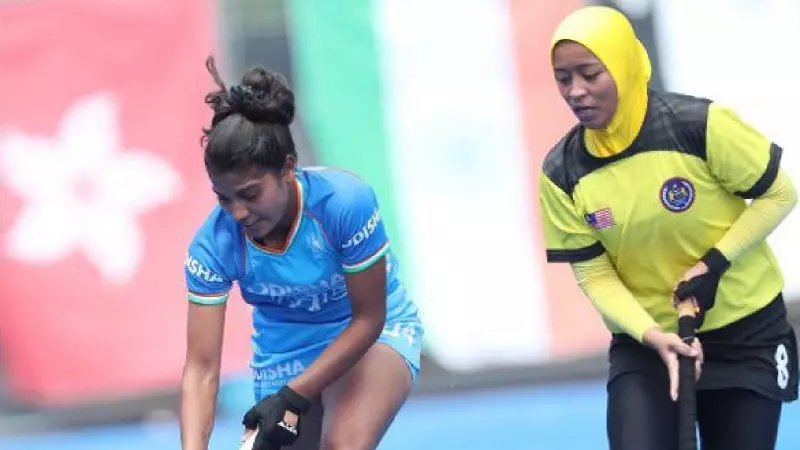
Preeti Panchal, who led India's hockey team at the 2023 Junior World Cup, has shared her distressing experience with the severe health impacts of air pollution on athletes. She describes developing breathing problems, persistent coughing, throat infections, and allergies directly linked to toxic air conditions in Sonepat, where she trains at the Sports Authority of India centre.
The Sudden Onset of Respiratory Distress
During a routine training session, Panchal was chasing the ball at her usual pace when her breathing suddenly became unusually heavy. "Within moments, it turned into a harsh bout of coughing, and the breathlessness kept getting worse," she recalls. "I had never experienced anything like it before, and for a while, I could not understand what was happening to my body."
A medical consultation revealed she had developed a respiratory condition triggered by air pollution. Sonepat, much like nearby Delhi, suffers from extremely poor air quality during winter months. The situation is exacerbated by a nearby rice factory whose dust constantly hangs in the air around their training facility.

Six Months of Health Struggles
What followed was a difficult six-month period where Panchal struggled with:
- Breathing issues that made even routine activities challenging
- Persistent coughing that disrupted training and daily life
- Recurring throat infections requiring medical attention
- Allergies that appeared unexpectedly and worsened during physical activity
"I would start to feel better for a few days, only to fall sick again, trapped in a frustrating cycle," she explains. While medication eventually helped, she admits that even today there are days when breathing doesn't come easily, and she experiences severe itching when sweating during play.
Direct Impact on Athletic Training and Performance
Pollution has a direct and measurable impact on athletic training according to Panchal. Running becomes harder, breathing becomes laboured, and many athletes develop allergies that compromise their performance. When athletes cannot breathe properly, they are forced to cut short playing time regardless of their motivation levels.
Training adaptations have become necessary. In winter, warm-ups take longer and practice sessions stretch to two or two-and-a-half hours. During summer, sessions are shorter but include mandatory breaks for recovery. "While I am not scared that my long-term growth will be affected, I believe we learn to manage and adapt," Panchal notes. "Better conditions would certainly help us perform at a higher level."
Additional Challenges Beyond Air Quality
Another significant concern is the condition of training turf. Due to surrounding dust pollution, the playing surface deteriorates quickly and becomes slippery, leading to frequent injuries. Regular cleaning could significantly help prevent this and ensure player safety.
Panchal contrasts her experience in Sonepat with training in Bangalore, where the weather is more balanced. "The difference is striking. Not too hot, not too cold, which allows us to train longer and better," she observes. "In such conditions, if a player comfortably plays for 10 minutes, she can push herself to 12. In Sonepat, we often have to limit ourselves."
A Growing National Concern for Indian Sports
The window for athletes to train is shrinking in and around the National Capital Region because of toxic air in winter and searing summers. As India makes a pitch for the 2036 Olympics, coaches and athletes from various sports—including boxing, wrestling, athletics, para-athletics, cycling, shooting, and hockey—have reported similar health and training impacts.
International badminton stars competing in Delhi recently for the India Open have even complained to the International Olympic Committee about air pollution, citing serious health concerns. This highlights how air quality has become a critical issue affecting India's sporting ambitions and athlete welfare.

"We manage, but with cleaner air and better facilities, we could do so much more," Panchal concludes, voicing a sentiment shared by many Indian athletes facing environmental challenges that threaten their health and competitive potential.