World Cup 2026 Entangled in Geopolitical Storm Over Greenland Dispute
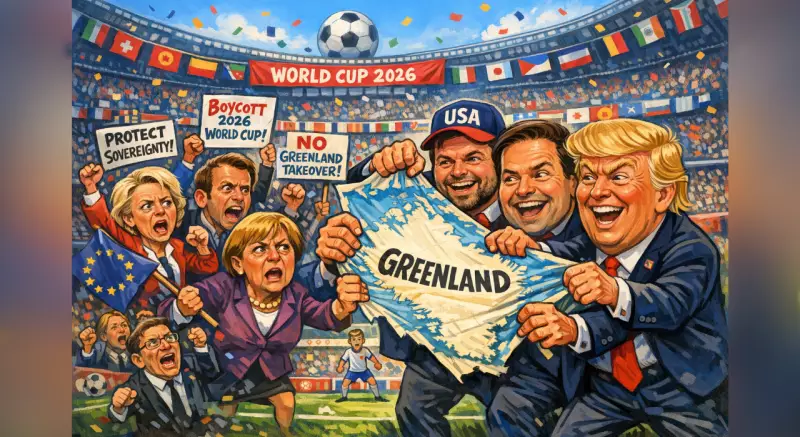
With just five months remaining before the first ball is kicked, the 2026 FIFA World Cup finds itself unexpectedly dragged into a geopolitical controversy that has absolutely nothing to do with football. The tournament, scheduled to be hosted across the United States, Canada, and Mexico, is now facing serious questions about European participation due to escalating tensions between the United States and Europe.
The Greenland Flashpoint: How Territorial Ambitions Threaten Football's Biggest Stage
The controversy centers on President Donald Trump's increasingly blunt language regarding Greenland, a self-governing territory within the Kingdom of Denmark. As both Denmark and the United States are NATO members bound by mutual defense commitments under Article 5, Trump's public statements about potentially annexing the world's largest island have created alarm across European capitals.
Over recent weeks, Trump has escalated rhetoric on his Truth Social platform, declaring he no longer needs to "think purely of peace" when it comes to controlling Greenland. He has threatened punitive tariffs against European countries resisting U.S. demands regarding the territory, though he temporarily suspended these threats this week after announcing a "framework of a future deal" with NATO.

The uncertainty surrounding these geopolitical maneuvers has directly spilled into World Cup preparations. What began as fringe speculation has now evolved into serious parliamentary discussions, football association debates, and public discourse across Europe about whether participating in a U.S.-hosted tournament would constitute tacit approval of Trump's expansionist rhetoric.
European Responses: From Cautious Diplomacy to Growing Boycott Calls
European leaders and football officials have adopted varying positions on the potential boycott:
- Germany: Jürgen Hardt, foreign policy spokesperson for Chancellor Friedrich Merz's Christian Democratic Union, suggested a boycott could be considered "as a last resort" to pressure Trump on Greenland. Meanwhile, Oke Göttlich, president of St. Pauli and member of both DFB and DFL executive boards, questioned whether Europeans should participate in a competition hosted by a country "indirectly, and possibly soon directly, attacking Europe."
- United Kingdom: MPs Simon Hoare and Kate Osborne told Metro that a boycott shouldn't be ruled out, with Hoare stating: "We should send as many messages as possible to the Trump administration... If that means not going to the World Cup then we shouldn't go." Osborne went further, suggesting the U.S. shouldn't even participate in the tournament, let alone host it.
- France: Sports Minister Marina Ferrari adopted a more cautious stance, telling reporters: "At the moment we are speaking, there is no desire from the ministry to boycott this major, much-anticipated competition. That said, I am not prejudging what might happen." She emphasized keeping sports and politics separate while acknowledging the tournament's importance.
- Netherlands: The Dutch FA (KNVB) has issued multiple statements attempting to lower tensions. Secretary General Gijs de Jong stressed that decisions would follow guidance from FIFA, UEFA, and the Dutch government, while President Frank Paauw stated the Netherlands would "so far" not boycott. Despite official caution, a petition urging KNVB withdrawal has gathered nearly 120,000 signatures, arguing participation would support Trump's controversial policies.
Historical Precedents and Potential Consequences
While boycotts remain rare in World Cup history, they are not unprecedented:

- Uruguay refused to defend its title in 1934 and boycotted again in 1938 alongside Argentina
- India withdrew in 1950
- Turkey, Indonesia, Egypt, and Sudan pulled out of 1958 qualifying
- All African nations boycotted the 1966 tournament over place allocation
- The Soviet Union refused to play Chile in a 1974 qualifying playoff
The potential impact of a coordinated European withdrawal would be catastrophic for the 2026 tournament. European teams occupy 16 of the 48 spots in the expanded World Cup format. Their absence would create logistical chaos for FIFA organizers and represent a significant political embarrassment for President Trump, who has positioned himself centrally in the tournament's buildup.
As geopolitical pressure continues to mount, the fundamental question facing European football federations is whether the 2026 World Cup will become an arena for political signaling rather than purely sporting competition. With alliance politics, public opinion, and football's traditional separation from geopolitics now colliding, the coming months will determine whether the beautiful game can remain insulated from international tensions or whether it will become another casualty in the widening transatlantic rift.