Abhishek Sharma and Chris Gayle: Two Eras, Two Blueprints in T20 Batting
A phase-by-phase breakdown of Chris Gayle's iconic innings, such as his 175* in 2013 and 102* in 2011, alongside Abhishek Sharma's remarkable knocks of 141 in 2025 and 75 in 2022, vividly illustrates the evolution of T20 batting. This comparison underscores how the approach to scoring in the shortest format has shifted from raw power to strategic efficiency.
Anatomy of a Mega Knock: Gayle's 175* vs. Sharma's 141
Chris Gayle's world-record 175* for Royal Challengers Bengaluru against Pune Warriors India in IPL 2013 remains the gold standard of raw power. His innings followed a "cyclical" pattern, starting with a sighting phase of 21 runs off the first 10 balls. He then unleashed a historic burst, scoring 79 runs between balls 11 and 30, before intentionally stabilizing with just 27 runs in the next 20 deliveries. A final surge of 48 runs in 15 balls carried him to his monumental total.
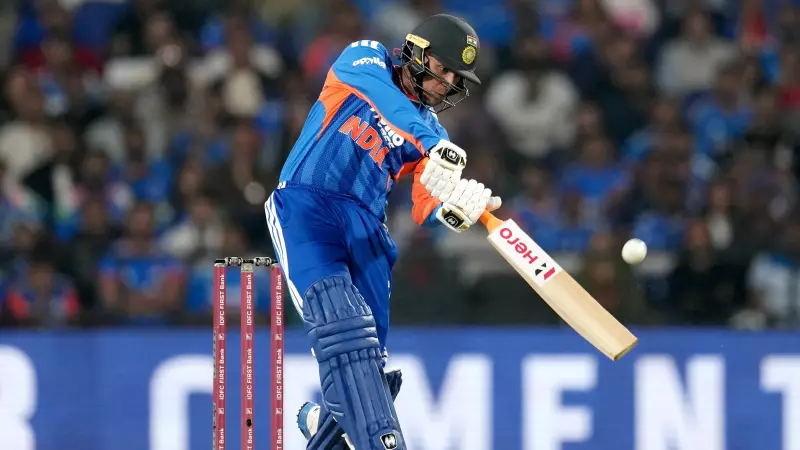
In stark contrast, Abhishek Sharma's 141 off 55 balls for Sunrisers Hyderabad against Punjab Kings in IPL 2025 exhibited a "linear" trajectory. After a similar start, Sharma maintained relentless intensity, plundering 64 runs during the middle phase (balls 31-50), where Gayle had slowed down. While Gayle relied on explosive bursts, Sharma's innings was characterized by sustained high-speed scoring, removing any mid-innings lull entirely.

Clinical Pursuits: Tactical Chasing in T20 Cricket
Examining Gayle's 102 off 55 balls for RCB against KKR in IPL 2011 and Sharma's 75 off 50 balls for SRH against CSK in IPL 2022 reveals further nuances in their approaches. Gayle began with a cautious 10 runs off 10 balls, then accelerated by adding 41 runs between balls 11 and 30 against the spin attack. He maintained a clinical tempo, calculating the chase to secure victory on the last ball.
Abhishek Sharma, on the other hand, started steadily with 25 runs from 20 balls to stabilize the innings. His tactical surge came between balls 21 and 30, where he took 19 runs off the spinners, effectively lowering the required rate. This strategic move allowed him to anchor the chase with high-intensity strike rotation, setting up the middle order for a comfortable win.
The Evolution of T20 Batting: From Power to Precision
The comparison between these two left-handed dynamos highlights a significant shift in T20 batting philosophy. Chris Gayle's era was defined by timed intimidation, relying on massive power bursts and strategic downtime to manage energy and momentum. His ability to explode at key moments made him a formidable force, earning him the nickname "Universe Boss."
In contrast, Abhishek Sharma represents the modern approach of sustained efficiency. His innings are marked by consistent aggression, minimizing slowdowns and maintaining pressure throughout. This evolution reflects broader trends in T20 cricket, where batters are increasingly focused on optimizing strike rates and adapting dynamically to match situations.
Both Gayle and Sharma share a disdain for bowling attacks, but their methods underscore how the game has evolved. Gayle's blueprint emphasized explosive peaks, while Sharma's approach prioritizes linear acceleration and tactical precision. As T20 cricket continues to evolve, these contrasting styles offer valuable insights into the art of batting in the fastest format.