Associate Nations Make Strong Statement in 2026 T20 World Cup Opening
The 2026 T20 World Cup has commenced with a thrilling narrative of associate cricket teams punching significantly above their weight, delivering genuine scares to established cricket powerhouses. The opening matches have showcased remarkable competitive spirit from nations traditionally considered underdogs in the global cricketing landscape.
Narrow Misses and Close Encounters
On Sunday at Mumbai's iconic Wankhede Stadium, Nepal came agonizingly close to achieving what would have been the most monumental victory in their sporting history. Their performance demonstrated exceptional skill and determination against formidable opposition.
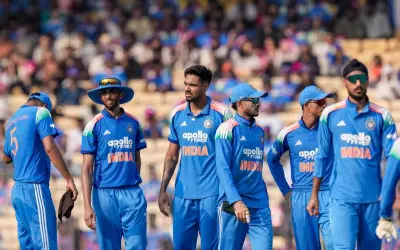
A day earlier at the same venue, the United States had India's captain Suryakumar Yadav under serious pressure. When Yadav was on just 15 runs, USA's Shubham Ranjane dropped a crucial return catch opportunity that could have dramatically altered the match's outcome and potentially rewritten the narrative of that encounter.

Simultaneously in Colombo, the Netherlands maintained consistent pressure on Pakistan throughout their match. A straightforward catching opportunity missed by Max O'Dowd at long-on when Faheem Ashraf was batting proved to be a pivotal moment that might have changed the game's result.
The Competitive Gap: Perception Versus Reality
While the on-field performances suggest a narrowing gap between associate nations and full member teams, cricket authorities and coaches are examining whether this represents genuine progress or temporary competitive flashes.
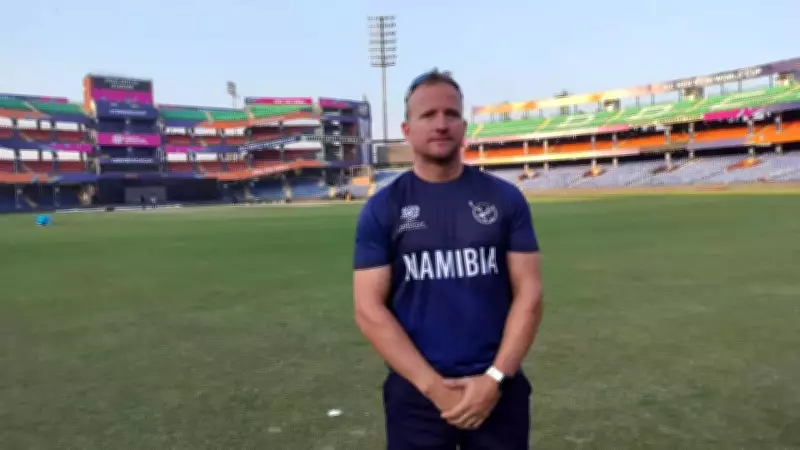
Namibia's head coach Craig Williams provided insightful perspective during an interview at Delhi's Arun Jaitley Stadium, where his team will begin their campaign against the Netherlands on Tuesday. "The World Cup now occurs every two years, meaning we're playing considerably more competitive cricket, which naturally helps close the gap," Williams explained. "However, there's still substantial room for improvement."
Williams highlighted the disparity in match preparation: "Consider that we last played South Africa four months ago, and since our warm-up against Afghanistan, we haven't had competitive matches. Meanwhile, teams like India have probably played thirty matches in that same period."
Leadership Perspectives on Development
Namibia captain Gerhard Erasmus echoed his coach's sentiments while advocating for structural changes. "We urge the International Cricket Council to provide us with more fixtures against full member teams," Erasmus stated. "That exposure would significantly level the playing field. If more countries worldwide achieve similar skill levels through consistent exposure, we'll develop a stronger global game that benefits everyone involved."
The points raised by both Williams and Erasmus reflect genuine concerns within associate cricket. The United States played no T20 Internationals against full member nations between the 2024 T20 World Cup and their opening 2026 match against India, despite their historic victory over Pakistan in the previous tournament.
Nepal managed only one assignment against full member opposition during the same period—a three-match T20I series against the West Indies that they surprisingly won 2-1. Namibia faced South Africa in a one-off T20I in October 2025, securing a memorable victory, and also competed against Zimbabwe in the ICC Men's T20 World Cup Africa Region Final.
Namibia's Progressive Cricket Infrastructure
Namibia has qualified for their fourth consecutive T20 World Cup, demonstrating consistent improvement in their cricket program. Unlike many associate nations where players must supplement their income with other employment, Namibia has implemented a professional structure with central contracts.
"We've provided full-time contracts to approximately twenty to twenty-five players and are continuously working to expand that number," Williams revealed. "We're consistently trying to increase our player pool and develop our talent pipeline."

The nation reached a significant milestone last year with the opening of their first international cricket ground. Williams expressed optimism about this development: "With our new home venue, we can hopefully generate more fixtures and pressure games. We aim to invite more countries to visit Namibia and compete against us, which would undoubtedly make us a better team."
Structural Improvements and Future Prospects
The expansion of the T20 World Cup to twenty teams and its biennial schedule has clearly benefited associate nations by providing more frequent opportunities to compete against established cricketing nations. However, as Namibia's leadership emphasizes, regular cricket outside major tournaments remains crucial for sustained progress.
"The competitive gap has undoubtedly closed," Williams observed. "Associate teams and emerging cricket nations have become substantially more professional. You'll notice significant sponsors on team shirts, and there's increased financial investment available. In Namibia specifically, we've allocated considerable resources to our high-performance programs and junior cricket development. Each year, that gap continues to narrow. Our primary mission remains competing consistently with Test-playing nations."
Namibia enters their T20 World Cup campaign with confidence after an impressive qualifying performance. The Gerhard Erasmus-led side secured their tournament place through a dominant run at the ICC Men's T20 World Cup 2026 Africa Qualifier in Harare, finishing as unbeaten Group A leaders before delivering a commanding semi-final victory over Tanzania.
The opening matches of the 2026 T20 World Cup have already demonstrated that associate nations are no longer mere participants but genuine competitors capable of challenging cricket's established hierarchy. Their performances suggest an evolving global cricket landscape where traditional boundaries are becoming increasingly blurred through determination, improved infrastructure, and strategic development.