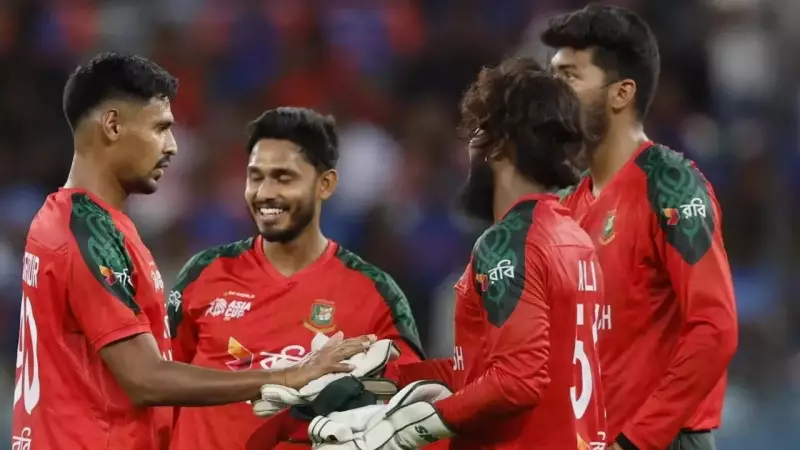
In a significant development that has escalated tensions in international cricket, Bangladesh has officially hardened its position regarding participation in the upcoming T20 World Cup. The Bangladesh government, through its sports advisor Asif Nazrul, confirmed on Thursday that the nation will not travel to India for the tournament, maintaining that neither the International Cricket Council (ICC) nor the Board of Control for Cricket in India (BCCI) has made any substantial effort to address their security apprehensions.
Security Concerns Remain Unaddressed
Speaking at a press conference in Dhaka, Nazrul elaborated that the ICC and BCCI failed to convincingly demonstrate that adequate security measures would be in place for Bangladesh players, journalists, and supporters during the tournament, which is scheduled to be co-hosted by India and Sri Lanka. He emphasized that Bangladesh's concerns are not based on abstract analysis but stem from a specific, real incident involving one of their top players in a domestic league.
ICC's Final Ultimatum and Bangladesh's Response
Earlier, the ICC had issued a final ultimatum to Bangladesh on Wednesday, demanding confirmation of travel plans by Thursday or risk being replaced in the tournament. The global cricket body stated that its security assessments found no credible threat to the safety of Bangladesh players, officials, or fans. Scotland is reportedly next in line for a tournament spot based on rankings, with the T20 World Cup set to begin on February 7.

However, Nazrul firmly rejected the ICC's position, stating it was unacceptable to Bangladesh. "While our cricketers have worked exceptionally hard to qualify for the World Cup, the security risk regarding playing in India remains unchanged," he declared. "We are not convinced that they can ensure the safety of our entire team, journalists, and spectators."
Government Stands Firm After Player Meeting
Following a meeting with national team players on Thursday, Nazrul explained that the purpose was to clarify the government's decision. "The meeting was simply to explain to the players why the government took this decision and provide them with the full context. I believe they understood our position," he said, adding that the final decision on World Cup participation rests entirely with the government.
Historical Incident Fuels Ongoing Apprehensions
Nazrul pointed to a past incident where a Bangladeshi player was allegedly forced to bow to extremists and was subsequently asked to leave India by the Indian cricket board. "The security concerns did not arise from speculation. They arose from a real incident involving one of our country's top players," he asserted. "Now this ICC tournament is being held in India. No matter how much the ICC says there is no security risk, the country where my player was not safe is hosting this tournament."
He questioned what has changed since that incident to assure Bangladesh that extremist flare-ups would not recur. "Security will be the responsibility of that country's police and security agencies. They could not protect Mustafizur previously, so what has changed? How can we be convinced they can protect our players, journalists, and supporters now?"
Criticism of ICC and Indian Authorities
Nazrul expressed disappointment over the lack of engagement from both the ICC and Indian authorities. "The ICC has made no genuine effort to convince us. They ignored the real incident and only discussed their standard security procedures without addressing our actual grievance," he stated. "Even the Indian government made no effort to contact us, offer reassurances, or acknowledge the isolated nature of the previous incident."
Echoing these sentiments, BCB president Aminul Islam criticized the ICC's approach, stating, "A world organization cannot impose a 24-hour ultimatum. We will continue to fight for what we believe is right."
With the T20 World Cup approaching, Bangladesh's firm stance highlights deep-seated security concerns and a breakdown in communication between cricket boards, potentially impacting the tournament's composition and raising broader questions about player safety in international cricket events.