Bangladesh T20 World Cup Participation Hangs in Balance Amid ICC Standoff
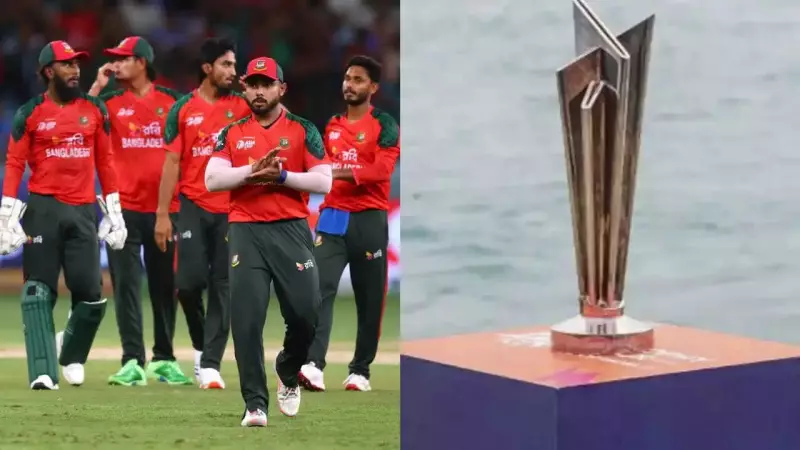
The participation of Bangladesh in the upcoming ICC Men's T20 World Cup 2026, scheduled to commence on February 7 in India, is shrouded in uncertainty as a growing standoff between the Bangladesh Cricket Board (BCB) and the International Cricket Council (ICC) intensifies. This dispute has escalated following the exclusion of Bangladesh fast bowler Mustafizur Rahman from the IPL 2026 season, a move that has reportedly hardened the BCB's stance against playing in India under the current conditions.
Bangladesh's Firm Position and Historical Precedents
Speaking at the Secretariat in Dhaka, Youth and Sports Adviser Asif Nazrul made Bangladesh's position unequivocally clear, stating that the country will not accept conditions imposed under pressure from the Indian cricket board. He pointed to historical precedents in international cricket, including instances where India declined to tour Pakistan, prompting the ICC to alter venues. Nazrul emphasized that Bangladesh has made a "reasonable" request for a venue change rather than withdrawing outright from the tournament.
Despite reports suggesting that the ICC had set a January 21 deadline for Bangladesh's final decision, BCB officials have publicly denied the existence of any fixed ultimatum. Media Committee Chairman Amjad Hossain confirmed that discussions with ICC representatives are ongoing and that Bangladesh has formally communicated its reluctance to play in India, requesting alternate arrangements. According to Hossain, the ICC has yet to provide a definitive response or timeline, leaving the situation in a state of limbo.

ICC's Stance and Security Assessments
Meanwhile, the ICC remains firm on retaining the original schedule, which places Bangladesh in Group C alongside New Zealand, West Indies, Italy, and Nepal, with matches slated for Kolkata and Mumbai. The governing body has rejected proposals to swap groups or shift matches to Sri Lanka and has emphasized that independent security assessments rate the risk level in India as low to moderate. The ICC insists that these findings are consistent with other major global sporting events and that no specific threats have been identified against the Bangladesh team or venues.
With Bangladesh's opening match against West Indies at Eden Gardens only weeks away, the uncertainty persists, affecting preparations for all teams involved in Group C. The lack of clarity has complicated planning, strategy, and travel logistics, casting a shadow over the tournament's build-up.
International Support and Legal Developments
In a significant development, the Pakistan Cricket Board (PCB) has backed Bangladesh's refusal to play its T20 World Cup matches in India, citing "security concerns" and formally offering to host Bangladesh's games in a communication sent to the ICC. This support aligns Pakistan with the BCB's request to shift matches to co-host Sri Lanka, although the ICC has so far refused to change the schedule.
On the legal front, the Delhi High Court recently dismissed a Public Interest Litigation seeking a ban on Bangladesh from all international cricket competitions over alleged violence against the Hindu community. The court ruled that the plea was not legally maintainable, as it involved matters of foreign policy and international relations, which fall exclusively within the executive's domain. This decision underscores the complex interplay between sports and geopolitics in this dispute.
Player Perspectives and Replacement Scenarios
Bangladesh captain Litton Das has admitted to the uncertainty surrounding the team's participation, stating, "From where I stand, I'm uncertain, everyone is uncertain." Batter Najmul Hossain Shanto echoed similar concerns, emphasizing that players are eager to take part in the World Cup but remain largely in the dark about internal decisions.

Should Bangladesh ultimately withdraw, ICC sources indicate that a replacement team, potentially Scotland, could be drafted in. However, reports suggest that no discussions have taken place between the ICC and Scotland regarding this possibility, and Scottish officials have chosen not to approach the ICC out of respect for the Bangladesh Cricket Board. This replacement scenario highlights the high stakes of the unresolved impasse and the potential competitive and reputational consequences for the tournament.
Ongoing Discussions and Future Outlook
As the ICC Board is set to meet to take a final decision on Bangladesh's participation, the standoff continues to involve multiple rounds of discussions, including a meeting in Dhaka last weekend. Neither side has moved from its position, with the ICC maintaining that the tournament should proceed as scheduled and the BCB reiterating that sending the team to India is not an option.
The situation escalated after Kolkata Knight Riders released pacer Mustafizur Rahman following a directive from the BCCI, which referred to "recent developments all around." Soon after, the Bangladesh government banned the broadcast of the IPL, and the BCB formally informed the ICC of the decision not to play World Cup matches in India. With the tournament countdown continuing, the resolution of Bangladesh's participation remains one of the biggest unanswered questions ahead of the World Cup, underscoring the fragile balance between governance, geopolitics, and sport.