The Mock Obituary That Created Cricket's Greatest Rivalry
In the annals of sporting history, few rivalries boast origins as poetic and dramatic as cricket's Ashes. The story begins with a satirical death notice published in the Sporting Times on August 29, 1882, mourning the supposed demise of English cricket following Australia's first-ever victory on English soil against a full-strength England side.
The Birth of a Legendary Tradition
Young London journalist Reginald Shirley Brooks penned the now-famous mock obituary that read: "In affectionate remembrance of English cricket which died at The Oval, 29th August, 1882. Deeply lamented by a large circle of sorrowing friends and acquaintances, RIP. NB The body will be cremated and the Ashes taken to Australia." This witty piece of sporting journalism would lay the foundation for what would become one of cricket's most cherished and enduring traditions.
England's shocking seven-run defeat at The Oval had already prompted plans for a tour of Australia, with The Honourable Ivo Bligh selected to lead the English side even before that fateful loss. However, the tone of the upcoming tour changed dramatically following the defeat. When the team set sail three weeks later, their mission had crystallized into a singular objective: recover the Ashes.

The Historic 1882-83 Australian Tour
The tour comprised three official Tests that would determine the fate of the mythical Ashes:
- Australia won the first Test at Melbourne by nine wickets
- England responded strongly in the second Test at the same venue, winning by 27 runs
- The decisive third Test saw England triumph by 69 runs, widely accepted as having "recovered" the Ashes
With honours considered restored, both teams agreed to play an additional match that would become Test No. 13 in chronological order and would feature one of cricket's most unusual experiments.
The Unprecedented Fourth Test Experiment
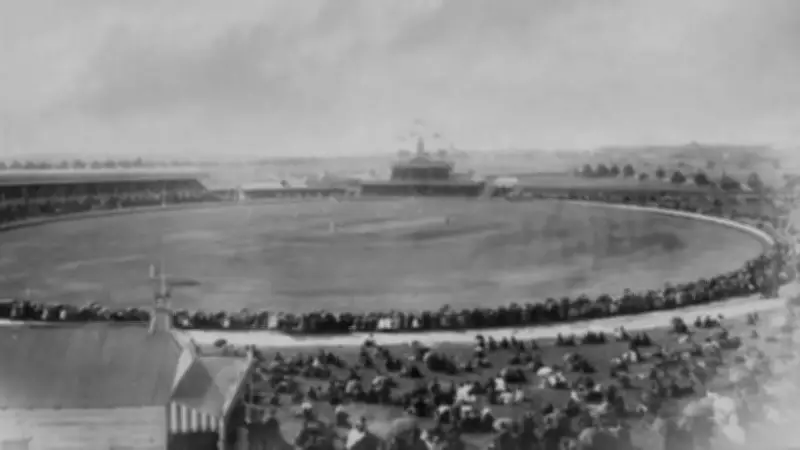
The match played at Sydney Cricket Ground starting February 17, 1883, stands apart in cricket history for a remarkable reason. Before play began, both teams agreed to an experiment never repeated at Test or first-class level: each innings would be played on a different pitch. Four innings meant four separate wickets, a decision Wisden recorded with characteristic restraint, noting simply: "Each innings was played on a fresh wicket."
The match itself proved incredibly competitive, with England scoring 263 in their first innings thanks to AG Steel's unbeaten 135. Australia replied with 262, featuring George Bonnor's 87 in 165 minutes. England's second innings produced 197, while Australia chased down 199 to win by four wickets, with Alec Bannerman scoring 63 in 175 minutes.
The Mysterious Origins of the Ashes Urn
Following the tour, The Ashes were ceremonially returned to England on January 30, 1883, in the form of a burnt bail contained within a small urn. For decades, it was believed the urn contained the remains of a bail burned after the third match, gifted to Bligh by a group of women in Melbourne. However, in 1998, Lord Darnley's daughter-in-law revealed the contents were actually the ashes of her mother-in-law's veil, not a bail. Other accounts suggest the ashes may have come from a ball, leaving the exact origin permanently disputed.
The urn itself bears poetic text celebrating the English victory:
When Ivo goes back with the urn, the urn;Studds, Steel, Read and Tylecote return, return;
The welkin will ring loud,
The great crowd will feel proud,
Seeing Barlow and Bates with the urn, the urn;
And the rest coming home with the urn.
After Lord Darnley's death in 1927, his Australian-born widow Florence presented the urn to the Marylebone Cricket Club. Today, this iconic symbol of cricket rivalry resides at the cricket museum at Lord's, accompanied by its original red and gold velvet bag and the scorecard from the historic 1882 match.

A Lasting Legacy
More than a century later, this forgotten Test with its unique four-wicket experiment remains a fascinating footnote in cricket history, demonstrating how early cricket was still willing to test the limits of its own laws. What began as a satirical obituary has evolved into one of sport's greatest rivalries, with the Ashes urn serving as a permanent reminder of cricket's rich history and the enduring spirit of competition between England and Australia.
The Ashes tradition continues to captivate cricket fans worldwide, with each series adding new chapters to a rivalry born from defeat, celebrated through poetry, and sustained through generations of sporting excellence.