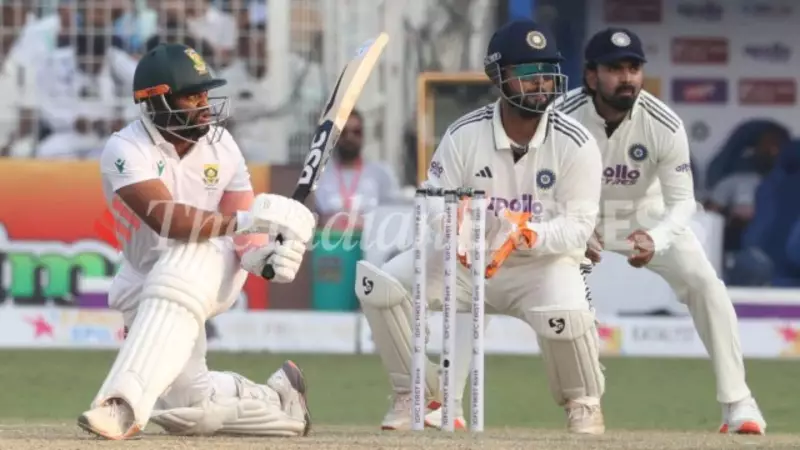
The recently concluded first Test between India and South Africa in Kolkata, held from November 14 to 18, 2025, has left a stain on the sport that extends far beyond the scoreboard. While South Africa's historic victory, their first Test win in India in 14 years, was a sporting achievement, the match is now overshadowed by an ugly incident involving two of India's cricketing stars.
The Incident That Marred a Historic Test
During the low-scoring thriller, which concluded within three days, the stump microphone picked up disturbing audio. India's pace spearhead Jasprit Bumrah and wicketkeeper Rishabh Pant were heard directing derogatory comments at the visiting captain, Temba Bavuma. The remarks specifically targeted his physical stature, using the Hindi term 'bauna' (dwarf). This instance of body-shaming, broadcast to the world, has triggered a wave of criticism and introspection within the cricket-loving nation.
For many fans and observers, the defeat itself, though painful, is an acceptable part of the game's uncertainties. What is far more troubling is the conduct displayed by players who are idolized by millions. The incident did not occur in a vacuum; it reflects a broader societal trend where abuse and personal attacks are becoming increasingly normalized, even legitimized, in public discourse.

Sledging vs. Abuse: A Critical Distinction Lost
Some have attempted to equate Bumrah and Pant's comments with the aggressive 'sledging' often associated with Australian cricket. However, a crucial line was crossed. Sledging is traditionally a tactical ploy aimed at breaking a player's concentration through psychological games. What transpired on the field was different—it was abuse rooted in body-shaming, a product of deep-seated disdain rather than competitive strategy.
This distinction is vital. While both may be ethically questionable, abuse carries a venom that sledging may not. It taps into a cycle of hate where violent language paves the way for a culture that normalizes disrespect based on physical appearance, caste, religion, or class. The incident serves as a mirror to a society grappling with a crisis of compassion, amplified by majoritarianism, casteism, and a widening economic divide.
The Weight of Icon Status in Modern India
The responsibility borne by cricketers and film stars in India is immense. In an era where traditional heroes are scarce for the youth, these figures become the default role models. Their actions, both on and off the field, set moral parameters for an entire generation. When celebrated athletes like Bumrah and Pant engage in such behavior, it sets a horrendous precedent.
It reinforces a dangerous social order that takes pride in verbal violence, an attitude visible in road rage, hate speech, and lynching. Such an environment implicitly grants immunity to casual cruelty, making actions like mocking someone's height seem trivial. The political class is not immune to this either, as evidenced by past instances of abusive language in the highest legislative forums.
The writer, a professor at AIIMS Delhi, poignantly notes that while the Test series loss on November 26—South Africa's first series win in India in 25 years—saddened him as an Indian cricket fan, it pleased him as a lover of sportsmanship. Perhaps only such a result could wash away the arrogance displayed on the field. As Eduardo Galeano wrote in Football in Sun and Shadow, idols sometimes break, and people devour the pieces. It is a stark warning for not just the Indian cricket team, but for all public figures in the nation.