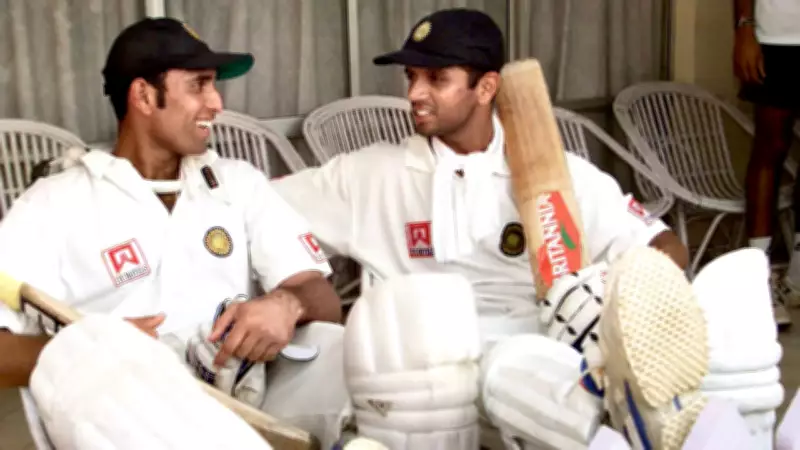
Rahul Dravid's Candid Reflections on the Iconic Eden Gardens Test Match
Twenty-five years after one of cricket's greatest comebacks, former Indian captain Rahul Dravid has opened up about the historic 2001 Eden Gardens Test against Australia. In an exclusive interview, Dravid reflected on the tactical decisions, his marathon partnership with VVS Laxman, and how this victory served as a definitive turning point for Indian cricket.
The Build-Up and Personal Form
Dravid revealed his form was "patchy" leading into the crucial Test. "I had scored runs against Zimbabwe and in domestic cricket, so I felt good technically," he explained. "But in the context of the series, with all the hype and noise, it almost felt like I was out of form despite only three low-scoring innings."
The former batsman particularly cherished scoring his century against legendary spinner Shane Warne. "Warne was phenomenal, and there were times I felt he had the wood over me," Dravid admitted. "Against bowlers of his caliber, you desperately want a big score, so it felt immensely satisfying."

The Tactical Batting Order Change
One of the most discussed decisions was Dravid being moved to number six in the second innings. "It was John Wright and Sourav Ganguly's decision," he recalled. "They approached me for my thoughts. Laxman had batted beautifully in the first innings, so promoting the in-form player made strategic sense."
Dravid acknowledged feeling slightly odd about the demotion but understood the reasoning. "The conversation centered on applying pressure back on the Australians, and I realized this might be the optimal approach," he said.
The Legendary Partnership with VVS Laxman
The 376-run partnership between Dravid and Laxman remains etched in cricket history. "I've always enjoyed batting with Laxman," Dravid shared warmly. "He's a fantastic player and wonderful to watch from the non-striker's end. We had played together for South Zone and in junior cricket, so there was comfort."
Describing their communication, Dravid noted, "We weren't big talkers in the middle, which suited my style. Laxman possessed skills to play all around the wicket, making it seem no bowling could trouble him. Batting alongside such a player boosts your confidence tremendously."
During their 446-minute stand, both batsmen followed personal routines. "I had a simple routine of two bat taps while moving my feet, taking breaths, and reminding myself to 'watch the ball,'" Dravid revealed. "Laxman liked drawing lines and tapping bats. Sometimes I'd playfully not extend my bat for his tap, and he'd get slightly grumpy!"
The Emotional Century Celebration
Dravid's uncharacteristically emotional celebration after reaching his century has been widely discussed. "That's been somewhat exaggerated," he clarified. "There was immense pressure, and as a young man fighting for my place, I lacked the maturity to handle everything. Looking back, I acknowledge letting things affect me more than I should have."
He emphasized, "It wasn't directed at anyone specifically. It was relief and an outlet for built-up pressure. Despite my reputation, I've always been human."
Dressing Room Dynamics and Declaration Debate
The dressing room atmosphere focused on maintaining pressure. "We concentrated on staying present, not looking too far ahead," Dravid said. "Remarkably, until the final session on Day Five, we weren't even contemplating victory."
Regarding the declaration timing, which some critics deemed late, Dravid explained, "Our strategy was to keep fielders around the bat constantly, denying Australia attacking opportunities. Giving them any opening could have changed the game completely."
Beyond the Headline Acts
While Dravid, Laxman, and Harbhajan Singh received most attention, Dravid highlighted other crucial contributions. "Sachin Tendulkar's wickets after tea on Day Five were absolutely critical," he stressed. "Getting Adam Gilchrist out was huge. Venkatesh Prasad's 42-run stand with Laxman in the first innings, Sadagopan Ramesh's catches, and Sourav Ganguly's captaincy and 48 runs were all vital. It was a complete team effort."

The Follow-On Legacy and Broader Impact
The Eden Gardens Test changed how teams approached follow-on decisions. "I wasn't surprised Australia enforced it then," Dravid observed. "Afterwards, teams became more circumspect, especially in subcontinental conditions. As an Indian team, we recognized that with ample time remaining, enforcing follow-on wasn't always necessary."
The victory's significance extended far beyond one match. "It provided stability during a transitional period," Dravid reflected. "John Wright was our first foreign coach, and there were doubts about this arrangement. Winning the series gave our group breathing space and allowed us to build momentum."
He added thoughtfully, "Without that win, Indian cricket would have eventually progressed, but perhaps taken longer. That victory initiated a phase where we began winning Tests and series abroad more consistently."
Personal Memories and Career Perspective
Dravid has kept souvenirs, including the bat from that innings. When asked if twenty-five years feels like a lifetime, he responded, "People frequently remind me of that innings. I cherish it because it connects me to others' memories. Knowing I was part of something people remember fondly is special, even though it was just doing my job."
Regarding where this victory ranks in his career, Dravid said, "I've probably batted better in tougher situations, and other knocks provided more pure batting satisfaction. But considering everything—the context, what it did for Indian cricket, and how it shaped many careers—it certainly ranks very high."
The article also notes Australia's resilient lower-order batting on Day Two, where Steve Waugh (110) and Jason Gillespie frustrated India with a 133-run partnership for the ninth wicket, followed by 43 runs between Gillespie and Glenn McGrath for the final wicket, adding 176 crucial runs after being 269/8.