Rahul Dravid Explains India's Test Cricket Decline Amid White-Ball Dominance
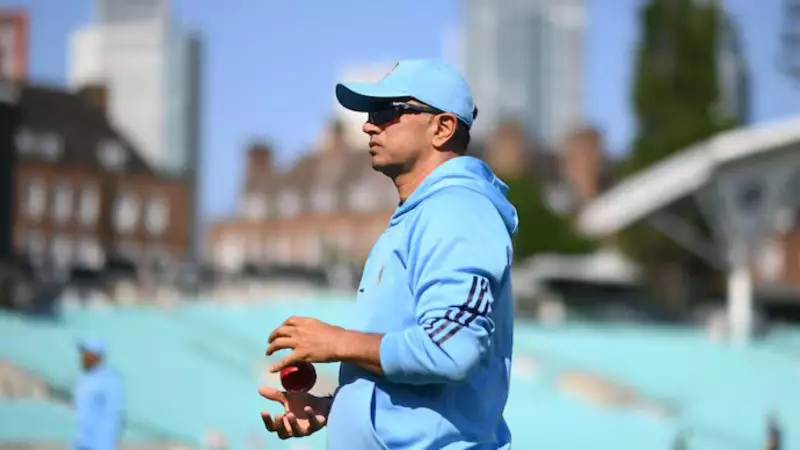
Former India head coach Rahul Dravid has provided crucial insights into why India's Test cricket record has been dipping despite their dominant performance in white-ball formats. Having led India to the 2023 World Test Championship final, Dravid reflected on the significant challenges faced by India's long-format batters who consistently switch between ODI and T20I commitments.
The Contrast Between White-Ball Success and Test Struggles
India currently sits at the top of the ICC men's T20I rankings, dominating the world stage as they prepare to defend their T20 World Cup title at home in under ten days. Under Gautam Gambhir's leadership since June 2024, the team has maintained an unbeaten streak in T20I series. However, this white-ball excellence contrasts sharply with India's Test performance, which has experienced a drastic slide in quality.
India's home fortress has been breached twice in under a year, with defeats against New Zealand and South Africa highlighting their red-ball vulnerabilities. The team is yet to secure a Test series victory against a top-ranked nation under Gambhir's coaching, with their only series win coming against the West Indies at home in October 2025.

The Core Challenge: Lack of Red-Ball Practice Time
Speaking at a book launch event in Bengaluru, Dravid opened up about the fundamental challenge of allotting adequate preparatory time for India's all-format batters. This concern has been echoed by current Test skipper Shubman Gill, who recently highlighted similar issues.
"One of the things I understood as a coach, especially the guys that play all three formats, they keep moving from one format to the other," Dravid explained. "There were times when we would get to a Test match three to four days before the match, and then when we start practising for the Test match, when you look back at the last time that some of these guys had actually hit a red ball, it might have been four months ago or five months ago."
Dravid emphasized that this scheduling reality has created significant obstacles for skill development in Test cricket. "That's become really a challenge, how do you almost find the time to be able to develop some of the skills that are hard. To play on turning tracks, or play on seaming wickets, doing that for hours and hours in a Test match is not easy. It requires skill," the former India captain added.
Historical Context and Modern Demands
The legendary India No. 3 batsman recounted his playing days when athletes had more substantial transition periods between Test and ODI formats before the explosive advent of T20Is after 2007. "Now, one of the things that has become a bit tougher in red-ball cricket is a lot of our guys who play all the three formats, or who play the amount of cricket that they are playing, sometimes don't have the time to be able to practise red-ball cricket as much."
Dravid specifically referenced Shubman Gill's experience to illustrate this modern challenge. "I think Shubman has kind of alluded to it a little bit, just recently, because I think he's one who experienced that. He's one who actually played recently for us in all of the three formats so I think he would have realised how difficult it is for him to actually gear up for the Test format."
The White-Ball Practice Advantage
Interestingly, Dravid connected India's relentless T20I batting success directly to the extensive white-ball practice opportunities available to modern cricketers. "You look at the hitting part, and the way people are hitting today in white-ball cricket, it's because they are able to practise it a lot more. A lot of these boys who spend two-and-a-half months in the IPL, all they are doing is practising how many sixes they can hit, so they are getting much better at it."
This creates an imbalance where players develop exceptional white-ball skills through consistent practice while their red-ball capabilities suffer from neglect due to packed schedules and format switching.

Current Test Standing and Future Challenges
India currently occupies the sixth position in the ICC World Test Championship 2025-27 cycle, with their next red-ball series scheduled during the Indian off-season in August against Sri Lanka. This gap provides limited opportunity for the kind of sustained red-ball practice Dravid identifies as crucial for Test success.
The analysis from one of India's most respected cricket minds highlights a structural challenge facing modern cricket: how to maintain excellence across all formats when the calendar increasingly favors white-ball cricket. As India prepares for their T20 World Cup defense, Dravid's observations serve as a crucial reminder of the different skill sets required for Test cricket and the need for dedicated preparation time that contemporary schedules often fail to provide.