ECB Issues Formal Warning to Hundred Franchises Over Pakistan Player Discrimination
The England and Wales Cricket Board (ECB) has taken a firm stance against potential discrimination in cricket recruitment by sending official letters to the directors of cricket at all eight franchises participating in The Hundred. The correspondence explicitly warns against any form of discrimination targeting Pakistan players during the crucial 2026 auction process.
Background of the Controversy
This decisive action by the ECB follows investigative reporting by the BBC, which uncovered concerning messages from a senior ECB official. These communications suggested to a player agent that interest in his Pakistan clients would likely be limited to franchises not associated with the Indian Premier League (IPL). This revelation has raised serious questions about fair play and equal opportunity in international cricket recruitment.
The IPL Ownership Connection
The situation is particularly sensitive because half of The Hundred's eight teams have direct links to IPL ownership groups. Manchester Super Giants, MI London, Southern Brave, and Sunrisers Leeds are either partially or fully owned by companies that control prominent IPL franchises. This ownership structure has created a complex landscape where business interests might potentially influence player selection decisions.

Historically, Pakistani cricketers have faced exclusion from the IPL since 2009, following the tragic Mumbai terror attacks of 2008. This pattern has extended to other global T20 leagues where IPL franchise groups hold ownership stakes, including South Africa's SA20 tournament, where all six teams are IPL-owned.
Current Player Registration and Auction Details
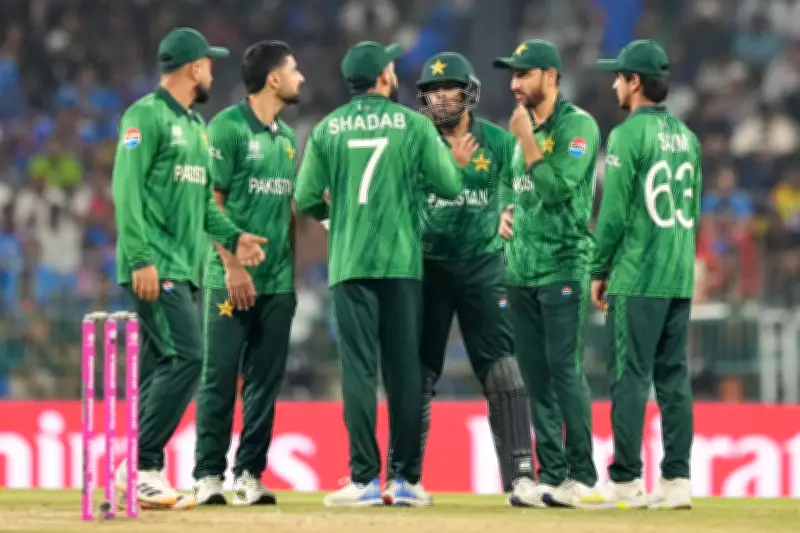
Despite these challenges, a significant number of Pakistani players have registered for The Hundred auction. Sixty-seven athletes from Pakistan – comprising 63 men and 4 women – have put their names forward for consideration. Among the notable registrations are several high-profile male cricketers including Saim Ayub, Shadab Khan, Muhammad Nawaz, and Naseem Shah, all listed at the maximum men's reserve price of £100,000.
The auction itself is scheduled to take place on March 11 and 12, marking a critical moment for player recruitment across the league. This comes after the ECB sold its 49% stakes in each of the eight Hundred franchises last year, giving team owners greater autonomy in their operational decisions.
ECB's Stance and Potential Consequences
In its formal communication to franchises, the ECB has made its position unequivocally clear. The governing body has warned that any evidence of discrimination in recruitment practices for the upcoming season will result in disciplinary action against offending teams. This represents a significant escalation in the ECB's efforts to ensure fairness and transparency in player selection processes.
However, skepticism remains within the cricket community. A Pakistani agent speaking to Telegraph Sport expressed the view that exclusion of Pakistan players from Indian-owned franchises is "a given," suggesting that deeply ingrained patterns may prove difficult to overcome despite official warnings.
Broader Context and Historical Patterns
The current controversy must be understood within a broader historical context. For four consecutive seasons of The Hundred, not a single Pakistani player has featured in the competition. This pattern mirrors what has occurred in other international T20 leagues where Indian-owned franchises participate, including the International League T20 and Major League Cricket, where Pakistani players have consistently been overlooked.
This situation highlights the complex intersection of sports, politics, and business in modern cricket. While the ECB's warning represents an important step toward addressing potential discrimination, the effectiveness of this intervention will only become clear during and after the auction process in March.