FIFA Clarifies VAR Decision That Denied Croatia Late Equaliser Against Portugal
FIFA has explained why Croatia's dramatic stoppage-time equaliser against Portugal was disallowed after a VAR review in their FIFA World Cup 2026 Round of 32 clash. The governing body revealed that Connected Ball Technology detected the slightest touch from striker Igor Matanovic in the build-up, enabling officials to confirm an offside offence and preserve Portugal's 2-1 victory.
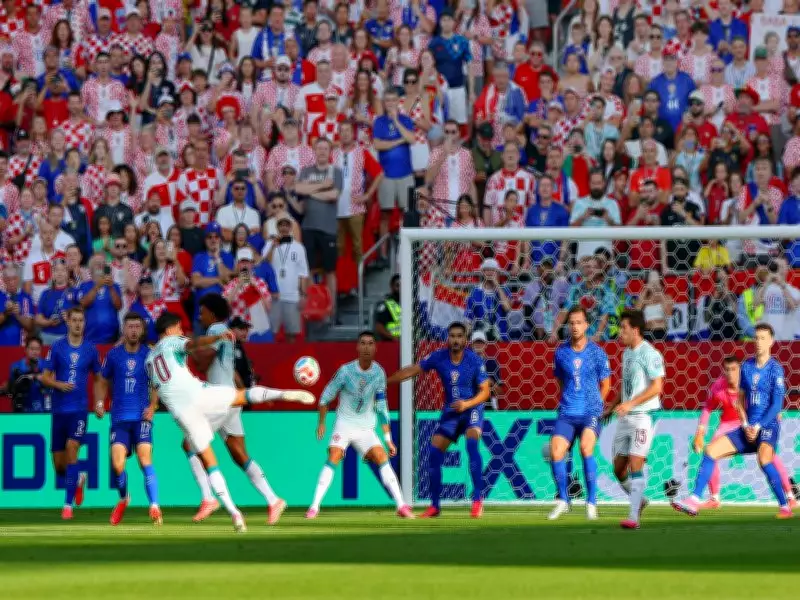
Portugal sealed qualification when Goncalo Ramos headed them into a 2-1 lead in the fourth minute of stoppage time. However, Croatia believed they had forced extra time nine minutes later when Josko Gvardiol found the back of the net, sparking jubilant celebrations.
How Connected Ball Technology Overturned the Goal
The goal was initially awarded as it appeared Matanovic had not made contact with Ivan Perisic's cross before Mario Pasalic became involved in the move. But referee Espen Eskas was called to the pitchside monitor after Connected Ball Technology registered a slight touch from Matanovic, reportedly as minimal as a brush off his hair.

According to Goal.com, the contact was not visible in television replays, but it proved decisive. The touch meant Pasalic had received the ball from a teammate while in an offside position before setting up Gvardiol, prompting the goal to be overturned and ending Croatia's hopes of a comeback.
FIFA's Official Statement on the Decision
Following the match, FIFA issued a statement on X explaining the decision. The world governing body said the sensor embedded inside the official Adidas Trionda match ball detected the crucial touch by Matanovic, providing objective data that supported the VAR review and confirmed the offside offence.
"According to the data provided by Connected Ball Technology housed within the @adidasfootball Trionda, the official match ball of the @FIFAWorldCup, it was proven that contact was made by Croatia's #20 Igor Matanovic in the build-up to the goal against Portugal, allowing the referee to correctly determine offside and disallow the goal," FIFA wrote in an X post.
"IMU sensors housed within the Trionda ball are capable of determining any slight contact, displayed to viewers in the broadcast as a 'heartbeat graphic', and allowing officials an unprecedented level of data to make fast, accurate decisions," the statement continued.
Impact and Implications of the Technology
The decision was based on FIFA's Connected Ball Technology, which detected the slightest touch on the ball by Igor Matanovic during the build-up. Although the contact was too subtle to be seen with the naked eye or captured clearly in conventional television replays, the sensor embedded inside the ball generated precise data that enabled VAR officials to confirm the touch and accurately rule an offside offence.
This incident marks one of the most significant uses of Connected Ball Technology in a World Cup match, highlighting how objective data can overturn subjective visual evidence. The technology, which uses IMU sensors to detect contact, provides referees with a level of accuracy previously unavailable. Croatia's elimination was a direct consequence of this technological intervention, sparking debate among fans and pundits about the role of such data in football.