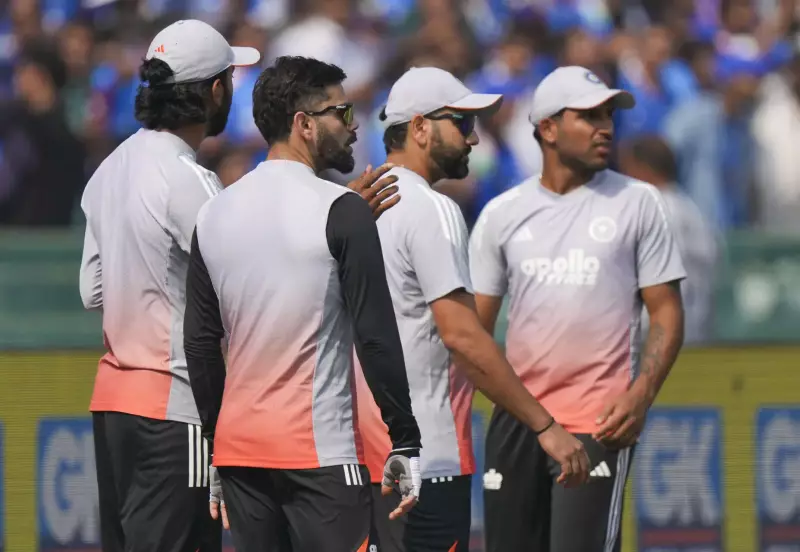
India's convincing ODI series victory against South Africa in Visakhapatnam has provided a much-needed morale boost for the team, coming on the heels of a Test series whitewash at home and a prior ODI series loss in Australia. However, the win has also opened up critical discussions about the long-term roadmap for the Men in Blue, with the 2027 ICC Cricket World Cup in South Africa firmly in sight.
Core Strength and Middle-Order Conundrum
The recent performances of senior stalwarts Virat Kohli and Rohit Sharma have emphatically reaffirmed their indispensable role in the ODI setup. Their consistent run-scoring has made it clear that phasing them out in the near future is not a straightforward task. Head coach Gautam Gambhir, while celebrating the series win, was quick to point out that the team is still evolving and that conditions in South Africa will be vastly different from the subcontinental pitches India has predominantly played on over the last year and a half.
The primary area of concern, however, remains the lower middle-order. The lack of explosive finishing power, particularly from all-rounders like Ravindra Jadeja and Washington Sundar, has been noticeable. While Ruturaj Gaikwad stepping in at No. 4 for the injured Shreyas Iyer showed promise, the constant shuffling of batting positions creates instability. Gambhir downplayed the hype around fixed batting orders in white-ball cricket, but former selector Devang Gandhi warned of harsh consequences, drawing parallels to the unsettled No. 4 slot before the 2019 World Cup.

"As long as Kohli and Rohit are around, the planning has to revolve around them," Gandhi told TOI. He stressed the need to identify a core pool of 20 players and give them sufficient game time. He also highlighted the importance of preparing backups like Rishabh Pant, who hasn't played an ODI recently, for critical roles should a player like KL Rahul get injured during a major tournament.
Balancing Acts: All-rounders and Pace Attack for South Africa
The strategic planning for the 2027 World Cup necessitates a significant shift in team composition. The current formula of three spinners and three pacers, with a spinner batting higher up, may not suffice on the bouncier South African tracks. Gambhir indicated that developing a pace-bowling all-rounder who can bat at No. 8, like Harshit Rana, is crucial to balance the side with three specialist seamers.
Former India wicketkeeper Deep Dasgupta echoed the need for contingency planning, especially concerning all-rounder Hardik Pandya. "If Hardik is around, he will solve a lot of problems. But you have to be prepared for a situation where Hardik isn't fit," Dasgupta said. He suggested grooming another player to handle the middle overs with similar impact and proposed trying out Mohammed Siraj as a backup pacer.
Gandhi added another dimension, suggesting that on South African pitches, a proper batter in the top five is essential, which could mean promoting KL Rahul. He recalled that even in the 2019 World Cup, Kohli was comfortable with just five bowling options, a balance that needs to be re-evaluated for different conditions.
The Road Ahead: Limited Opportunities Before 2027
The clock is ticking for team management to finalize its combinations. With only three more ODIs scheduled at home this season, and the focus shifting to the T20 World Cup in February-March, the window for experimentation in the 50-over format is narrow. The planning for the 2027 mega event in October-November 2027 will go into full swing only after the T20 World Cup concludes.
The series win, therefore, is a positive step but also a stark reminder of the work ahead. The management, led by Gambhir, faces the dual challenge of managing a transition while building a squad specifically tailored to conquer conditions in South Africa, a task that requires clear vision and decisive action in the limited time available.