Sourav Ganguly Recalls the Pivotal Eden Gardens Victory That Redefined Indian Cricket
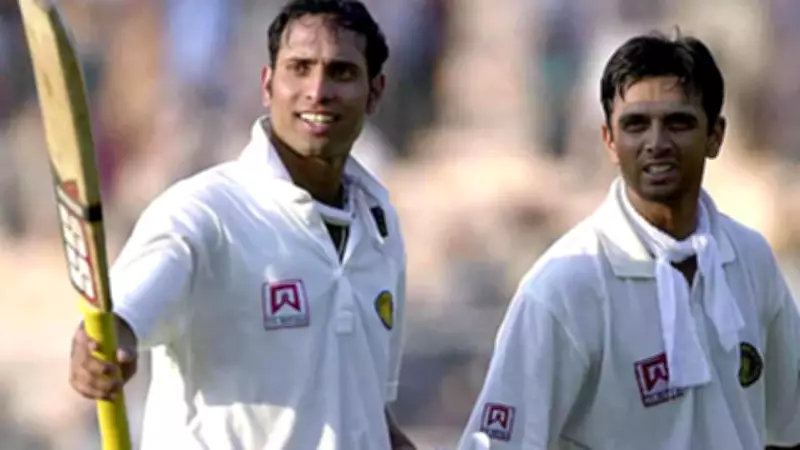
India's triumph against Steve Waugh's formidable Australian team at Eden Gardens in 2001 marked a crucial milestone in Sourav Ganguly's journey to becoming one of Indian cricket's most influential captains. As the nation commemorates the 25th anniversary of this legendary win, Ganguly opened up about how this Test match ignited a much-needed transformation in Indian cricket at the dawn of the new century.
The Unforgettable Emotions of a Surreal Victory
Can you recall your feelings when the last Australian wicket fell?
"It was a freak Test match. You can’t verbalise those emotions. It was unbelievable," Ganguly reminisced. "To win that Test when we were down and out against the best team of that generation was surreal. You start a series with an objective to win it. But the way things transpired at Eden Gardens made us believe we could win the series in Chennai in the next Test. I still believe more than winning that Test, winning the series was more important for Indian cricket."

He emphasized the significance of the victory, noting that the Australian team was dominating every opponent at home. "That win at Eden Gardens became bigger because we could win the series in Chennai. In those days, you were only judged on how well you played in Test cricket."
Turning the Tide After a Turbulent Period
You took up captaincy at a difficult time when scandals had hit Indian cricket. Then your team lost in Mumbai. How much did the Eden win change things for you?
"We had gone past those issues by the time the Australia series happened. We had already played in a final of a Champions Trophy in Nairobi a few months before that. Those negative issues were forgotten there," Ganguly explained. "Obviously, that win changed the mood and mindset of the dressing room. It gave me more confidence as a captain. It made us feel we could beat anyone."
Tactical Moves and Dressing Room Dynamics
Much has been spoken about how you kept Steve Waugh waiting for the toss...
"It just happened. I was looking for my blazer to wear for the toss. But then one could see he was getting agitated. Then it became a tactic to distract the Australians and keep them irritated in the field," Ganguly revealed with a hint of strategy.
What was the discussion in the dressing room when you were made to follow on? You took the big call of sending VVS Laxman at No. 3 ahead of Rahul Dravid...
"There was nothing to talk about, really. At that moment, sending VVS at No. 3 didn’t seem like a big call. He was batting beautifully. So, we just went with the flow. It was all about batting in one session. Every batter got a start. But what VVS and Dravid did was exceptional," he recounted, highlighting the seamless teamwork.
Planning for an Improbable Win
The declaration came almost at the end of the first session on Day Five. When did you start planning for a win?
"We knew that things move very fast on the last day of a Test match in India. We thought that if we can take the Test to the last day, anything could happen. Even when we went out to the field, we didn’t think of winning the Test. It was all about keep trying, and things kept happening," Ganguly shared, underscoring the unpredictable nature of the game.
Building a Fearless Legacy and Team Foundation
Your captaincy is said to have paved the way for India’s fearless cricket. How much of the calls that you took came out of desperation rather than just being tactical? And did the series make you believe that now it’s your team?
"I never thought of controlling the team or owning the team. We were a fantastic cricket team that always kept trying. I only said that we should play to win," Ganguly asserted. "Rahul Dravid, Sachin Tendulkar, VVS Laxman and I batted in the middle order, which is one of the best any team could hope for. Anil Kumble missed the series, but he was a world class spinner."

He elaborated on the long-term impact: "Yes, after that win, it helped form a strong foundation for the team for years to come. Virender Sehwag came in, and Harbhajan Singh became a big bowler. Zaheer Khan grew as a pacer. Yuvraj Singh and Mohammed Kaif came through in the one-day team. That win paved the foundation for historic wins like in Leeds, Adelaide and Multan."
Ganguly also reflected on the team's evolution: "After that series we thought about winning abroad. The best thing about that team was that there were different individuals standing up on different occasions. Those days, every team had gun-bowling attacks. International cricket was tough across the world. It’s not like how a few teams have become now. Every team was particularly strong in their own backyard."
The Quiet Transformation and Team Camaraderie
"People talked about how that win changed the way India played. But there was a quiet transformation happening before that. As I said, we were a fantastic cricket team," Ganguly noted. "We became great friends especially with John Wright who was the first foreign coach in India. We could stick with a great bunch of players for a longer period of time. We had faith in each other to do bigger things in international cricket."
Modern-Day Relevance and the Future of Test Cricket
India’s Test cricket today has started to look shaky even in home conditions. Do you think a Test series win now like the one in 2001 can have a similar impact on Indian cricket?
"Of course! A great Test series can influence a lot of people. I understand T20 cricket has become massive and rightfully so. The back-to-back T20 World Cup wins are bound to be an inspiration. But a tough Test series win too has a different high," Ganguly affirmed. "But for that India need to start playing on good pitches in India. The talent pool in India is enormous. The team did well in England recently and felt so good. I am sure Test cricket will continue to thrive in India."