The Summer That Changed Indian Cricket Forever
In March 2001, Indian cricket stood at its lowest ebb. Bruised and sullied by the match-fixing scandal that had erupted barely a year earlier, the team was fighting desperately to save face and restore public trust. The atmosphere was one of profound disillusionment, with few giving Indian cricket any genuine hope for redemption.
A Rudderless Ship Against Invincible Opponents
Into this crisis stepped Sourav Ganguly, handed the captaincy of what many described as a rudderless ship. The Board of Control for Cricket in India had recently imposed a lifetime ban on former captain Mohammed Azharuddin and a five-year banishment on Ajay Jadeja. Sachin Tendulkar had spurned the captaincy, leaving a dangerous leadership void that demanded immediate attention.
Ganguly's first challenge couldn't have been more daunting: hosting Steve Waugh's Australian team, dubbed the 'Invincibles' for their remarkable streak of fifteen consecutive Test victories. Comparisons with Donald Bradman's legendary 1948 team were already circulating, and Australia had just extended their winning streak to sixteen with a commanding ten-wicket victory in the first Test at Mumbai's Wankhede Stadium.

The Eden Gardens Crucible
Kolkata, freshly renamed just two months earlier, became the stage for what would become one of cricket's most legendary contests. Australia seemed destined for another victory after Steve Waugh scored his only Test century in India and his bowlers—including the formidable Glenn McGrath and Shane Warne—exposed India's batting vulnerabilities.
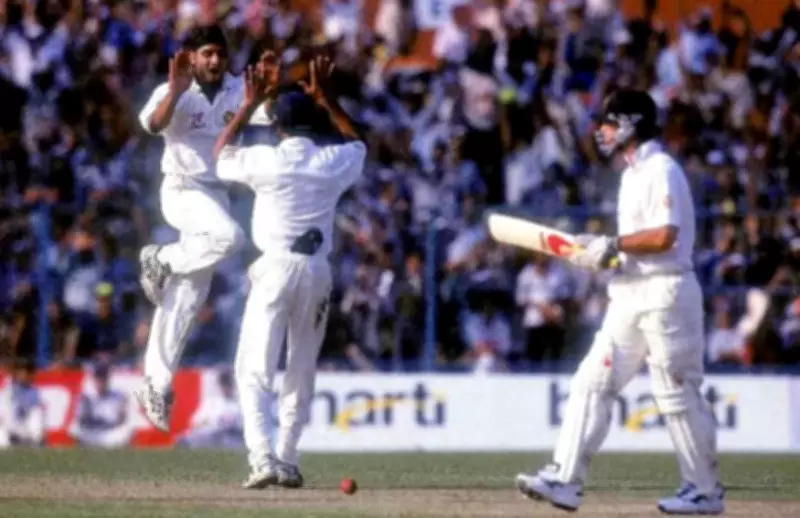
Yet amidst the apparent Australian dominance, a young off-spinner named Harbhajan Singh created history. With three consecutive deliveries, he trapped Ricky Ponting and Adam Gilchrist lbw before dismissing Shane Warne to become the first Indian ever to claim a Test hat-trick. His youthful impudence yielded seven wickets for 123 runs, giving the packed Eden Gardens crowd their first glimpse of resistance.
The Follow-On That Changed Everything
When India succumbed in their first innings, Steve Waugh enforced the follow-on—a decision he would rue long after the final ball was bowled. Promoted to bat at number three, VVS Laxman joined Rahul Dravid in what would become one of Test cricket's most celebrated partnerships.
Through the entire fourth day, Laxman and Dravid batted with such artistry and determination that their partnership has been compared to Michelangelo's David by art enthusiasts and to the Battle of Stalingrad by historians. They didn't just save the match; they turned it completely on its head.
Psychological Warfare and Tactical Brilliance
Ganguly's leadership extended beyond mere tactics. Before the toss, he deliberately kept the Australian captain waiting pitchside—a psychological move unheard of in Indian cricket annals. This wasn't just about playing cricket; it was about taking the fight to the opposition, both psychologically and tactically.
The impact was profound. When Australia finally fell to defeat, it marked wicket-keeper Adam Gilchrist's first taste of Test defeat since his debut in November 1999—after fifteen consecutive victories.
The Aftermath and Legacy
The third Test in Chennai became another streetfight, with Harbhajan Singh claiming a remarkable 32 wickets across the series to help India secure a historic victory against the world's best team. Though the full impact wasn't immediately apparent, the Eden Gardens Test proved to be the inflection point where Ganguly's team turned the corner.
From the odorous path of scandal and defeat, Indian cricket embarked on a new journey toward sporting greatness. Twenty-five years later, the memory of that Eden Gardens victory remains undimmed—a dangling conversation without superficial sighs, a watershed moment that continues to inspire.
As Steve Waugh remarked after the reversal, "The sun will rise tomorrow." Indeed it did, but it shone brightest on Sourav Ganguly's India, illuminating a new path for generations of cricketers to follow.