ICC Under Fire as Bangladesh Misses T20 World Cup 2026 Over Venue Dispute
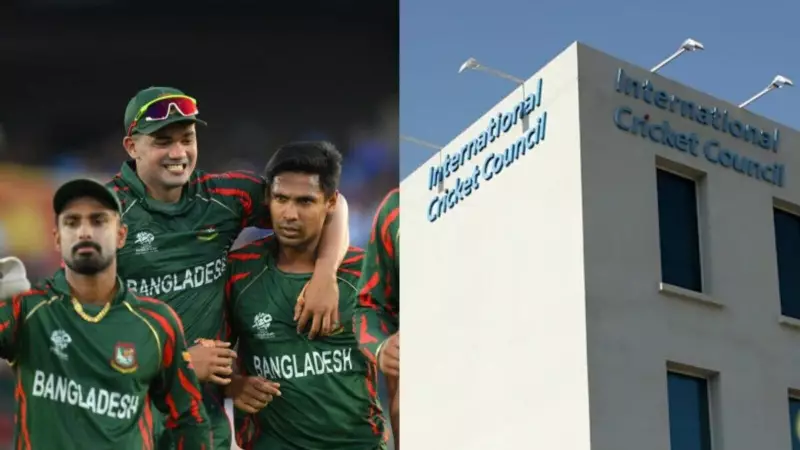
The International Cricket Council (ICC) has found itself at the center of a brewing controversy following Bangladesh's exclusion from the upcoming T20 World Cup 2026. The Bangladesh Cricket Board (BCB) has been replaced by Scotland in the tournament after refusing to travel to India, sparking accusations of inconsistent standards from former Pakistan cricketer Mohammad Yousaf.
Bangladesh's Protest and Replacement
More than a month after the ICC announced the schedule for the T20 World Cup 2026, the BCB formally requested a venue change in protest against Mustafizur Rahman's removal from the Indian Premier League. This decision came amid ongoing strained political relations between the two nations. Despite several meetings between the ICC and BCB, both bodies remained firm on their positions, leading to Bangladesh's replacement by Scotland in Group C.
The revised group now includes Nepal, West Indies, England, and debutants Italy alongside Scotland. The tournament is scheduled to commence on February 7, 2026, marking a significant absence for Bangladesh, a cricket-loving nation with a passionate fan base.

Mohammad Yousaf's Strong Criticism
Former Pakistan batting legend Mohammad Yousaf has emerged as a vocal critic of the ICC's handling of the situation. Taking to social media platform X, Yousaf expressed deep disappointment, stating, "Very sad to see a cricket-loving nation like Bangladesh being deprived of cricket due to security concerns not being addressed." He further emphasized the need for consistency in ICC policies, adding, "When similar concerns were raised earlier, a neutral venue was approved. Standards cannot change from country to country."
Yousaf's comments directly reference the ICC's previous accommodation of Pakistan's security concerns regarding travel to India. Due to longstanding political tensions, India does not travel to Pakistan, citing security reasons. This led to an agreement between the Pakistan Cricket Board and the Board of Control for Cricket in India (BCCI), allowing both teams to play each other at neutral venues in ICC and Asia Cricket Council events until 2027.
Historical Precedent of Neutral Venues
The precedent for neutral venues in Indo-Pak cricket is well-established. India participated in the 2023 Asia Cup and the ICC Champions Trophy 2025 in Dubai, despite Pakistan being the official host for both events. Additionally, Pakistan faced India in Sri Lanka during the ICC Women's World Cup 2025. These arrangements highlight the ICC's flexibility in addressing security and political concerns in the past.
Yousaf, who scored 17,120 runs in 381 matches for Pakistan, accused the ICC of appearing to serve the interests of a "single board," an apparent reference to the BCCI. He asserted, "ICC must act as the International Cricket Council, not appear to serve the interests of any single board. Fairness and consistency are the foundation of global cricket." At 51 years old, Yousaf's critique underscores growing concerns about equitable treatment within international cricket governance.
Broader Implications for Cricket Governance
This incident raises significant questions about the ICC's role in mediating geopolitical tensions within cricket. The differing approaches to Bangladesh's and Pakistan's security concerns suggest potential inconsistencies in policy application. As global cricket continues to navigate complex international relations, calls for transparent and uniform standards are likely to intensify.
The exclusion of Bangladesh from a major tournament not only impacts the team's competitive opportunities but also affects fans and the sport's development in the region. With the T20 World Cup 2026 approaching, the ICC faces mounting pressure to address these governance issues and restore confidence in its decision-making processes.