Umpires in the Line of Fire: ICC's Wake-Up Call for Safety Measures
The International Cricket Council (ICC) faces a pressing challenge that demands immediate attention: protecting the often-overlooked guardians of the game—the umpires. In the high-octane world of modern cricket, particularly in the T20 format, umpires have become vulnerable targets, exposed to the sheer power of contemporary batsmen like Sanju Samson and Hardik Pandya.
Recent Incidents Highlight Growing Danger
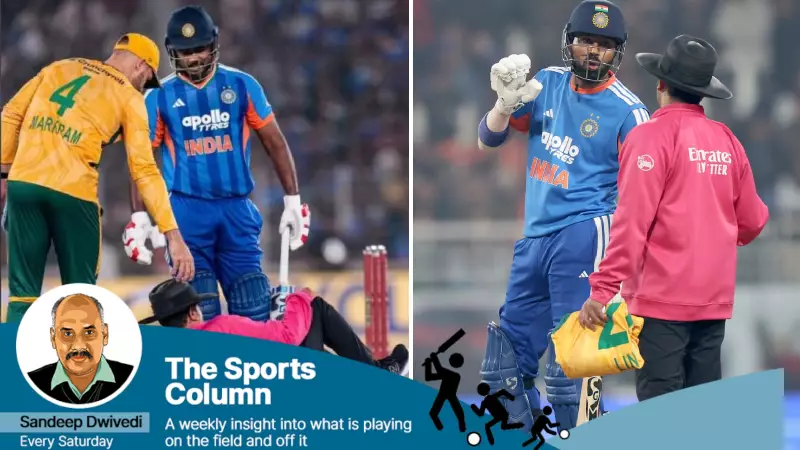
During India's recent white-ball series against South Africa and New Zealand, umpire Rohan Pandit found himself at the center of two alarming episodes. In December 2025, Sanju Samson's blistering straight drive struck Pandit's knee with such force that physios from both teams rushed to attend to the injured official. Mere weeks later, Hardik Pandya unleashed an even more ferocious shot that whistled past Pandit's temple—a near-miss that could have resulted in catastrophic injury.
These incidents are not isolated. During last year's Champions Trophy, Rohit Sharma's powerful drive sent umpire Chris Gaffaney tumbling to the ground, leaving both player and official visibly shaken. As the cricketing world marvels at the increasing power of modern batsmen, the safety of those officiating the game has been largely overlooked.

The Invisible Guardians of Cricket
Umpires occupy a peculiar space in cricket's ecosystem. They are essential to the game's integrity yet remain largely invisible until they make a mistake. Commentators often focus on the batsman's power or the ball's trajectory into the stands, while the oldest and least agile person on the field—the umpire—faces constant danger with minimal protection.
International umpire Anil Chaudhary, who officiated over 100 international matches without injury, emphasizes that traditional fitness approaches are inadequate for today's game. "Gym fitness wouldn't work. Building muscles makes your body stiff. Umpires need flexibility, agility, and sharp reflexes," he explains, suggesting that ICC should evaluate umpires based on these athletic qualities rather than conventional fitness metrics.
Existing Protection Measures and Their Limitations
Some umpires have taken individual precautions. Australian official Bruce Oxenford uses a transparent polycarbonate shield called Ox-black, while others like Virender Sharma wear abdominal guards. During the 2016 World T20, helmets were provided to umpires but weren't made mandatory, and most officials declined to wear them due to visibility concerns.
Chaudhary reveals his own survival strategy: "Whenever there was a hard-hitter like MS Dhoni or Andre Russell, I would step back four to six steps to buy time for evasive action." Yet even this precaution proved insufficient against power-hitters like Chris Gayle, whose shots travel at terrifying velocities.
The Human Element in Umpire Safety
The danger extends beyond physical injury to psychological impact. Virat Kohli once shared a chilling anecdote about batting with Gayle, when umpire Kumar Dharmasena shouted at him during a Royal Challengers Bangalore match: "Don't move sideways, go down. If the ball hits your helmet and comes towards me, I will be dead." This stark warning underscores how umpires constantly calculate survival strategies while maintaining professional composure.
Path Forward for Cricket's Governing Body
With another ICC event—the World T20—approaching, the need for comprehensive safety protocols has never been more urgent. The ICC must consider several approaches:

- Customized Protective Gear: Developing helmets with improved visibility and lightweight body protection specifically designed for umpires
- Enhanced Training Protocols: Implementing specialized agility and reflex training programs for match officials
- Positional Guidelines: Establishing clear protocols for umpire positioning based on batsmen's power-hitting capabilities
- Technological Solutions: Exploring protective screens or modified field placements during powerplay overs
Cricket has evolved into a sport where batsmen wield weapons capable of launching projectiles at speeds exceeding 150 km/h. While fans celebrate these displays of power, the individuals tasked with ensuring fair play deserve adequate protection. The ICC's responsibility extends beyond rule-making to safeguarding those who enforce these rules—before another close shave becomes a tragedy.
As Sandeep Dwivedi's analysis suggests, cricket's decision-makers can no longer hit the snooze button on umpire safety. The time for action is now, before the sound of ball meeting flesh replaces the current warnings as cricket's most urgent alarm.