With the ICC Men's T20 World Cup in India and Sri Lanka just 50 days away, the Indian cricket team finds itself grappling with a significant dip in its batting firepower. While recent results offer some solace, the statistical dominance that defined their post-2024 title run has noticeably faded, raising critical questions about team balance and form.
From Ruthless Dominance to a Flattening Curve
After defending their title in 2024, India started their campaign in spectacular fashion, winning 17 out of their next 20 T20Is. Their batting was explosive, surpassing the 200-run mark eight times, with five scores above 220 and three breaching 245. This period showcased a unit operating at a different level altogether.
However, the momentum has stalled since the 2025 Asia Cup. The team's overall strike rate has plummeted to 141.64, a worrying trend for a side that once redefined aggressive intent. Post-Asia Cup, Abhishek Sharma stands alone as the only Indian batter striking above 145, highlighting a collective slowdown.

The Opening Puzzle and Middle Order Pressure
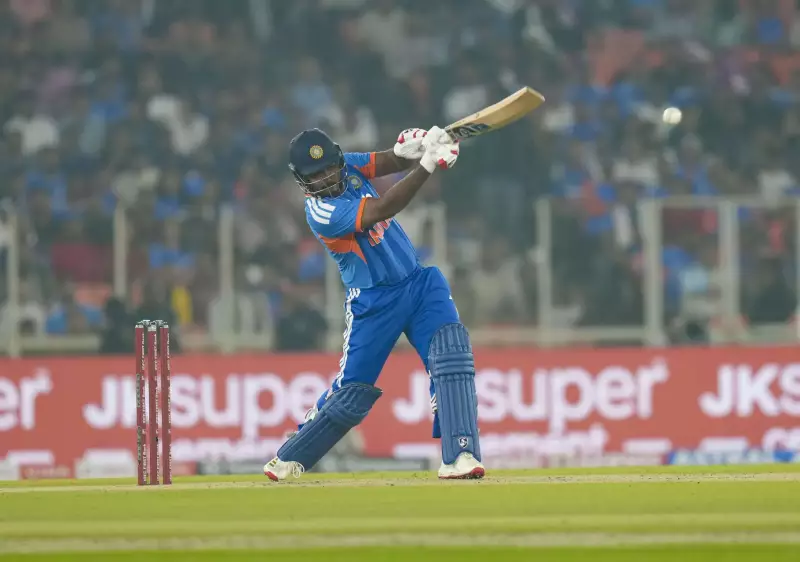
The most debated change has been at the top of the order. The successful pairing of Sanju Samson and Abhishek Sharma, which averaged 33.43 at a blistering strike rate of 193.84 across 16 innings, was dismantled. Samson, who scored 417 runs in 12 T20Is at a strike rate of 183.70 with three centuries as opener, was moved down to accommodate Shubman Gill as part of a long-term leadership plan.
Gill's return, however, has been underwhelming. In 15 matches since his comeback, he has managed only 291 runs at an average of 24.25 and a strike rate of 137, without a single half-century. This has disrupted the early momentum that previously allowed India to maintain high strike rates in the middle (154.56) and death overs (169.39).
Compounding the issue is the prolonged lean patch of captain Suryakumar Yadav. In 2025, he has scored a mere 213 runs from 20 matches at an average of 14.20 and a strike rate of 125.29. With both captain and vice-captain struggling, immense pressure has shifted to the middle order.
Expert Voices: Clarity Over Experimentation
Ahead of the World Cup, former players have emphasized the urgent need for role clarity. Robin Uthappa, a 2007 T20 World Cup winner, advocated for a stable top order. "I would not personally like to tinker with the opening combination," Uthappa stated. He proposed Samson at No. 3, Tilak Varma at No. 4, and Suryakumar Yadav at No. 5 to free up the top order.
Uthappa suggested a specific role for Gill: "You can have someone like Shubman Gill play that sheet anchor role... similar to the role Virat Kohli played in the last T20 World Cup," allowing others to bat aggressively around him.
Echoing the call for certainty, former all-rounder Irfan Pathan stressed that the time for experimentation is over. "This is not the time to experiment. When the World Cup starts, it has to be very clear who is batting at what position," Pathan asserted. He expressed concern over Suryakumar's form, noting his strike rate has fallen from a career average of around 166 to approximately 119 over the past year.
Pathan also backed Abhishek Sharma's high-risk approach, stating, "He does not need to change. That is why he has been successful." However, he acknowledged that this puts pressure on the middle order, which is amplified when the captain is out of form.
As the clock ticks down to the global tournament, Team India's immediate challenge is clear: rediscover their batting tempo, establish fixed roles, and urgently revive the form of their key leaders. In the high-stakes environment of a World Cup, these factors may outweigh any complex tactical adjustments.