India's T20 World Cup Survival Hinges on Must-Win Clash Against Zimbabwe
Forced into a critical must-win scenario after a significant loss to South Africa, the Indian cricket team urgently needs a rapid reboot as they prepare to face Zimbabwe at Chennai's MA Chidambaram Stadium on Thursday. The real World Cup challenge begins now for the hosts, whose humbling defeat has stripped away any perceived cloak of invincibility and thrust them into immediate knockout mode.
The Complex Semifinal Equation
This encounter essentially functions as a round-of-16 match, followed by what would become a virtual quarterfinal against West Indies in Kolkata on March 1. However, there exists a significant catch: if West Indies defeat South Africa on Thursday afternoon and South Africa subsequently beat Zimbabwe, even two consecutive victories might not guarantee India's progression to the semifinals.
The mathematics become particularly daunting when examining net run rate differentials. West Indies' commanding 107-run victory over Zimbabwe, combined with India's 76-run loss to South Africa, has created a massive gulf in net run rate that two substantial wins may struggle to bridge. Currently, West Indies boast an impressive +5.35 NRR, while India languish at -3.8.

Even before taking the field against Zimbabwe, captain Suryakumar Yadav and the Indian camp will be fervently hoping that South Africa fulfill their part of the equation by defeating the West Indies in the day game. These external factors remain beyond India's control, placing additional pressure on their performance.
India's Batting Concerns and Selection Headaches
What India can control is their response on the field, beginning with a commanding victory over Zimbabwe to restore morale after the psychological blow suffered in Ahmedabad. Nothing seemed to work against South Africa, and that performance was not an isolated aberration.
Multiple key batters are struggling for form simultaneously:
- Abhishek Sharma carries the burden of four consecutive failures
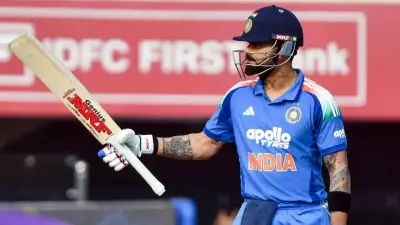
- Tilak Varma appears a shadow of the batter who clinched the Asia Cup final for India last September
- Suryakumar Yadav has not fired on all cylinders since the USA game
When three of the top four batters experience such form slumps simultaneously, it creates a nearly insurmountable challenge at this elite level. The problem compounds when considering that the quality of backup options appears limited.
Potential changes like pushing Sanju Samson ahead of Tilak Varma and asking Ishan Kishan to bat at number three would represent forced selections rather than strategic enhancements. Samson has not produced extraordinary performances with the bat in his limited opportunities, including World Cup appearances. His inclusion would likely constitute a desperate attempt to plug glaring holes rather than a calculated tactical move.
Tactical Adjustments and Opposition Analysis
The most obvious course correction India will implement at Chepauk involves recalling Axar Patel in place of Washington Sundar. The decision to bench Axar against South Africa lacked tactical justification and backfired significantly, making his return almost certain.
One potential relief for India comes from Zimbabwe's current situation. While they qualified for the Super 8s at Australia's expense through spirited performances in Sri Lanka, conditions in India present dramatically different challenges. The slower bowling-friendly surfaces in Sri Lanka that suited Zimbabwe's pace-off approach contrast sharply with Indian conditions.
Zimbabwe discovered this harsh reality during their Wankhede Stadium encounter against West Indies, and Chepauk conditions are expected to be similarly challenging for them. If just two of India's power hitters find form on what is anticipated to be a batting-friendly pitch, the match could conclude quickly, as Zimbabwe appears to lack the firepower to chase substantial 200-plus totals.

Zimbabwe's Perspective and Challenges
Zimbabwe coach Justin Sammons acknowledged how his team's inexperience in Indian conditions creates significant obstacles. "There's probably only three in our starting XI that have played in India before. So, for eight players it's the first time. These are completely different conditions, grounds are smaller, so there's massive learning that the group will take," Sammons explained.
The coach recognizes India's hunger to rebound after the Ahmedabad disappointment and anticipates an aggressive approach similar to West Indies' strategy, where batters will attempt to demolish Zimbabwe through sheer run accumulation. What provides Sammons with modest hope is Chepauk's slightly larger playing area compared to Wankhede, which might offer his bowlers some respite.
"India are not going to hold back. So we have to stay calm and think on our feet and try to change things up a little to disrupt the rhythm of their batters. Chennai will be a bit bigger and it probably will make things a little easier," Sammons noted.
For Zimbabwe to remain competitive, numerous elements must align perfectly, with the form of mystery spinner Sikandar Raza and paceman Blessing Muzarabani topping the priority list. The duo conceded 94 runs from just seven overs in Mumbai, and India's power hitters will aim to replicate that dominance to keep their semifinal aspirations alive.
The stage is set for a high-pressure encounter where India must not only win but win convincingly to improve their net run rate dramatically. With batting form concerns, selection dilemmas, and external dependencies on other match outcomes, Thursday's clash represents perhaps the most critical match of India's T20 World Cup campaign to date.