From Football's Tactical Revolution to Cricket's New Dynasty
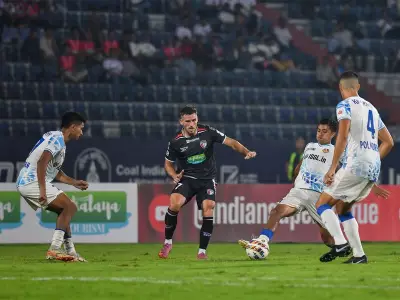
In the 1970s, Dutch football visionary Rinus Michels revolutionized the sport with 'Total Football' (Totaalvoetbal), tearing up traditional tactical manuals. This philosophy liberated players from rigid positions like attacker, midfielder, and defender, encouraging them to search for space and employ high pressing tactics. Defenders attacked, attackers defended, creating fluid, dynamic teams.
Captain Johan Cruyff embraced this concept, implementing it at Ajax and Barcelona as manager. Today, Pep Guardiola continues this legacy at Manchester City with his own adaptations. The 1974 Dutch team, often called the greatest team never to win the World Cup, created a dynasty that left an enduring tactical legacy.
India's Cricket Transformation: The 'Total T20' Philosophy
Since their triumphant victory in the USA and West Indies in June 2024 under Rohit Sharma and coach Rahul Dravid, India's cricket team has been playing their own version of 'Total T20' in the game's most popular format. They have developed an intimidation factor reminiscent of Ricky Ponting's dominant Australian teams that won the 2003 and 2007 World Cups unbeaten, while also securing two ICC Champions Trophy titles.

During the T20 World Cup, opponents constantly questioned: "Where is India's weakness?" The team boasted attacking openers, fearsome hitting potential down to number eight, and a varied bowling lineup. While South Africa exposed some vulnerabilities in a Super-8 clash in Ahmedabad, and England nearly chased an improbable 254 in the Mumbai semifinal, India's dominance remained largely unchallenged.
Building an Unbeatable T20 Machine
Since the 2024 T20 World Cup, India has won eight consecutive bilateral T20I series. Under captain Suryakumar Yadav ('SKY') and head coach Gautam Gambhir, they have secured seven series victories. India's last T20I series defeat came in August 2023 against West Indies away from home—a result largely forgotten in their current dominance.
Transitions in Indian cricket have often been challenging, particularly when moving on from legends like Rohit Sharma and Virat Kohli. However, the T20I transition proved remarkably seamless. Selectors and Gambhir quickly appointed SKY as T20I captain, overlooking Hardik Pandya due to fitness and availability concerns. They communicated clearly that SKY would focus exclusively on T20I cricket without responsibilities in other formats.
The Aggressive Batting Template
India established a high-risk, high-reward batting philosophy, aggressively seeking players who could post above-par scores while batting first. This approach proved particularly effective on batting-friendly surfaces, where huge totals provided cushion against variables like toss and dew.
Players like Sanju Samson and Abhishek Sharma received security despite inconsistent performances, empowering them to play freely. In thirteen matches since the June 29, 2024 T20 World Cup final, India has posted 200-plus scores batting first, including five 250-plus totals.
The safety-first Powerplay approach was abandoned, minimizing or eliminating settling-in periods. The anchor role was discarded in favor of prioritizing impact over personal milestones. This philosophy was evident when Samson aggressively pursued big shots on 89 in crucial matches rather than playing for centuries—decisions that enabled cameos from players like Tilak Varma and Hardik Pandya.
Data-Driven Flexibility and Specialization
While Gambhir has publicly stated that data is overrated, he strategically employs analytics to orchestrate match-ups and batting order flexibility. Spinners began bowling in powerplays, certain batters were held back to target specific bowlers, and designated spin-hitters like Shivam Dube received consistent roles.
The mantra became eight batters and six bowlers as Gambhir and SKY prioritized 'multi-dimensional' players, blurring lines between specialists and all-rounders to ensure deep batting lineups. This sometimes meant excluding potent bowlers like Arshdeep Singh and Kuldeep Yadav due to batting limitations—a clear message that batting would not be compromised.

The T20-First Generation
Barring all-format superstar Jasprit Bumrah, SKY and Gambhir's 'Mission 2026' squad represents a classic T20 setup with specialized players. Samson, Abhishek, SKY, Tilak, Rinku Singh, Hardik, Axar Patel, Shivam Dube, Arshdeep, and Varun Chakravarthy form a core unapologetically focused on T20 success and franchise cricket riches.
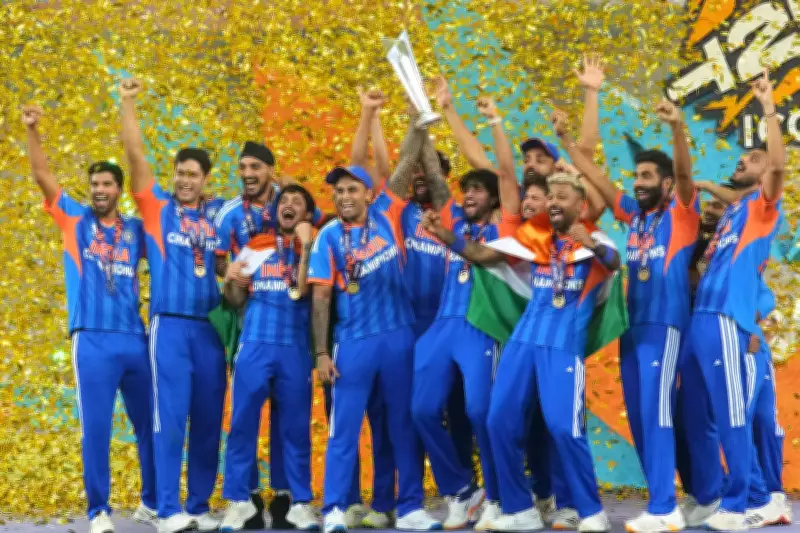
Unlike previous generations, these players don't voice platitudes about "Test cricket being real cricket" or ambitions of playing 100 Tests. They embrace a two-year "immortality" cycle, content with T20 dominance. Sunday's triumph has enabled India to establish a new T20 dynasty that could dominate for at least the next two years, if not longer.