Iran's World Cup Participation Hangs in Balance Amid Regional Turmoil
The participation of Iran in the men's FIFA World Cup, set to commence in the United States in three months, is now shrouded in uncertainty as conflicts intensify across the Middle East. This expanded 48-team tournament, co-hosted by the United States, Canada, and Mexico, features 104 matches across these nations, but Iran's involvement is under severe threat.
Escalating Conflict and Its Impact on Football
Since Saturday, coordinated attacks by the United States and Israel have targeted Iran, resulting in the death of Supreme Leader Ayatollah Ali Khamenei and several senior officials. In retaliation, Iran launched missiles toward US allies, including Qatar—host of the 2022 World Cup—and Saudi Arabia, selected to host the 2034 edition. These developments have drastically altered the outlook for the tournament, according to Mehdi Taj, Iran's top football official and a vice president of the Asian Football Confederation.
"What is certain is that after this attack, we cannot be expected to look forward to the World Cup with hope," Taj stated, highlighting the grim reality facing the team.

Logistical and Political Challenges
Iran is scheduled to play three group-stage matches in the US from June 15-26, with two games in Inglewood, California, and one in Seattle. However, it remains unclear whether Iran's state-backed football federation will opt not to send the team, or if the US government might prevent their entry. FIFA has remained silent since Saturday, with secretary general Mattias Grafström only noting that the organization would "monitor developments around all issues around the world."
Andrew Guiliani, the White House official overseeing World Cup preparations, added to the tension with a social media post on Saturday: "We'll deal with football games tomorrow," he wrote about Iran, "tonight, we celebrate their opportunity for freedom."
Iran's Football Legacy and Current Standing
As an Asian football power, Iran has qualified for six of the past eight World Cups and is currently ranked No. 20 among 211 teams in the latest FIFA rankings, maintaining a position above No. 24 since the last tournament in Qatar. At the World Cup draw held on December 5 in Washington, D.C., Iran was placed among the second-seeded teams, benefiting from an expanded format that allows many third-place teams to advance to the knockout stage.
The team's group matches include opening against New Zealand, followed by Belgium, and concluding with Egypt. Despite a travel ban on residents of Iran, the team is expected to receive support from the Iranian diaspora in the US, as athletes and coaches are exempt from travel restrictions for major sporting events like the World Cup.
FIFA Regulations and Potential Consequences
FIFA regulations provide broad authority for handling team withdrawals or exclusions. Article 6.7 states: "FIFA shall decide on the matter at its sole discretion and take whatever action is deemed necessary." The rules further allow FIFA to replace a withdrawn team with another association, granting president Gianni Infantino significant decision-making power.
If Iran withdraws, the financial repercussions are substantial:
- Loss of at least $10.5 million, including $9 million for group stage elimination and $1.5 million for preparation costs.
- Fines ranging from 250,000 Swiss francs ($321,000) for withdrawal up to three days before the tournament to 500,000 Swiss francs ($642,000) for withdrawal in the final month.
- Potential exclusion from qualifying for the 2030 World Cup.
Possible Replacements and Historical Precedents
Iran secured one of eight automatic Asian qualification spots last March. In the event of withdrawal, potential replacements include Iraq or the United Arab Emirates, ranked ninth and tenth in Asia during qualifying. Iraq recently eliminated the UAE in a playoff and is scheduled to face Bolivia or Suriname on March 31 for a World Cup place.

FIFA's rules do not specify that replacements must come from the same continental confederation, allowing flexibility. Historical precedents exist, such as Denmark winning the 1992 European Championship after a late invitation following Yugoslavia's removal due to UN sanctions. Similarly, the 1950 World Cup in Brazil featured only 13 teams after India and Scotland declined to participate.
Broader Implications and Future Outlook
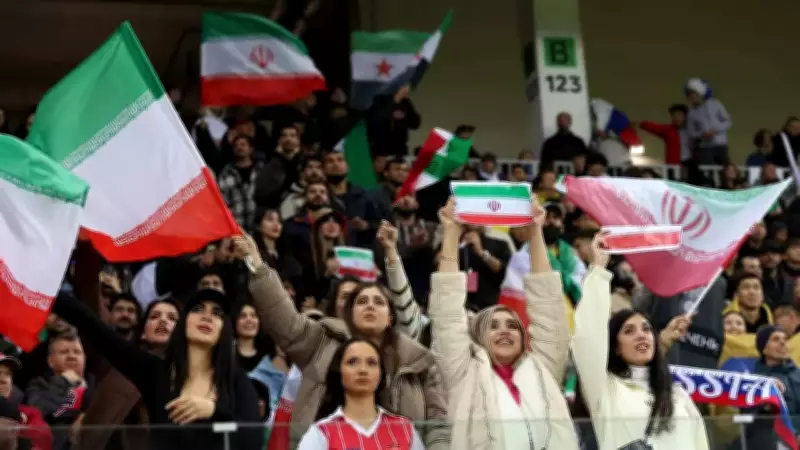
Political issues involving Iran have surfaced at previous tournaments, with fans using stadiums for protests. The current situation underscores the complex interplay between sports and global politics. As tensions persist, the football world watches closely, awaiting decisions from FIFA and national authorities that will shape the tournament's dynamics and Iran's sporting future.