From Outcast to Match-Winner: Ishan Kishan's Redefining Century
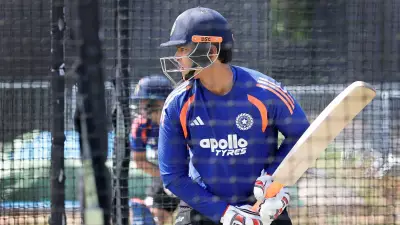
The moment Ishan Kishan reached his maiden T20 International century, his unrestrained celebration spoke volumes about the personal and professional significance of the milestone. After removing his helmet and raising his bat, he sprinted towards point, leapt into the air, and fell into Hardik Pandya's embrace, both players bouncing with unbridled joy. This innings at Greenfield International Stadium in Thiruvananthapuram on January 31, 2026, completed a stirring redemption arc for Kishan, transforming him from an outsider to a national hero in the span of one brutal knock against New Zealand.
Solving India's Persistent No. 3 Conundrum
Kishan's spectacular form arrives as a blessing on multiple levels for the Indian cricket team. Most significantly, he has emerged as the buccaneering T20 number three that India has desperately sought for years. As recently as the South Africa series, the team management appeared confused about the characteristics required for this crucial batting position. They had been caught in the Virat Kohli-Shubman Gill mould, where the role primarily involved accumulation rather than pure aggression.
Several experiments had yielded limited success. Suryakumar Yadav, though theoretically suited to the role, encountered a lean patch at the wrong time. Tilak Varma and Sanju Samson were both tried at number three, but neither managed to inspire lasting confidence. In just four innings since being promoted to this position, Kishan has proven to be the mould-breaker India needed at precisely the right moment.

A Postmodern One-Drop Batsman Emerges
Despite having played only four games in his new role, Kishan has arguably established himself as India's most postmodern one-drop batsman. His innings against a high-class New Zealand attack represented the most brutally free-flowing knock of his international career. An incredible six off Lockie Ferguson perfectly captured his rhythm and confidence - facing a leg-cutter outside off-stump that seemed too wide for optimum control, Kishan responded with a crisp, clean bat-swing that smote the ball through extra cover.
The preceding boundary demonstrated his remarkable bravado. Confronted with a delivery that was both fast and wide, seemingly beyond his reach, Kishan imparted every ounce of coiled energy into the stroke, releasing his bottom hand to prevent the bat from turning in his arms. The strokes flowed from his willow with such authority that they seemed designed specifically to disillusion the bowlers. While some batsmen plunge bowlers into helplessness and others wow them with sheer talent, players like Kishan leave opposition attacks in utter despair.
Middle Overs Transformed into Theatre of Destruction
The petrified New Zealand captain Mitchell Santner tried multiple strategies to contain Kishan's onslaught, even summoning leg-spinner Ish Sodhi in desperation. Kishan responded by greeting Sodhi with a humongous six. When Santner decided to check the flow of runs himself, Kishan promptly carted him for a boundary and another maximum. What are typically considered the less eventful middle overs in T20 cricket became a theatre of brutal six-hitting under Kishan's assault.
Against the spinners, his approach was particularly devastating. He either waited patiently before sinking to his knees and cudgelling deliveries over mid-wicket, or danced down the pitch to thump them over covers with savage swings. The partnership between Kishan and Suryakumar Yadav during the middle overs presents a fearsome prospect for bowlers worldwide. Between the ninth and seventeenth overs, they creamed 132 runs - a decent T20 total just a decade ago - in just eight overs of breathtaking strokeplay.
Implications for Team Balance and Selection
Kishan's emergence creates fascinating selection dilemmas for the Indian team management. His success at number three means he could potentially open the batting when Tilak Varma returns to the side, all without disturbing the team's delicate balance. This development directly threatens Sanju Samson's position as an opener, raising questions about whether Kishan will be upgraded to that role.

The team has approximately one week to contemplate this strategic decision, but what's undeniable is that India has finally unearthed their postmodern number three - a batsman of uninhibited hitting prowess who adds another layer of intimidation to an already fearless batting lineup. The 137-run partnership between Kishan and Yadav was as bewildering as it was exciting, signaling the arrival of a new era in India's T20 batting philosophy where power and panache reign supreme from the very beginning of the innings.