Italy's Cricket Renaissance: From British Roots to T20 World Cup Debut
In a remarkable sporting narrative, cricket has found its way back to prominence in Italy after centuries of existing on the fringes. The Italian national cricket team, known as the Azzurri, is poised to make its historic debut at the T20 World Cup, marking a significant milestone for a sport that has long been overshadowed by football and political ideologies in the country.
A Historic Journey from Obscurity to Recognition
Cricket arrived in Italy long before it ever captured the public imagination. Introduced by British sailors, diplomats, and merchants during the late 18th century, the game initially took root in specific pockets of Italian society. The first recorded cricket match on Italian soil is believed to have occurred in 1793 when Admiral Horatio Nelson and sailors from HMS Agamemnon played during their stay in the Kingdom of Naples.
Despite this early introduction, cricket struggled to gain mainstream acceptance. The establishment of the Genoa Cricket and Athletic Club in 1893 and the Milan Cricket and Football Club in 1899 initially included cricket as part of their sporting offerings. However, both institutions gradually shifted their focus entirely to football, with Genoa winning Italy's first football championship in 1898 and AC Milan abandoning cricket completely by 1919.

For decades, cricket survived primarily through expatriate communities and a small group of dedicated enthusiasts. The sport faced additional challenges during the fascist era when it was deemed "un-Italian" by Benito Mussolini's regime, further pushing it to the margins of Italian sporting culture.
The Modern Italian Cricket Team: A Melting Pot of Talent
Italy's qualification for the 2026 T20 World Cup represents a dramatic turnaround for the sport in the country. The 15-member squad reflects a striking blend of cultures and life stories, with players drawn from multiple countries and continents. Alongside Italians of Indian heritage are athletes with Pakistani and Sri Lankan roots, as well as players from South Africa, England, and Australia.
The team's circumstances vary just as widely as their backgrounds. Some players earn their living entirely from cricket, while others balance semi-professional commitments or franchise cricket with everyday jobs ranging from teaching and physiotherapy to hotel work. This diversity creates a unique team dynamic that combines different cricketing traditions and approaches to the game.
The Azzurri will be led by 42-year-old Wayne Madsen, who brings considerable experience and leadership to the squad. The team also includes former South African international JJ Smuts and features two pairs of brothers: Harry and Benjamin Manenti, and Anthony and Justin Mosca.
Preparation and Confidence Ahead of World Cup Debut
Captain Wayne Madsen expresses buoyant confidence about Italy's prospects at the tournament. "We're looking to win games, and we believe we have the quality to play good cricket," Madsen stated in an interview from Dubai, where the team recently played a three-match series against Ireland. "The boys have been together for a while and our preparation has been very good, so we're confident and hopeful."
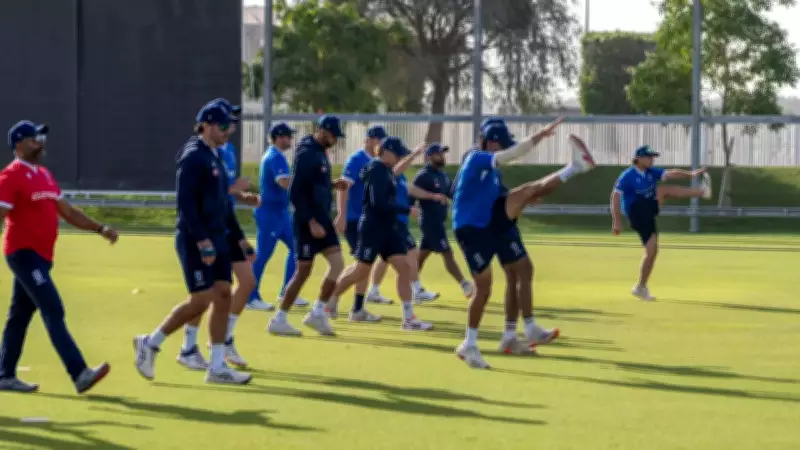
The team's preparation has been comprehensive, including training camps in Dubai and Sri Lanka, followed by bilateral series against Ireland and Namibia. Notably, Italy achieved its first-ever victory against a Test-playing nation during these preparations, providing significant momentum ahead of their World Cup campaign.
Jaspreet Singh, a 32-year-old player originally from Phagwara in Punjab who moved to Italy in 2006, represents one of the team's success stories. Beginning with informal tape-ball games, he progressed through the Italian cricket system and now trains in Birmingham while featuring in the Birmingham District Premier League. "We had a very good training camp in Dubai in November," Singh explained, "after which some of the squad travelled to Sri Lanka for another camp. The boys have been working extremely hard."

Strategic Development and Future Vision
The Italian Cricket Federation has implemented strategic initiatives to develop the sport from the ground up. Luca Bruno Malaspina, CEO of the Federation, emphasizes that schools serve as the starting point for cricket's growth in Italy. "Cricket in Italy is growing from the ground up," Malaspina explains. "Schools are the starting point, and through initiatives like the Scuola Attiva project, the number of schools involved in cricket is steadily increasing. This is where the connection with local communities begins, introducing the sport to young people, building familiarity, and turning cricket from something perceived as foreign into a game that feels increasingly Italian."
The Federation has placed strong emphasis on heritage players for the World Cup qualification process, actively seeking to encourage players of Italian heritage and connection to represent the Azzurri. This approach has yielded a diverse and talented squad capable of competing at the international level.
Lorea Haz Paz, president of the Italian Cricket Federation, reflects on the significance of Italy's qualification as the reward for years of dedication and sacrifice. "July 11 was a moment of immense joy," Haz Paz recalls, referring to the date when Italy secured their World Cup spot. "I am referring not only to myself, but to the work done by the players, years of commitment, sacrifice and continuous growth. The happiness was entirely for them and for all Italian cricketers who had been waiting for this milestone for a long time."
Experienced Coaching Staff and Backroom Support
The Italian team benefits from an experienced and diverse coaching staff that mirrors the squad's international composition. Head coach John Davison has represented Canada in the 2003 ODI World Cup, where he famously struck a 67-ball hundred against the West Indies. Assistant coach Kevin O'Brien brings experience from World Cup epics with Ireland, including his memorable 50-ball century against England in the 2011 ODI World Cup.
Rakbir Hasan, the team's media manager from Dhaka, explains the value of this experienced coaching staff. "Their experience is extremely valuable," Hasan notes. "Davison, O'Brien and Dougie Brown have already played in World Cups. They bring a level of professionalism and tactical awareness that is crucial in tournaments of this magnitude. They understand the pressures, the tempo and the small details that make the difference at this level, and that experience is something the whole group benefits from, especially the younger players."
A New Chapter in Italian Sporting History
Italy's T20 World Cup debut represents more than just a sporting achievement; it symbolizes the resurgence of a game that has fought against historical neglect and cultural barriers. Interestingly, young Italians will witness their cricket team compete in a World Cup before seeing the national football team return to the FIFA World Cup, given Italian football's recent qualification struggles.
The team's journey from historical curiosity to World Cup competitor demonstrates the power of strategic development, community engagement, and embracing diversity. As Italy prepares to face Scotland, England, Nepal, and the West Indies in Group C of the tournament, the Azzurri carry with them not just the hopes of current players and fans, but the legacy of centuries of cricket history in their country.
Despite its rich and deep history in Italy, cricket was no longer at the forefront of Italian sporting culture for much of the 20th century. The sport once lost out to fascism as it was deemed un-Italian by political forces. But through perseverance, strategic planning, and embracing its multicultural potential, Italian cricket has fought its way back to relevance and is now ready to make some noise on the world stage.