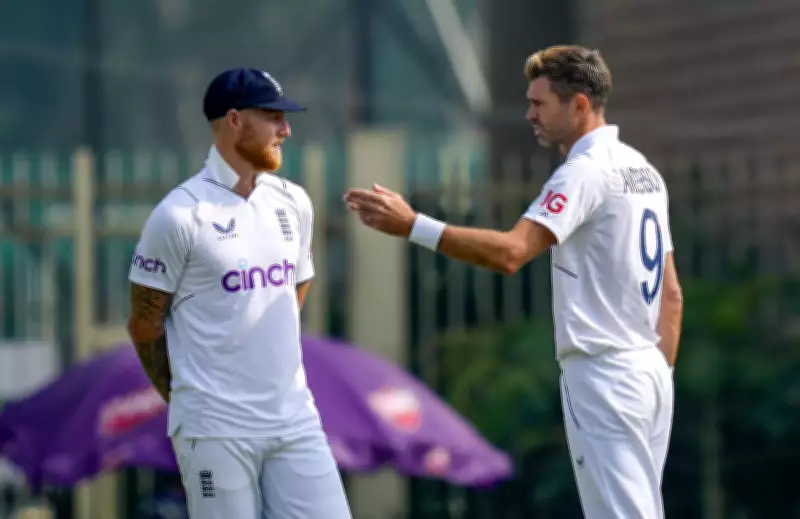
James Anderson Delivers Scathing Critique of The Hundred Tournament
England cricket legend James Anderson has delivered a brutally honest assessment of his experience in The Hundred, admitting he "hated every minute" of playing in the tournament last year. The veteran seamer's remarks are unlikely to please tournament organizers who have been working to establish the 100-ball format.
Anderson's Brief and Unhappy Stint in The Hundred
The 43-year-old fast bowler, widely regarded as one of the greatest pace bowlers in cricket history and the only fast bowler to reach 700 Test wickets, featured in just three matches for Manchester Originals during the 2025 edition. This came after he had impressed selectors with his performances in the T20 Blast tournament.
However, Anderson's stint in The Hundred yielded minimal success and even less enjoyment. He managed to take only two wickets across his three appearances, and by his own admission, found little pleasure in the experience.

"It was a mixture of hating every minute of The Hundred last year, if I can say that, and especially being captain this year, I think it's really important that I focus on being as fit as I can be for the four-day stuff," Anderson told The Independent in a candid interview.
He added with characteristic bluntness: "When The Hundred's on, I'm hopefully going to be on holiday somewhere."
Significant Blow to Tournament's Credibility
Anderson's comments carry significant weight given the substantial efforts by the England and Wales Cricket Board to grow and promote the 100-ball format. The ECB has invested considerable resources into establishing The Hundred as a premier domestic competition that appeals to new audiences while maintaining player support.
While Anderson's remarks appear to be candid rather than deliberately critical, they nonetheless cast a shadow over the tournament's perception among traditionalists and fellow players alike. His status as one of England's most respected cricketers gives his opinions particular resonance within the cricketing community.
Anderson's New Focus: Lancashire Captaincy
Now retired from international cricket since 2024, Anderson is turning his attention fully to the red-ball game. He has taken on the role of permanent captain at Lancashire County Cricket Club after a brief stint in charge last season.
During his temporary captaincy last year, Anderson led Lancashire in five matches, achieving two wins, two draws, and one loss. Speaking after his official appointment as permanent captain, Anderson expressed both pride and ambition for his new role.
"Captaining Lancashire for the first time last season was a huge privilege, and I'm honoured to take on the role full-time heading into the new season," he said.
He continued with optimism about the team's prospects: "We've got a fantastic group of players, a great blend of youth and experience, and I'm excited about what we can achieve together with promotion back to Division One our number one priority."
Clear Priorities for the Season Ahead
With the new county season set to begin, Lancashire will open their campaign away to Northamptonshire. Anderson has made it abundantly clear that his focus is firmly on guiding the team back to Division One of the County Championship.
"I want the team to get promoted this year," Anderson stated emphatically. "I want all the players to have fun doing it. Remember why we started playing cricket, because we love the game."
The veteran bowler acknowledged that county cricket can sometimes feel like a relentless treadmill for professional players. He emphasized his desire to reconnect players with their fundamental love for the sport.
"So to try and bring guys back to, 'it's not just a job, it's something that we love doing'," Anderson explained, highlighting his leadership philosophy.
For Anderson, the priority is unequivocally clear. The red-ball game comes first in his cricketing priorities, and his brief, unhappy experience in The Hundred appears to have only reinforced that fundamental belief. His comments serve as a stark reminder of the ongoing tension between cricket's traditional formats and newer, shorter competitions seeking to capture audience attention.