Gulf Nations Exit World Cup Early Despite Massive Investment
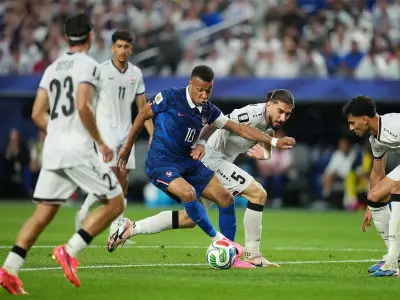
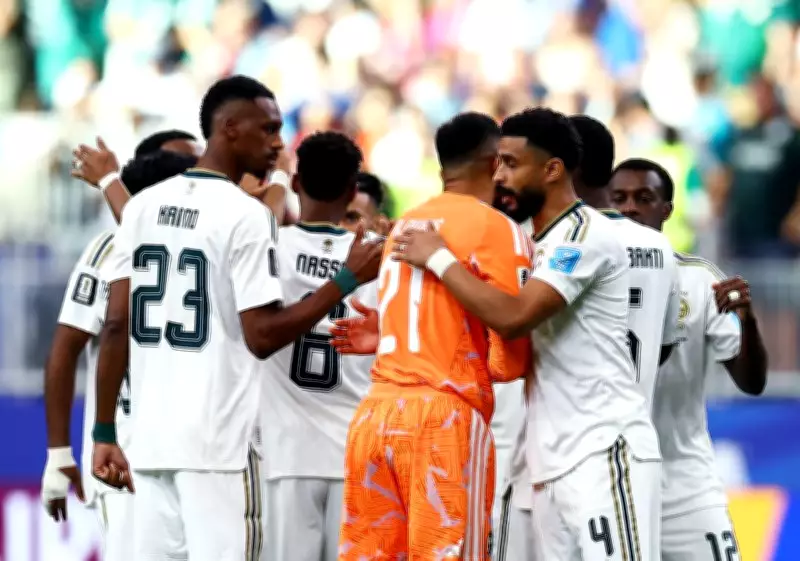
Gulf countries like Saudi Arabia and Qatar that poured a fortune into soccer and infrastructure experienced unceremonious exits from the World Cup, proving that big money doesn't guarantee success on the sport's biggest stage. Saudi Arabia is out at the earliest point again, bottom of a group that included tiny Cape Verde, the third-smallest nation ever to compete on this stage and into the knockouts for the first time.
By signing the likes of Cristiano Ronaldo, Neymar and Karim Benzema as part of a spectacular recruitment drive in recent years, Saudi Arabia has been a major disruptor of club soccer. But on the international stage it still has a long way to go eight years out from hosting the World Cup in 2034.
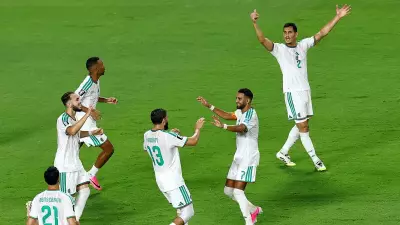
Qatar, the host four years ago, is also on its way home after just three games, so too are the other gulf nations Iran and Iraq. Compared to the success of African teams at this World Cup, with nine out of 10 advancing to the round of 32, gulf nations are struggling mightily to make their mark.

Saudi Arabia's Disappointing Performance
A goalless draw against Cape Verde ended Saudi Arabia's hopes of advancing from the group phase for the first time since 1994. Saudi coach Georgios Donis said, "It was not what we wanted because when playing in such a match against a team that is more or less the same level as us, our performance was not good. So this gives rise to concern."
After pulling off one of the biggest upsets in World Cup history by beating eventual champion Argentina four years ago, there was no standout moment this time - failing to advance beyond the group phase for the sixth time in a row.
Qatar's Early Exit Despite Progress
Qatar made history with its first point at a World Cup, scoring a dramatic late equalizer against Switzerland. But it was another disappointingly early exit after it was eliminated just two games into its home tournament in 2022. Coach Julen Lopetegui said, "I think that they show that at least we were able to compete in these kind of matches."
The appointment of Lopetegui - the former Spain and Real Madrid coach - is evidence of the type of investment Qatar has made to try to boost its performance on the global stage. Despite a population of 3 million people and only around 300,000 citizens, it has managed to develop enough homegrown players to win back-to-back Asian Cups in recent years. But it has not been able to translate those performances to the World Cup, spending billions of dollars to create eight state-of-the-art stadiums.
Lopetegui added, "You compare with other countries ... for sure we know who we are. But at the same time I think that this is one little country but with a big passion, a big investment ... we have to improve every day and they did this. We look to the future being optimistic about this for sure."
Iran and Iraq Also Fail to Advance
Iran had to contend with difficulties regarding preparation and travel in the wake of war with the United States and only narrowly missed out on advancing as a best third place team after three draws. In seven appearances at the World Cup it has never gone beyond the groups. Likewise for Iraq in its two appearances 40 years apart.
Focus on Homegrown Talent for Future
It's all about the future for Saudi Arabia after winning the right to host the World Cup in 2034. The country has been on a mission to wield influence in sports around the world, from buying Premier League Newcastle to launching LIV Golf and hosting world title boxing matches and Formula 1. The World Cup would be its standout achievement as it looks to move away from its heavy reliance on oil.
Focus on development of homegrown talent is clear as 2034 approaches. Star signings from overseas have slowed and some big names, including Neymar, have departed. U.S. Soccer's sporting director Matt Crocker was lured away to head up talent development in Saudi Arabia and youth investment is said to have doubled over the past three years.
Donis said, "When we have these stars in the Arabian League, I think that the more competitive the competition, the better our players will be. But it's different when we're playing for the national team because in the national team, these experiences, there needs to be a certain mentality."

At a time when a supersized 48-team World Cup has opportunities for the likes of Cape Verde and Congo to make history, gulf nations are still waiting for their moment.